 By
DOE Launches ASCEND to Expand U.S. E-Waste Recycling and Critical Mineral Recovery
The U.S. Department of Energy has launched a national laboratory-led initiative to improve recovery of critical minerals from discarded electronics, targeting collection barriers, processing costs and gaps in domestic recycling infrastructure.
By Paul Ploumis | Published November 11, 2026
Key Points
- New federal initiative: DOE launched the Accelerator for Supply Chain, Economy, and National Development (ASCEND) on November 10, 2026.
- Untapped resources: The EPA cites 6.7 million tons of annual U.S. electronic waste generation, with only 16% captured for recycling.
- Critical materials: The program targets recovery opportunities involving lithium, cobalt, nickel, copper and rare earth elements.
- Research priorities: Three national laboratories will examine recovery economics, processing capabilities and domestic supply-chain gaps.
MONTREAL (Scrap Monster): The U.S. Department of Energy (DOE) launched the Accelerator for Supply Chain, Economy, and National Development (ASCEND) on November 10, 2026, establishing a national laboratory-led collaboration to expand domestic recovery of critical materials from discarded electronics.
The initiative will examine opportunities to recover lithium, cobalt, nickel, copper and rare earth elements from products such as batteries, circuit boards and hard-drive magnets. These materials are used in advanced manufacturing, energy technologies and national defense.
With the United States dependent on foreign production and processing for many critical materials, DOE is evaluating electronics recycling as a complementary source of domestic supply.
U.S. Captures Only 16% of Electronic Waste for Recycling
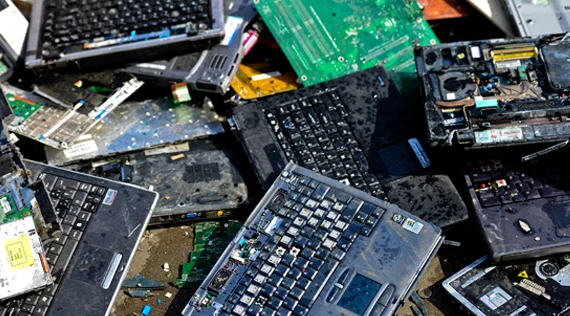
A 2024 U.S. Environmental Protection Agency assessment cites an estimated 6.7 million tons of electronic waste generated annually in the United States, with only 16% captured for recycling.
Increasing collection is only part of the challenge. Electronic scrap contains complex mixtures of metals, plastics and components that must be separated and processed before valuable materials can return to industrial supply chains.
The cost of recovery and refining remains an important factor in determining whether these materials can be extracted economically.
ScrapMonster Edge: Collection Alone Will Not Solve Critical Mineral Recovery
The biggest opportunity is also a processing challenge. EPA data indicate that most U.S. electronic waste is not captured for recycling, but increasing collection will not automatically deliver usable critical minerals. Recyclers must also separate valuable components, recover target materials and establish economically viable processing routes.
Industry takeaway: ASCEND's emphasis on recovery economics and processing gaps is particularly relevant for e-scrap processors. The initiative could help identify which material streams and technologies warrant further investment, although DOE has not announced specific commercial facilities or recovery targets.
National Laboratories Develop New Recovery Technologies
Idaho National Laboratory has developed electrochemical and biology-based approaches intended to reduce chemical consumption and energy requirements during critical material recovery. Separate collection research has also examined ways to increase the volume of electronic equipment entering recycling systems.
Oak Ridge National Laboratory in Tennessee has developed automated equipment to dismantle computer hard drives and recover rare earth magnets, with related technologies progressing toward commercial applications.
These efforts form part of a broader research program addressing the technical and economic limitations of recovering critical materials from end-of-life electronics.
ASCEND to Assess Recycling Economics and Supply-Chain Gaps
Organized through DOE's Office of Critical Minerals and Energy Innovation, ASCEND will examine the electronics recycling process from collection and dismantling through material recovery, processing and industrial reuse.
The initiative is led by Idaho National Laboratory in collaboration with the National Laboratory of the Rockies and Oak Ridge National Laboratory. Funding is provided through DOE's Advanced Materials and Manufacturing Technologies Office.
During its initial phase, the laboratories will compare the economics of recovering critical minerals from different electronic scrap streams, evaluate existing U.S. processing capabilities and identify technologies requiring further development.
"ASCEND will determine the most impactful opportunities to expand critical materials production through domestic electronics recycling," said Deputy Assistant Secretary Chris Saldaña.
"By bringing together National Laboratory expertise, industry engagement, and supply chain and economic analysis, this initiative will detect critical gaps, evaluate potential solutions, and identify opportunities to strengthen U.S. critical materials supply chains through recycling."
DOE also plans to consult recycling companies and other supply-chain participants to identify barriers to collection, recovery, processing and reuse.
The findings will be used to prioritize supply-chain gaps and technologies that could support expanded domestic critical material production through electronics recycling.
Courtesy: www.metaltechnews.com