Bank of England and The Royal Mint: E-Waste Circularity
E-waste Recycling | 2026-09-04 00:06:31
Vivienne Grafton, Executive Director for Central Operations at the Bank of England, emphasises the dual benefits of the programme.
 By Paul Ploumis
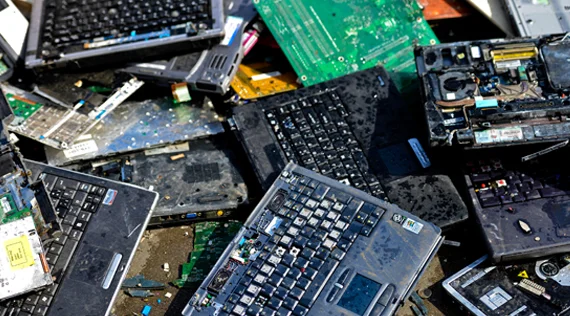
SEATTLE (Scrap Monster): Electronic waste is one of the most pressing environmental challenges of the modern era.
As technological advancement accelerates, the volume of discarded devices continues to grow at an unprecedented rate.
Finding sustainable methods to manage this end-of-life equipment is a priority for organisations across the globe.
In a step toward addressing this issue within the UK, two British institutions have joined forces.
The Royal Mint and the Bank of England have announced a collaborative circularity initiative designed to sustainably process electronic waste, recover precious metals and reduce environmental impact.
This partnership highlights a growing trend among historic institutions to modernise their operational practices and embrace the principles of the circular economy.
About the initiative
At the heart of this new agreement is the responsible processing of thousands of decommissioned desk phones previously used across the Bank of England’s premises.
Rather than allowing these outdated communications devices to end up in landfill, the institutions have implemented a strategy that firmly prioritises reuse before recycling.
Under this tiered approach, all equipment is first rigorously assessed to identify any potential resale opportunities.
For the remaining equipment that cannot be reused, the devices are securely wiped of all data and sent directly to The Royal Mint for intensive material processing.
By managing the sustainable disposal of these desk phones, the project ensures that valuable resources are kept within the supply chain rather than being discarded.
Sean Millard, Chief Growth Officer at The Royal Mint, tells Sustainability Magazine: “Electronic waste is one of the fastest-growing waste streams globally, yet it contains valuable resources that can be recovered and put back into use. Printed circuit boards contain precious metals and other materials and our aim is to maximise their recovery, helping to keep finite resources in circulation and supporting a more circular economy.
“For The Royal Mint, this is an opportunity to apply our centuries of expertise in precious metals to a very modern challenge. By recovering gold and other critical metals from end-of-life electronics here in the UK, we can help organisations reduce waste while giving those materials a new life. For The Royal Mint, this means crafting recovered gold into jewellery for 886 by The Royal Mint, demonstrating circularity in action.
“Our work with the Bank of England demonstrates how prioritising reuse and resource recovery can turn end-of-life equipment into a source of value.”
The Royal Mint's material recovery
The physical processing of the Bank of England's end-of-life equipment takes place at The Royal Mint's Reformation Metals facility in South Wales.
Officially unveiled in August 2024, this site represents a major evolution in the Mint's operations.
Developed in partnership with the Canadian clean-tech company Excir, the facility leverages innovative technology to extract gold and other vital materials from electronic waste.
Spanning 3,700 square metres, the site has the capacity to process up to 4,000 tonnes of printed circuit boards found in e-waste annually.
Through this capability, The Royal Mint works with various organisations nationally to recover gold and other precious metals from discarded electronics.
Sustainability at the Bank of England
For the Bank of England, this collaboration is a clear demonstration of its broader commitment to sustainable operations.
Managing the environmental footprint of a major national institution requires proactive strategies to handle everyday materials, including office equipment like desk phones.
By ensuring that decommissioned devices are processed responsibly, the Bank is actively working to reduce waste across its estate.
Vivienne Grafton, Executive Director for Central Operations at the Bank of England, emphasises the dual benefits of the programme.
“Partnering with The Royal Mint to manage the sustainable disposal of our desk phones reflects our commitment to reducing waste and delivering value for money," she says.
"We’re proud to support this initiative and to contribute to a more sustainable future economy.”
This focus on delivering value for money aligns environmental responsibility with economic considerations.
By treating e-waste as a resource rather than a burden, the Bank of England is setting a strong example for other public and private sector organisations.
This partnership shows that historical institutions can lead the way in adopting modern sustainable practices, ensuring that materials are recovered, reused and integrated back into a thriving circular economy.
Courtesy: www.sustainabilitymag.com