Customs to inspect all scrap metal containers for e-waste
E-waste Recycling | 2026-10-22 23:50:20
As a longer-term measure, the department is considering classifying metal scrap and rubber scrap as prohibited imports.
 By Paul Ploumis
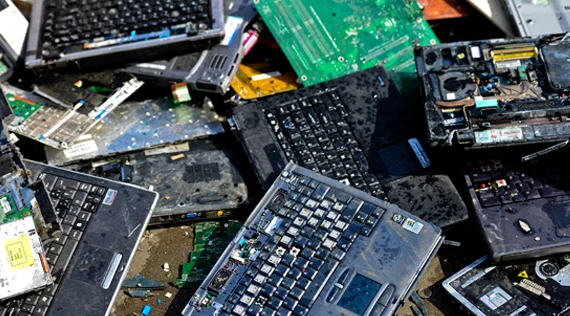
SEATTLE (Scrap Monster): The Thai Customs Department is physically inspecting every container declared as metal scrap as it steps up enforcement against illegal electronic waste imports, which have polluted the environment and threatened local livelihoods in the country’s eastern provinces.
Thailand confiscated 10,029 tonnes of illegally imported electronic waste in the 2026 fiscal year that ended on Sept 30. Of the total, 5,290 tonnes have already been shipped back to their countries of origin, Customs Department director-general Phantong Loykulnanta said on Thursday.
He was updating the media on several suspicious shipments discovered in the eastern provinces of Rayong and Prachin Buri this week.
In Rayong, two containers featured in news reports were found to be part of a shipment of five containers from Spain, Mr Phantong said. The shipment, declared as metal scrap, had been released for delivery from Laem Chabang Port in Chon Buri.
There was no evidence yet confirming that the shipment contained prohibited waste, he said. However, nine other containers from the same country, weighing 223 tonnes in total, had been seized for inspection.
In Prachin Buri, officials suspected eight containers from the United States, while further checks uncovered five additional import declarations from the same country. The shipments had also been held pending inspection.
The Basel Action Network (BAN), which monitors hazardous waste shipments worldwide, flagged 720 containers for potentially illegal or hazardous waste movements in fiscal 2026, Mr Phantong said.
Inspections found that 440 containers had not entered Thailand, he said.
Of the remaining cases, 187 containers were inspected and found not to contain hazardous waste covered by the Basel Convention, while 89 were found to have violated the relevant regulations. Of the latter group, 75 containers had already been returned to their countries of origin.
The remaining 14 containers were subject to legal proceedings, with four being held for further inspection, he said.
Thailand banned electronic waste imports in 2020 and tightened the regulations in 2025 to cover 463 types of e-waste, including circuit boards, batteries and used mobile phones.
The country ratified the Basel Convention in March 2023, committing to international controls on the movement of hazardous waste.
However, Thailand continues to face illegal dumping, with electronic waste and contaminated materials polluting soil and water and threatening agricultural production. Such waste is often concealed in shipments declared as metal scrap.
Between January and September 2026, Thailand imported a total of 2.76 million tonnes of scrap steel, aluminium and copper, equivalent to about 14,600 containers per month.
The department said inspecting these shipments posed challenges because densely packed cargo often made it difficult for X-ray scanners to detect concealed electronic waste.
Physical inspections require heavy machinery to unload and examine the cargo. Previously, officials used import data, traders’ compliance records and intelligence to identify high-risk containers for closer inspection, in line with the World Customs Organization’s risk management principles.
Physically inspecting every container, given the volume of nearly 500 containers a day, would significantly delay cargo clearance and increase costs for legitimate importers.
However, as offenders have adapted by concealing prohibited materials in scrap metal shipments, the department has upgraded its enforcement strategy to require physical inspections of every container in this high-risk category.
Violators will face legal action under the Customs Act 2017 and other relevant laws. The goods will be returned to their countries of origin at the importers’ expense, while retrospective audits of high-risk importers will also be conducted.
As a longer-term measure, the department is considering classifying metal scrap and rubber scrap as prohibited imports.
The proposal includes a transition period of six to 12 months to minimise the impact on domestic metal smelting and recycling facilities that rely on imported raw materials.
During this period, the materials would be classified as controlled imports requiring permits. Such permits would be issued only to factories importing materials for their own production processes and where domestic raw materials were insufficient.
Every shipment would also be required to carry a pre-shipment inspection (PSI) certificate, the department said.
Courtesy: www.bangkokpost.com