 By
South Africa Joins $60M Circular Electronics Program
South Africa is among nine African countries joining a $60 million international program aimed at extending electronics lifespans, expanding repair and reuse, and improving the collection and recycling of electronic waste.
Key Points
- Program: The Global Electronics Management Program is backed by $60 million from the Global Environment Facility.
- Africa: South Africa is one of nine African countries participating in the first phase.
- Global Reach: The program spans 16 countries across Africa, Asia, Latin America and Europe.
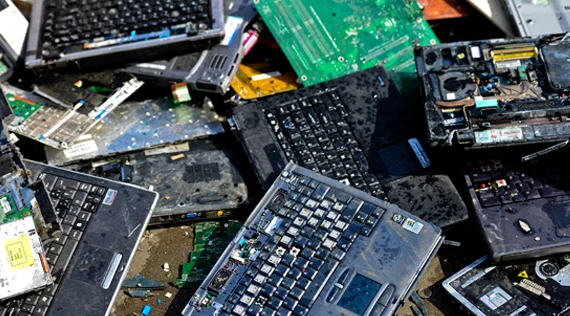
- E-Waste: Global generation reached 62 million tonnes in 2022, with only 22.3% formally collected and recycled.
- 2030 Outlook: E-waste generation is projected to reach 82 million tonnes by 2030.
SEATTLE (Scrap Monster): South Africa has joined a $60 million international initiative designed to expand circular electronics systems and improve the management of rapidly growing electronic waste.
The Global Electronics Management (GEM) Program was launched in Manila on October 7 and brings together 16 participating countries, including nine in Africa.
The initiative is funded by the Global Environment Facility (GEF) and led by the United Nations Industrial Development Organization (UNIDO), working with the African Development Bank Group, UNDP and UNEP.
Nine African Countries Join the Program
The African participants are Botswana, Djibouti, Eswatini, Ethiopia, Lesotho, Mozambique, Namibia, Somalia and South Africa.
The other participating countries are Cambodia, Colombia, Kazakhstan, Peru, the Philippines, Türkiye and Viet Nam.
South Africa is part of a Southern Africa/SADC regional project that also includes Botswana, Eswatini, Lesotho, Mozambique and Namibia.
Djibouti, Ethiopia and Somalia are participating through a separate Horn of Africa project supported by the African Development Bank.
ScrapMonster Edge: Africa's Opportunity Goes Beyond Recycling
The commercial opportunity is broader than simply recovering metals from discarded electronics.
GEM is designed to support repair, refurbishment, reuse, collection, logistics, resource recovery and environmentally sound recycling.
For African markets, that could help formalize more of the electronics value chain while creating opportunities for recyclers, repair businesses and materials-recovery operators. Those outcomes, however, will depend on local implementation, investment and market development.
Global E-Waste Reached 62 Million Tonnes
The program is being launched against a rapidly growing global waste problem.
The world generated approximately 62 million tonnes of electronic waste in 2022, according to the Global E-waste Monitor.
Only 22.3% was documented as formally collected and recycled in an environmentally sound manner.
Annual generation is projected to increase to approximately 82 million tonnes by 2030.
GEM Targets the Full Electronics Lifecycle
The initiative is designed to address electronics from production through end-of-life management rather than focusing only on disposal.
Its priorities include:
- More resource-efficient electronics production
- Longer product lifespans
- Repair and refurbishment
- Reuse and second-life markets
- Structured collection systems
- Material recovery
- Environmentally sound recycling
The program will also support participating countries in strengthening policies and regulations, improving access to finance and technology, and developing markets for circular electronics.
South Africa Part of Wider Southern Africa Project
South Africa's participation sits within a broader Southern African initiative being implemented with UNEP support.
The regional structure is intended to connect national action with shared technical expertise and lessons from neighbouring countries.
The GEM Knowledge Platform will also allow participating governments, recyclers, businesses, financial institutions and technical organisations to share practical approaches and potentially scale successful models between markets.
Program Could Support Jobs and Resource Recovery
The African Development Bank says the initiative is intended to connect digital transformation with environmental sustainability while creating conditions for future investment.
Potential economic benefits include employment, recovery of valuable materials and development of more resilient digital economies.
Those benefits should be viewed as program objectives rather than guaranteed results. The initiative has only recently entered implementation, and no country-specific employment or recycling-volume outcomes have yet been reported.
Repair and Reuse Could Keep Electronics in Service Longer
A central goal of GEM is to prevent functioning products and recoverable materials from reaching the waste stream prematurely.
Extending product lifetimes through repair and refurbishment can retain more economic value than immediately processing devices for materials recovery.
For recyclers, that creates a more complex but potentially valuable ecosystem in which equipment can move through repair, resale, dismantling and material recovery depending on its condition.
Market Read
South Africa's participation gives the GEM program a significant foothold in one of Africa's largest industrial and consumer markets.
The key issue now moves from program design to execution. Policies, collection systems, finance and commercially viable recycling infrastructure will determine whether the initiative produces measurable improvements.
For the recycling sector, the opportunity lies in creating formal pathways that keep usable electronics in service longer while directing true end-of-life equipment toward safe recovery of metals, plastics and other valuable materials.
What to Watch Next
South African implementation: Specific national collection, repair, recycling and financing measures have yet to be detailed publicly.
Private-sector participation: The effectiveness of GEM will depend partly on whether recyclers, electronics manufacturers and financial institutions invest alongside governments.
Formal recycling: One of the clearest measures of progress will be whether more discarded electronics move into documented, environmentally sound treatment.
Jobs and industrialisation: Employment and business-growth claims should be measured against actual project results as implementation advances.
Courtesy: EWN