Hard Drives
ISRI Code : NA | Last updatedOctober 29, 2025 12:47:40 PM
Hard drive scrap is the byproduct of obsolete computers and servers—containing valuable metals (aluminum, copper, rare earths, precious metals), complex PCBs, and high-recyclability content. It’s a critical e-waste stream where data security and responsible recycling matter as much as resale value.

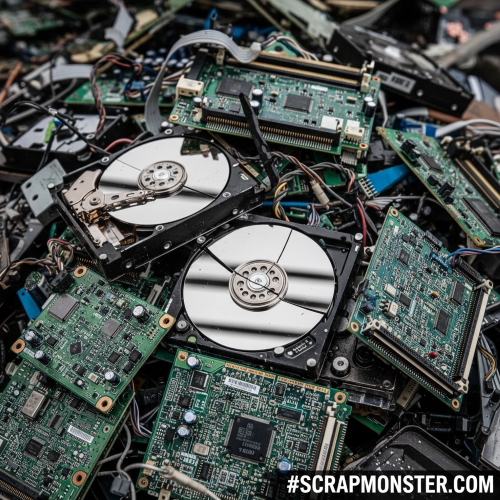
What is Hard Drives Scrap?
Hard drives scrap refers to end-of-life hard disk drives (HDDs) from desktops, laptops, servers, and datacenter equipment. These drives consist of multiple metals and materials:
Aluminum, steel, or sometimes magnesium outer casings
Circuit boards (PCBs) containing gold, copper, silver, lead, tantalum, and palladium
Rare earth magnets (neodymium-iron-boron)
Glass or aluminum platters with precious/rare metals
Stainless steel motor, assorted screws, and fasteners
Two major types:
3.5-inch — desktop/enterprise drives, higher metal content
2.5-inch — notebook or portable, more compact, less non-precious metal
Strategic Educational & Business Information
Why Is Hard Drive Scrap Valuable?
High Metal Content:
Up to 95% of a drive’s mass is recyclable—mainly aluminum, steel, copper, rare earths, and precious metals.Data Security Requirements:
Every scrap stream requires secure data destruction—shredding or certified degaussing—to prevent information leaks.Environmental Mandates:
Many jurisdictions require e-waste recycling; responsible handling averts toxic landfill contamination.
E-Waste Sector & Industry Economics
Massive Supply:
Enterprises upgrade servers every 3-5 years, and consumers replace devices often.Critical Minerals Recovery:
Valuable palladium, silver, platinum, and neodymium magnets are recovered by advanced processors for resale.Downstream Demand:
Manufacturers, foundries, and precious metal refiners buy these materials for new electronics, batteries, auto parts, and green technologies.
Certification and Compliance
Work with R2/RIOS/e-Stewards certified companies for regulatory, environmental, and corporate compliance (see ScrapMonster’s Directory for R2 vendors).
Recycling Process: From Data Destruction to Metal Recovery
Secure Data Destruction
Degaussing, physical shredding, or certified destruction are musts.
Dismantling/Sorting
Removal of PCB, casing, magnets, and platters for targeted recycling.
Shredding & Separation
Mechanical separation of metals, further refined for metals recovery.
Precious Metals Refining
PCBs processed for gold, platinum, silver, tantalum, and rare earths.
Pro Tip:
Work only with reputable companies—certify destruction with video/photo evidence or written chain of custody.
Live Pricing & Where to Sell
Yard Pricing: 5¢–65¢/lb depending on content, grade, and removal of PCBs.
Large Batches: Enterprise, ITAD, and data center sellers see bulk pricing and rebates.
Check Current Electronics Scrap Prices on ScrapMonster, including hard drives with or without boards.
Sell/Buy via ScrapMonster Marketplace—post offers for large volumes and find direct buyers.
Find R2/E-Stewards/Recycling Vendors | Register & Track Live Electronics Scrap Prices | Ask Questions, Share Security/Tech News
Industry Trends & Security Alerts | Equipment Marketplace: Shredders, Data Wipe Tools
Fun & Surprising Facts
Global E-Waste: Over 50 million metric tons of e-waste are generated per year—hard drives account for a major share.
Energy Benefit: Recovering metals from hard drives uses 75% less energy than mining new ones.
Urban Mining: A metric ton of discarded laptops yields over 200x the gold compared to a ton of ore.
Eco-Security: Hard drives are the only scrap where data privacy and environmental value go hand in hand.
The ScrapMonster Advantage
Hard drive scrap is more than just e-waste—it’s an intersection of security, sustainability, and profits. From enterprise ITAD vendors to household recyclers, the right strategies maximize value, minimize risk, and drive the circular economy. For the latest trading tools, price intelligence, and secure vendor directory, make ScrapMonster.com your digital home base for all things e-scrap.
Updated October 2025 | ScrapMonster Inc. | © 2009–2025 – All rights reserved
Frequently Asked Questions
- Is it legal to sell hard drive scrap with data still on it?
Laws vary—most require total destruction or data wipe. Business best practice is secure erasure or physical destruction.
- Which vendors buy hard drive scrap?
Certified e-waste processors, data sanitization companies, and metals refiners listed on ScrapMonster.
- What’s the best way to maximize hard drive scrap value?
Separate drives by size/type, remove PCBs (sometimes sold separately), pool large lots, use certified data destruction.
- Do SSDs (solid-state drives) have value as scrap?
Yes! SSDs contain rare metals and chip-level gold or silver, but value structure differs from traditional HDDs.
- Can rare earth magnets be resold?
Yes, especially in large batches—labs and green tech firms sometimes pay a premium for bulk used neodymium magnets.
Related Materials
Cellular Phone Scrap
Cellular phone scrap comes from obsolete mobile phones—containing modest but critical quantities of precious metals,…
CPU Processors
CPU processors are among the highest-value electronic scrap due to their rich gold, silver, platinum,…
Memory Chips
Memory chip scrap—encompassing RAM, DRAM, SDRAM, and ICs—comes from outdated computers, servers, printers, and electronics.…
Power Supplies
Power supplies—especially those from computers and servers—are a crucial e-waste stream. Containing circuit boards, wires,…