Cellular Phone Scrap
ISRI Code : NA | Last updatedOctober 29, 2025 03:06:09 PM
Cellular phone scrap comes from obsolete mobile phones—containing modest but critical quantities of precious metals, plastics, and battery components. Recycling phones responsibly returns gold, silver, copper, and other metals into the supply chain, driving profit and environmental benefit for the e-scrap industry.

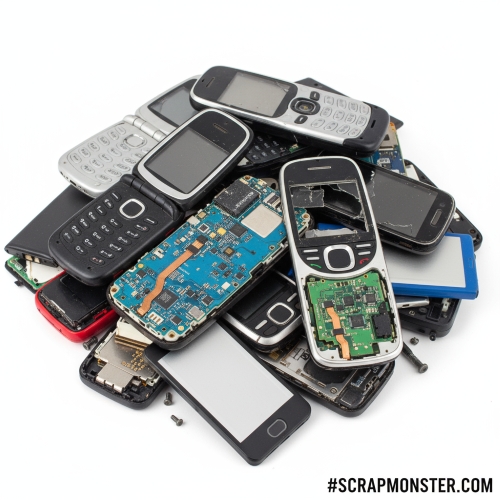
What Is Cellular Phone Scrap?
Cellular phone scrap is obsolete mobile phones with or without batteries, sourced from consumers, businesses, and retailers. Each phone contains:
Printed circuit boards with gold, copper, zinc, silver, and lead
Battery (often lithium-ion, sometimes nickel/cadmium—must be handled separately)
Plastic, glass, and minor metal components
Phones may range from flip phones and first-generation smartphones to today’s advanced handsets. Disposed in landfill, phones pollute the environment; recycled properly, they recover valuable metals and feed the circular economy.
Industry, Pricing, and Market Details
How Are Prices Determined?
Model/type: Smartphone boards usually have more precious metal than basic handsets
Weight: It takes 3–5 cell phones to weigh a pound for scrap sale
Battery removal: Some buyers require batteries removed for safety and easier e-scrap processing
Location and quantity: Bulk loads sold to major yards, smelters, or ScrapMonster’s Marketplace often fetch premium rates
Example Price (August 2020):
North America (US East/West/Midwest): $4.25/lb (model/board specifics vary)
Where to Sell and Buy Cellular Phone Scrap
Local Yards: Find buyers using Scrap Yard Finder
Major US buyers: Green Secure (CA), Global Material Recycling (TX), Gold Metal Recyclers (TX), ABS Recycling Ltd (CA)
Marketplace: Sell Offers for Electronics Scrap, Buy Offers
Bulk: Yards and refiners pay more for bulk loads; minimum quantity and battery removal often required
Environmental and Business Benefits
Diverts lead, zinc, lithium, and hazardous plastics from land/water pollution
Recovers gold, silver, copper—reducing demand for mining, supporting circular supply chains
Supports green jobs at recycling facilities, B2B trade, and tech refurbishers
UN report: Recycling 41 cell phones yields 1 gram of gold; large-scale recycling scales this impact exponentially
ScrapMonster Core Services & Industry Integration
Fun Facts: Mobile Recycling & E-Waste
Each smartphone contains ~0.034g of gold—multiply by billions for global impact!
Enough copper in 1,000 recycled phones to wire a small home
The plastic from recycled phones can be used in street furniture, playgrounds, and car parts
Mobile recycling helps close the gap on e-waste—50 million metric tons per year and growing
Related Materials & Further Reading
For the best prices, analytics, sustainable trade, and e-scrap deals globally, start each project at ScrapMonster.com—North America’s most trusted recycling network!
Updated October 2025 | ScrapMonster Inc. | © 2009–2025 – All rights reserved
Frequently Asked Questions
- Do I need to remove batteries before selling?
Some yards require it for safety; others will do it themselves. Always check requirements.
- Can I sell broken smartphones as scrap?
Yes—precious metals, PCBs, and batteries retain value even if phone is nonfunctional.
- Is there a minimum quantity for bulk sale?
Yes—bulk deals offered by smelters/refiners; qualifying loads get better rates.
- What happens to the plastics in phones?
High-grade plastics may be recycled—lower grades often used for energy recovery or disposed according to local rules.
- Why does phone scrap matter for the environment?
Phones contain toxic elements and valuable metals—responsible recycling maximizes recovery and minimizes pollution.
Related Materials
CPU Processors
CPU processors are among the highest-value electronic scrap due to their rich gold, silver, platinum,…
Hard Drives
Hard drive scrap is the byproduct of obsolete computers and servers—containing valuable metals (aluminum, copper,…
Memory Chips
Memory chip scrap—encompassing RAM, DRAM, SDRAM, and ICs—comes from outdated computers, servers, printers, and electronics.…
Power Supplies
Power supplies—especially those from computers and servers—are a crucial e-waste stream. Containing circuit boards, wires,…