Aluminum Utensil Scrap
ISRI Code : NA | Last updatedOctober 28, 2025 09:36:10 PM
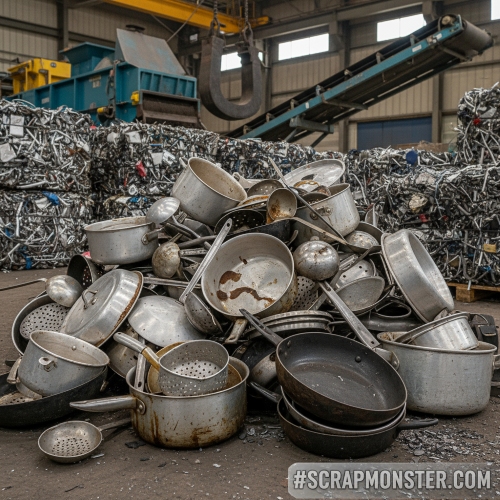
Recycled aluminum utensil scrap comes from used household and commercial cookware, pots, pans, and related foodservice items. Lightweight, corrosion-resistant, and endlessly recyclable—these items are a major source of sustainable aluminum for smelters and manufacturers, with strong pricing and high-volume recovery globally.

The Power of Aluminum Utensil Scrap: Sustainability, Business Opportunity & The Circular Economy
A Valuable Slice of the Green Economy
In an age where every business is measured by both its bottom line and its green credentials, the humble aluminum pot, pan, or tray can represent far more than a leftover from the kitchen. Aluminum utensil scrap has become a key commodity stream—not only reducing landfill waste and saving energy but driving profits, creating jobs, and enabling global trade.
This article explores the technical, economic, and environmental benefits of aluminum utensil scrap, delivering actionable intelligence for scrap dealers, sustainability teams, commercial kitchens, demolition contractors, and circular economy champions.
What is Aluminum Utensil Scrap?
Aluminum utensil scrap refers to end-of-life cookware—pots, pans, baking trays, serving utensils, and kitchenware—made of cast or shaped aluminum, sourced from homes, restaurants, commercial kitchens, institutions, and food processing plants.
As these items reach the end of their useful life, they enter a robust secondary metals marketplace. They are aggregated, processed, and returned to the metals supply chain, ultimately transforming into everything from new kitchenware to automotive alloys.
Key Properties
Material Group: Non-Ferrous Metal
Composition: Usually 99%+ aluminum, sometimes alloyed with small amounts of silicon or magnesium for durability
Physical State: Pots, pans, trays, plates, utensils (both household and commercial grade)
Typical Scrap Categories: Can fall under “TENSE” or “TAINT/TABOR” in ISRI specifications; clean, uncoated scrap brings the strongest price
The Business Case: Why Does Aluminum Utensil Scrap Matter?
The Economic Engine
Supply Chain Sources:
Restaurants, caterers, industrial kitchens, hotels, hospitals, schools, and foodservice distributors generate substantial volumes.
Estate and commercial clean-outs, remodelling contractors, and liquidators add to this reliable scrap stream.
Aggregation Power:
Consolidating large quantities increases profitability—high-volume lots (over 1,000 lbs) are especially desirable for both local yards and global buyers.
Market Demand:
Smelters and manufacturers increasingly prefer recycled aluminum for both price and sustainability goals.
Asia, Europe, and the Middle East are vital export markets for U.S. and Canadian suppliers.
A Strategic Asset for Modern Business
Direct Revenue: Immediate cashflow for bulk sellers.
Brand Differentiation: Offering or promoting closed-loop recycling to customers improves ESG scores and attracts eco-minded clients.
Circular Model: Some manufacturers initiate buy-back or make-back programs, ensuring their goods are reborn as new products.
Optimize Your Operation: Sourcing to Sale
Sourcing Networks:
Partner with restaurants, property managers, kitchen renovators, and thrift stores.
Preprocessing:
Remove plastic/wood handles, non-aluminum parts, coatings (where possible), and ensure items are dry and clean.
Bulk Handling & Baling:
Compress to reduce shipping costs and increase lot value.
Documentation:
Provide weight tickets and (for export) composition analyses with your shipments.
Choose Your Buyer:
Local yards for speed, global trading companies for larger lots or higher margins.
For the best prices and real-time negotiation power, always track live aluminum scrap market rates on ScrapMonster.
Sustainability at the Heart
Environmental Impact
Energy Savings: Recycling aluminum saves up to 95% of the energy of using primary (mined) aluminum.
CO₂ Reduction: One ton of recycled aluminum prevents nearly 15 tons of carbon emissions.
Circularity & Infinite Use: Aluminum from an old pan can become a new bike or airplane part—endlessly.
Regulatory & Market Shifts
Growing Regulation: More regions require proof of recycling or landfill diversion for commercial operations.
Corporate Procurement: LEED, BREEAM, and other standards favor recycled-content metals.
Educational Role
STEM Integration: Recycled aluminum stories are now found in everything from elementary classroom lessons to MBA supply chain case studies.
The ScrapMonster Advantage
Live Scrap Metal Prices (track market shifts, negotiate with confidence)
Bulk Buyer/Seller Directory (find partners, build relationships)
Post Sell Offers or Buy Requests (reach thousands of buyers instantly)
Find or List Scrap Yards (optimize local logistics)
Equipment Marketplace (update your processing or baling line for better margins)
Industry News & Analysis (follow global trends, regulations, and technology breakthroughs)
Market Q&A and Advanced FAQs (get real answers from industry experts)
Fun Facts & Industry Nuggets
Aluminum cookware has been recycled since the early 1900s, making it one of the oldest closed-loop metal product lines!
A single recycled pan can return to the market as a new pan in under 60 days.
In 2025, foodservice operations recycling aluminum were found to be 20% more cost-efficient than those that landfilled kitchenware.
Some gourmet chefs now request “ultra-green” pans made only from post-consumer utensil scrap.
Did you know? Every pound of recycled aluminum utensils saves enough energy to run a TV for 3 hours.
Turn Old Cookware into New Opportunity
Whether you operate a chain of restaurants, manage waste operations, or run a global trading desk, aluminum utensil scrap offers a rare intersection of profit and sustainability. The real winners? Those who combine smart sourcing, proper preparation, and data-driven sales via platforms like ScrapMonster.
Don’t let those old pots and pans gather dust—turn them into new capital, a better carbon story, and a real business advantage.
For more information, price updates, buyer matchmaking, and market intelligence, visit ScrapMonster.com—North America’s top platform for scrap professionals and sustainability leaders.
Frequently Asked Questions
- Which utensils are best for recycling?
Clean, pure aluminum pots, pans, and trays with no steel, plastic, or enamel.
- Who buys aluminum utensil scrap?
Local scrap yards, recyclers, and secondary aluminum smelters—find buyers here.
- What’s the difference between cast and sheet aluminum scrap?
Utensils are mostly cast; sheet (like foil or thin trays) is graded separately, often paid at a different rate.
- Do coatings (paint, Teflon) affect value?
Yes—clean, bare metal fetches higher prices. Many smelters charge a discount for coatings due to extra processing needs.
- Is recycling cookware profitable for commercial kitchens?
Yes—when aggregated (ideally via a managed bin system) it delivers material revenue and cost-saving waste reduction.
- What is the best way to connect with buyers?
Use the ScrapMonster marketplace, bulk buyer directory, or register your company as a preferred supplier.
Related Materials
356 Aluminum Wheels (Clean)
356 Aluminum Wheels (Clean) are high-value non-ferrous scrap materials sourced from vehicle wheels. To maximize…
6061 Extrusions
Extruded Aluminum Alloy 6061 is a medium to high strength aluminum alloy. It is one…
6063 Extrusions
6063 Aluminum Extrusions are in high demand for their architectural strength, finishing versatility, and superior…
Alternator Scrap
Alternator scrap from cars and trucks is a high-value source of copper and steel. Learn…