 By
By 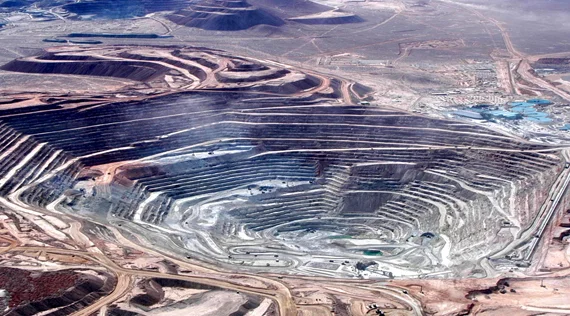
Centinela Copper Strike Talks Resume as November Output Risk Grows
Antofagasta Minerals and two striking unions at Chile’s Centinela copper mine have returned to negotiations after a week-long work stoppage, with union representatives warning that continued disruption could materially affect November production even as the company maintains its existing output outlook.
By Paul Ploumis
Published October 14, 2026
Key Points
- Strike: Distrito Centinela and Minera Esperanza unions have been off the job for about one week.
- Negotiations: Talks resumed Tuesday under voluntary mediation.
- Union claim: Operating mine-truck activity has been reduced by roughly half.
- Critical roles: Unions say members represent more than 50% of key shovel and drill operators and more than 60% of equipment-maintenance workers.
- November risk: Unions warn production could eventually fall by as much as 50% if disruption continues.
- Company position: Antofagasta says striking employees represent about 22% of Centinela’s total workforce and has not changed its production outlook.
- 2026 Centinela guidance: 195,000–215,000 tonnes of copper.
SEATTLE (Scrap Monster): Chile’s Centinela copper mine and two striking unions returned to negotiations Tuesday under a voluntary mediation process aimed at ending a week-long work stoppage that workers say is beginning to disrupt mine operations.
The Distrito Centinela and Minera Esperanza unions began the strike after collective bargaining talks with mine owner Antofagasta Minerals failed to produce an agreement.
The unions are seeking equal benefits for workers regardless of union affiliation.
While the company has maintained that production should remain unaffected, union representatives say the operational impact is already becoming visible.
ALSO READ:
Copper Rises as Chile Mine Disruptions Tighten Supply
ScrapMonster Exclusive: A 50% November Hit Could Mean Roughly 8,500 Tonnes of Copper at Risk
The union’s 50% warning sounds dramatic, but Centinela’s production scale shows why the market is paying attention.
Antofagasta produced 240,400 tonnes of copper at Centinela in 2025.
For 2026, the company forecasts 195,000–215,000 tonnes, with a midpoint of approximately 205,000 tonnes.
Spread evenly across a full year, that midpoint equates to roughly 17,100 tonnes of copper per month.
If the unions’ warning of a 50% November production reduction were ultimately realized, the implied impact would be roughly 8,500 tonnes versus a simple monthly run rate based on current guidance.
That figure is a ScrapMonster scenario calculation, not a company forecast. Monthly mine production is not evenly distributed and can vary with grades, maintenance, throughput and operating conditions.
Antofagasta has not forecast a 50% production loss. When the strike began, the company said the striking workers represented approximately 22% of Centinela’s total workforce and maintained its production outlook.
The difference between those two positions is now the central question: whether the mine can continue operating close to plan with a relatively limited share of the overall workforce absent, even though unions say their members hold a much larger share of several critical operating and maintenance jobs.
Unions Say Truck Activity Has Been Cut in Half
The unions said reports available to them show a direct operational impact from the strike.
According to their statement, the number of mine trucks currently operating at Centinela has been reduced by approximately 50%.
The unions also say their members account for:
- More than 50% of critical shovel and drill operators
- More than 60% of mining-equipment maintenance personnel
Those roles are particularly important in a large open-pit operation because extraction depends not only on the number of employees on site but also on whether enough skilled workers are available to operate and maintain specific pieces of equipment.
Antofagasta Says Strikers Represent 22% of Workforce
Antofagasta Minerals presented a different view when the stoppage began.
The company said members of the two striking unions represented about 22% of Centinela’s total workforce.
At that time, Antofagasta said it expected production to remain unchanged.
No revised Centinela production guidance has been publicly announced as a result of the dispute.
This makes the distinction between total headcount and operational role particularly important.
A strike involving 22% of workers does not automatically imply a corresponding 22% production impact, especially if the affected workers are disproportionately concentrated in critical mining, drilling, loading or maintenance positions.
Centinela Produced 240,400 Tonnes of Copper Last Year
Centinela is one of Antofagasta’s largest operating assets.
The mine produced 240,400 tonnes of copper in 2025, up 7% from the previous year.
Production included copper concentrate from sulphide ore as well as copper cathodes produced through solvent extraction and electrowinning.
| Centinela Production | Copper |
|---|---|
| 2024 | 223,800 tonnes |
| 2025 | 240,400 tonnes |
| 2026 Guidance | 195,000–215,000 tonnes |
The lower 2026 guidance reflects expected normalization in copper-in-concentrate grades rather than the current strike.
2026 Production Was Already Expected to Be Lower
Centinela’s current guidance represents a meaningful decline from last year even before accounting for any strike impact.
At the low end of guidance, 2026 production would be about 18.9% below 2025.
At the high end, it would be about 10.6% lower.
This makes any material disruption during the final quarter more important because it would occur in a year when Antofagasta already expects Centinela output to fall from 2025’s unusually strong level.
Centinela Is a Major Contributor to Antofagasta’s Copper Output
Antofagasta produced 653,700 tonnes of copper across its operations in 2025.
Centinela’s 240,400 tonnes represented approximately 37% of that total.
For 2026, Antofagasta expects group production of 650,000–700,000 tonnes.
Centinela’s guidance of 195,000–215,000 tonnes therefore represents roughly 28%–33% of the group’s expected annual copper production, depending on where each operation finishes within guidance.
That gives Centinela enough scale for an extended disruption to become material to Antofagasta’s overall production performance.
Strike Comes as Antofagasta Builds a Second Centinela Concentrator
The labor dispute is occurring while Antofagasta is making one of its largest growth investments at the Centinela district.
The company is constructing the Centinela Second Concentrator project, which is expected to materially expand copper production once completed.
Antofagasta spent approximately $1.33 billion on the project during 2025 alone, part of more than $1.6 billion of Centinela development capital during the year.
Pre-commissioning activity has already begun in selected project areas, with commissioning expected during 2027.
The long-term growth project is separate from the current labor dispute, but it increases the strategic importance of maintaining stable operating and workforce relationships at the district.
Chile Supply Risk Has Already Drawn Copper-Market Attention
The Centinela dispute is not occurring in isolation.
Chile has recently experienced several separate mine disruptions and labor risks.
Codelco partially suspended an open-pit section of its El Teniente operation following a fatal avalanche, while BHP and supervisors at the Escondida mine were also negotiating to avoid a separate strike.
Escondida and its supervisors subsequently reached a preliminary agreement, reducing one immediate source of potential disruption.
That leaves Centinela as one of the more important unresolved Chilean labor risks currently facing the copper market.
Why Maintenance Staffing Matters
The union’s claim that members represent more than 60% of mine-equipment maintenance workers may be as important as the number of trucks currently operating.
Large open-pit mines depend on continuous maintenance of haul trucks, shovels, drills and support equipment.
Even when equipment remains available early in a strike, deferred maintenance can gradually reduce operating availability if the dispute extends.
This helps explain why the unions say the full production effect may not become visible until November.
That remains the unions’ assessment rather than an independently verified production forecast.
What to Watch Next
Mediation: A collective agreement would remove the most immediate supply risk before any larger November production effect develops.
Truck availability: The unions say active truck numbers have already fallen by about half. Continued reductions would provide another indication of operating stress.
Maintenance capacity: A prolonged shortage of skilled maintenance workers could have a delayed effect on equipment availability even if operations continue.
Production guidance: Any revision to Centinela’s 195,000–215,000-tonne forecast would provide the first company-confirmed measure of the strike’s impact.
November output: The unions identify November as the month when the full effect could become visible if no settlement is reached.
Chile supply: With Escondida appearing to have avoided a separate strike, Centinela may become a more concentrated source of labor-related copper supply risk.
ScrapMonster Market Read: Centinela’s strike is still a risk story rather than a confirmed major production loss. Antofagasta has not lowered guidance, and the company says only 22% of the mine’s workforce is involved. But the unions argue that their membership is concentrated in exactly the jobs that determine whether the mine can move material and keep equipment running. That is why the next two weeks matter more than the first week of the stoppage. A quick settlement could leave the annual production impact limited. A strike extending into November would make the union’s claims about truck availability, maintenance staffing and lower output much more important to an already tight global copper supply picture.
Sources: Reuters; Antofagasta plc.