 By
By 
Copper Nears Record as U.S. Stockpile Swells to 1.1 Million Tonnes
Copper moved within roughly 2% of its all-time three-month LME high on Tuesday as mine disruptions in Chile and increasingly tight immediately available metal kept the market under pressure. At the same time, an estimated 1.1 million tonnes of copper has accumulated in the United States — more than the country held at the peak of its Cold War government stockpile.
By Paul Ploumis
Published October 13, 2026
Key Points
- LME copper: About $14,636.50/MT Tuesday morning, roughly 1.6% below its $14,875 record.
- U.S. copper inventories: Estimated at about 1.1 million metric tonnes.
- CME registered stocks: More than 711,000 tonnes, up sharply from about 88,600 tonnes in February 2025.
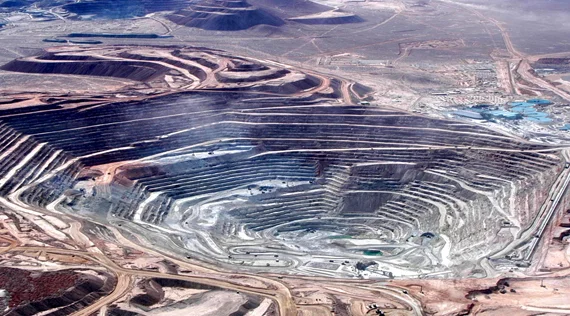
- Chile: El Teniente remains partially disrupted while a strike continues at Centinela.
- Centinela: Unions say mine truck activity has been cut roughly in half during the strike.
- Scrap market: North American clean copper scrap gained another 5¢/lb on October 12 after jumping 13¢/lb on October 9.
SEATTLE (Scrap Monster): Copper prices rose for a third consecutive session Tuesday, moving closer to a record as physical-market tightness and fresh disruption at major Chilean mines kept supply firmly in focus.
Benchmark three-month copper on the London Metal Exchange traded around $14,636.50 per metric ton in Tuesday morning dealings, only about 1.6% below the $14,875 record reached last month.
The move comes as an unusual amount of copper continues to accumulate in the United States while inventories available to buyers elsewhere remain comparatively tight.
ALSO READ:
Copper Rises as Chile Mine Disruptions Tighten Supply
ScrapMonster Exclusive: America Has More Copper Parked Than Its Cold War Reserve — But It Does Not Own It
The most surprising number in today's copper market may not be the price. It is 1.1 million tonnes.
Analysts estimate that roughly that much copper is now stored in the United States after months of metal flowing toward American warehouses because CME copper traded at a premium to London.
CME registered stocks alone have climbed from approximately 88,595 tonnes in February 2025 to more than 711,000 tonnes today. U.S. LME warehouses hold additional registered and off-warrant metal.
The comparison with history is striking. The former U.S. National Defense Stockpile held just over 900,000 metric tonnes of copper at its early-1960s peak.
But there is one major difference: today's copper mountain is mostly commercially owned, not a government strategic reserve.
That means it can move again if the pricing incentive changes. If copper becomes sufficiently scarce outside the United States, higher international prices could eventually pull metal back out.
For scrap yards and secondary refiners, that distinction matters. The United States may look extremely well supplied on paper while the physical market outside the country simultaneously becomes tighter.
Chile Disruptions Keep Copper Supply in Focus
The immediate market concern remains Chile, the world's largest copper-producing country.
Codelco partially suspended operations at its El Teniente mine following the fatal avalanche that killed two subcontractor workers.
The affected open-pit operation represents less than 10% of El Teniente's overall production, while underground mining and processing have continued.
A potentially larger supply risk is developing at Antofagasta Minerals' Centinela mine.
Two striking unions returned to negotiations Tuesday after a week-long stoppage.
The unions say the number of operating mine trucks has been reduced by about half and that their members include more than half of key shovel and drill operators and over 60% of equipment-maintenance workers.
They have warned that the full effect could emerge in November if the dispute continues. Antofagasta, however, has said the striking employees represent about 22% of the total workforce and has so far maintained its production outlook.
Available Copper Outside the U.S. Is Tight
LME inventories fell another 1,625 tonnes Tuesday to approximately 232,275 tonnes.
The LME cash copper contract was also trading at a premium of around $181.50 per tonne to the three-month contract.
That market structure, known as backwardation, generally indicates buyers are willing to pay more for copper available immediately than for metal delivered later.
The contrast is unusual: enormous quantities of copper are sitting in the United States while near-term availability elsewhere remains tight enough to command a substantial premium.
North American Copper Scrap Is Already Moving Higher
The tighter copper environment is also visible in ScrapMonster's North American buying benchmarks.
On October 12, #1 Copper Bare Bright, #1 Copper Wire & Tubing, #2 Copper Wire & Tubing and #3 Copper-Light Copper each increased another ↑5¢/lb.
That followed a much larger ↑13¢/lb increase in the same clean grades on October 9.
The current primary-copper rally does not mechanically determine scrap buying prices, but it increases the importance of watching exchange values, physical premiums and regional availability together.
Copper Scrap Is Part of U.S. Supply-Security Policy
The policy angle makes this particularly relevant to the recycling industry.
The White House's 2025 copper proclamation specifically identified high-quality copper scrap as strategically important and directed the Commerce Department to implement a requirement that 25% of such domestically produced material be sold within the United States.
The Commerce Department had also recommended export controls for high-quality copper scrap.
That means copper recycling is increasingly being treated not simply as a commodity business, but as part of the country's broader raw-material security strategy.
Can the U.S. Keep the Copper?
That may become the next big question.
The United States has already established Project Vault, a public-private strategic critical-minerals reserve backed by up to $10 billion in Export-Import Bank financing and nearly $2 billion in private investment.
No decision has been announced to move the current commercial copper inventories into that reserve.
For now, the U.S. copper stockpile exists largely because market pricing encouraged metal to move there.
If that pricing relationship changes, so could the direction of the metal.
What Scrap Yards Should Watch
Copper's record: Three-month LME copper is less than 2% from its recent all-time high.
Centinela negotiations: A settlement would remove one immediate supply risk; a prolonged strike could make its production impact much larger.
U.S. warehouse flows: If metal begins leaving U.S. inventories, that could signal that international physical tightness is overcoming the CME pricing incentive.
Clean copper scrap: ScrapMonster's North American benchmarks have already posted two sizeable increases in consecutive active sessions.
U.S. copper policy: Decisions involving refined copper tariffs, domestic sales requirements and strategic stockpiling could have direct implications for secondary refiners and high-quality copper scrap.
ScrapMonster Market Read: Copper is entering an unusual market setup. The United States is sitting on roughly 1.1 million tonnes of commercially held metal, yet prices are still approaching record territory because copper available outside the U.S. is becoming increasingly valuable. Chilean mine disruptions are adding pressure at exactly the same time. For the scrap industry, the message is not simply that copper is expensive. It is that the location of physical metal — and who can access it — is becoming almost as important as the global inventory total.