Russia is stepping up scrap metal exports to Türkiye and Southeast Asia
Metal Recycling News | 2026-11-10 04:05:08
Statistics show a clear divergence between markets, notably the market outside the Eurasian Economic Union (EAEU), where export volume surged by 30%, approaching 1.5 million tons. Leningrad Oblast led the way, contributing 56% of the market share.
 By Paul Ploumis
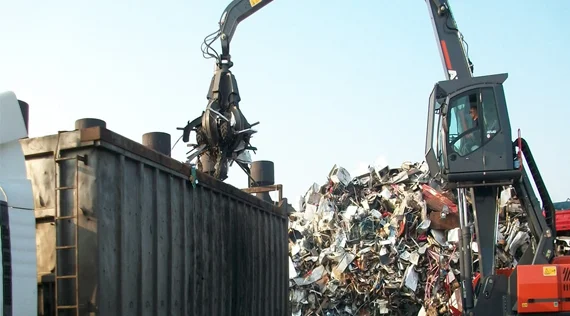
SEATTLE (Scrap Monster): Russia's scrap metal exports in the period January-October 2026 reached 1.8 million tons, a 5% increase compared to the same period last year.
According to a report by the "Ruslom" Association, the main drivers of growth stem from attractive prices in the international market and the low comparative base effect from previous periods.
Statistics show a clear divergence between markets, notably the market outside the Eurasian Economic Union (EAEU), where export volume surged by 30%, approaching 1.5 million tons. Leningrad Oblast led the way, contributing 56% of the market share.
Together with the Primorsky region, Arkhangelsk province, and Murmansk, these four regions control nearly 85% of total exports outside the EAEU. Turkey continues to be the largest partner, absorbing no less than 70% of the supply, followed by Southeast Asia and South Korea.
In contrast to the aforementioned growth, scrap metal exports to EAEU markets such as Belarus and Kazakhstan plummeted by 45%, falling to 310,000 tons.
For the whole of 2026, Ruslom estimates that Russia's total exports will reach 2.18 million tons (a 9% increase compared to 2025). Exports outside the EAEU are expected to reach 1.83 million tons (a 33.3% increase), while exports to Belarus and Kazakhstan will remain at 350,000 tons (a 44% decrease).
With export quotas for 2026 set at 2.2 million tons, Russian companies are likely to exhaust their allocated quotas before the new year begins.
Although export revenues to Türkiye are proving economically viable thanks to prices remaining at around $401 per ton, the Russian scrap metal industry still faces numerous internal obstacles.
Dmitry Stechkevich, CEO of Pskovvtormet, said that businesses are facing significant difficulties in international payments and a shortage of shipping vessels.
Meanwhile, the domestic market has seen a partial freeze since the end of October due to delayed payments from Russian smelters, causing projected domestic scrap metal consumption for the whole year to fall by 9% to 13.3 million tons.
Courtesy: www.vietnam.vn