 By
Thailand Orders Inspection of Every Metal Scrap Container
Thailand has ordered physical inspections of every container declared as metal scrap as customs authorities intensify efforts to stop illegal electronic waste from entering the country disguised as recyclable material.
Key Points
- Enforcement: Every container declared as metal scrap is now subject to physical inspection.
- 2026 Seizures: Thailand confiscated 10,029 tonnes of illegally imported electronic waste during the fiscal year ended September 30.
- Returned Waste: About 5,290 tonnes have already been shipped back to their countries of origin.
- Scrap Imports: Thailand imported 2.76 million tonnes of steel, aluminum and copper scrap from January through September.
- Trade Impact: Roughly 14,600 scrap containers arrive each month, creating significant inspection and clearance challenges.
- Next Step: Customs is considering much tighter long-term restrictions on metal-scrap imports.
SEATTLE (Scrap Monster): Thailand's Customs Department is physically inspecting every container declared as metal scrap as authorities step up enforcement against illegal electronic-waste imports concealed inside recyclable-material shipments.
The change marks a significant escalation from the country's previous risk-based inspection system, under which import history, trader compliance records and intelligence were used to identify higher-risk containers for closer examination.
Customs Director-General Phantong Loykulnanta said Thailand confiscated 10,029 tonnes of illegally imported electronic waste during fiscal 2026, which ended September 30. Approximately 5,290 tonnes have already been returned to their countries of origin.
Metal Scrap Shipments Face 100% Physical Inspection
The decision means containers declared as metal scrap can no longer rely solely on document checks, risk profiling or X-ray screening.
Customs officials said densely packed metal cargo can make it difficult for scanners to detect electronic waste hidden inside legitimate scrap.
Physical examination often requires containers to be opened and material unloaded with heavy machinery so inspectors can verify the contents.
The new policy could therefore lengthen cargo-clearance times and raise handling costs for legitimate scrap importers.
ScrapMonster Edge: This Is Now a Scrap-Trade Issue, Not Just an E-Waste Issue
The scale of Thailand's legitimate metal-scrap trade makes the enforcement change particularly important.
Thailand imported approximately 2.76 million tonnes of steel, aluminum and copper scrap between January and September 2026, equal to around 14,600 containers per month.
That works out to roughly 480-500 containers per day moving through the system.
Inspecting that volume physically changes the economics of the trade. Longer port dwell times, unloading requirements and inspection costs could affect importers even when their cargo is fully compliant.
For Thai smelters and recycling facilities that depend on imported secondary raw materials, the key question is whether tougher enforcement can stop illegal waste without creating major bottlenecks in legitimate scrap supply.
Spain and U.S. Shipments Under Review
The enforcement push follows several suspicious shipments identified in Thailand's eastern industrial provinces.
In Rayong, customs officials investigated containers originating from Spain that had been declared as metal scrap.
Two containers highlighted in local reports were part of a five-container shipment released from Laem Chabang Port in Chon Buri.
Authorities said there was not yet evidence confirming that those containers contained prohibited waste.
However, another nine containers from Spain weighing a combined 223 tonnes were seized for inspection.
In Prachin Buri, authorities also identified eight containers from the United States for further examination. Additional checks found five more import declarations associated with U.S. shipments, which were also being held pending inspection.
The distinction is important: these shipments were considered suspicious and subjected to further investigation, but suspicion should not be treated as confirmation that every container contained illegal waste.
Basel Action Network Flagged Hundreds of Containers
The Basel Action Network, which monitors international hazardous-waste shipments, flagged 720 containers for potentially illegal or hazardous waste movements during fiscal 2026, according to Thai Customs.
Authorities said 440 of the flagged containers had not entered Thailand.
Another 187 containers were inspected and were not found to contain hazardous waste covered by the Basel Convention.
Customs said 89 containers violated applicable regulations. Of those, 75 had already been returned to their countries of origin, while 14 remained subject to legal proceedings, including four being held for additional inspection.
The published figures should be read as the categories reported by Customs rather than a fully reconciled accounting of every one of the 720 flagged containers.
Thailand Expanded E-Waste Import Ban in 2025
Thailand has prohibited electronic-waste imports for several years and substantially expanded the scope of the restrictions in 2025.
The updated rules increased the number of prohibited e-waste categories from 428 to 463.
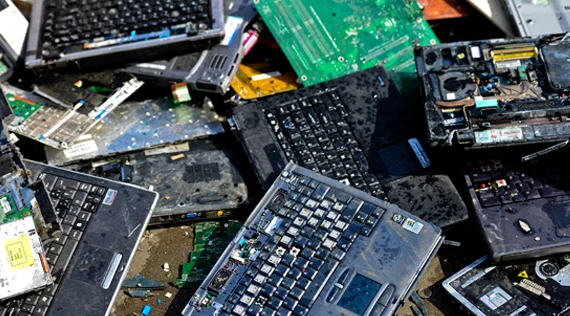
Covered materials include circuit boards, batteries, used mobile phones and other end-of-life electrical and electronic equipment.
The aim is to prevent Thailand from becoming a destination for hazardous waste that cannot be economically or safely processed in exporting countries.
Basel Ban Amendment Strengthened Thailand's Position
Thailand has been a party to the Basel Convention on the Control of Transboundary Movements of Hazardous Wastes and Their Disposal since 1997.
In March 2023, Thailand accepted the Basel Convention Ban Amendment, becoming one of the countries formally supporting tighter controls on hazardous-waste exports.
The distinction is important because Thailand did not first join the Basel Convention in 2023. Its participation in the underlying convention dates back nearly three decades.
False Scrap Declarations Remain a Key Enforcement Problem
Thai authorities say illegal e-waste is frequently concealed in containers declared as metal scrap.
This creates a difficult enforcement problem because legitimate scrap can contain a wide variety of shapes, sizes and mixed metallic materials, making dense cargo difficult to inspect using imaging technology alone.
Previous Thai investigations have uncovered circuit boards and other electronic waste inside shipments declared as aluminum, copper, iron or mixed metal scrap.
Government agencies have increased cooperation among Customs, the Pollution Control Department and the Department of Industrial Works to identify false declarations and prevent illegal waste from reaching recycling and processing facilities.
Illegal Shipments Will Be Returned at Importers' Expense
Importers found to have violated the rules face enforcement under Thailand's Customs Act 2017 and other applicable laws.
Illegal cargo will be returned to its country of origin at the importer's expense.
Customs also plans retrospective audits of importers considered high risk.
The strategy is intended to discourage companies from repeatedly using legitimate scrap classifications to conceal prohibited material.
Thailand Considers Much Tighter Scrap Import Controls
The most significant longer-term development may extend beyond container inspections.
Thai Customs is considering a proposal for substantially tighter restrictions on imports of metal scrap and certain other secondary materials.
The proposal discussed by Customs includes a six- to 12-month transition period intended to reduce disruption for domestic smelters and recycling plants that rely on imported raw materials.
During the transition, affected material could be treated as a controlled import requiring government approval.
Permits would be directed toward factories importing scrap for their own production where domestic raw-material availability is insufficient.
Pre-Shipment Inspection Certificates Could Become Mandatory
The proposed framework would also require shipments to carry a pre-shipment inspection, or PSI, certificate.
Such a requirement would shift part of the compliance process to the exporting country before the container reaches Thailand.
For international scrap exporters, that could mean additional documentation, inspection costs and verification requirements before cargo is loaded.
For Thai authorities, pre-shipment certification could provide another layer of control while potentially reducing the burden of identifying prohibited waste only after containers arrive at port.
ScrapMonster Market Read
Thailand's decision represents an important shift in how scrap imports are regulated.
The government is no longer treating illegal e-waste solely as a hazardous-waste enforcement problem. It is increasingly treating the metal-scrap import channel itself as a high-risk route that requires tighter controls.
That creates a difficult policy balance.
Thailand needs imported secondary raw materials for steelmaking, non-ferrous smelting and recycling, while authorities also need to prevent foreign hazardous waste from entering under false customs declarations.
Universal inspection may improve enforcement, but at nearly 500 containers per day it could also create meaningful logistical and financial costs for legitimate traders.
The more consequential development will be whether Thailand ultimately moves from inspection to broader import restrictions. If that happens, established international flows of ferrous, aluminum and copper scrap could be redirected to other Asian markets.
What to Watch Next
Port delays: The industry will be watching how much additional clearance time results from physical inspection of every metal-scrap container.
Import costs: Unloading, inspection, storage and documentation costs could increase for compliant traders.
Smelter supply: Thai metal producers that rely on imported scrap could face tighter raw-material availability if inspections slow cargo flows.
Import restrictions: The proposed six- to 12-month transition toward tighter controls could have much larger implications than the current inspection policy.
PSI requirements: Exporters may eventually need pre-shipment inspection certificates before sending scrap to Thailand.
Regional trade flows: Any significant restriction on Thai scrap imports could redirect material toward India, Malaysia, Indonesia or other Asian recycling markets.
Courtesy: Bangkok Post