Cambodia launches initiative to reduce e-waste with support from UNDP and GEF
E-waste Recycling | 2026-09-22 00:13:26
Efforts will also aim to improve conditions for informal workers, who play a central role in e-waste collection, through training, safer practices, and support to integrate them into more formal systems.
 By Paul Ploumis
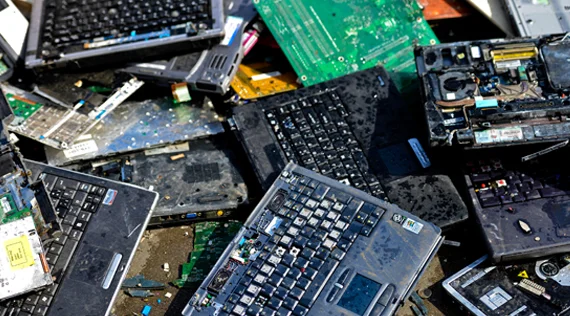
SEATTLE (Scrap Monster): The United Nations Development Programme (UNDP), in partnership with Cambodia’s Ministry of Environment, launched a project on 15 September 2026 to strengthen the management of electronic waste and advance a circular economy in Cambodia, supported by a US$ 4 million grant from the Global Environment Facility (GEF).
To be implemented over five years from 2026 to 2031, the “Global Electronics Management (GEM) Program Child Project in Cambodia” initiative forms part of the Global Electronics Management (GEM) programme, a multi-country effort to reduce pollution and improve resource use across the electronics value chain. In Cambodia, it is expected to directly benefit more than 200,000 people through safer working conditions and reduced exposure to hazardous waste.
The initiative is also supported by an estimated US$ 26 million in co-financing from the Government of Cambodia and private sector partners. It is expected to reduce more than 27,000 tonnes of greenhouse gas emissions, ensure the safe management and disposal of hazardous substances such as persistent organic pollutants and mercury, and prevent over 20,000 tonnes of toxic materials from entering the environment.
“The scale and pace of change in Cambodia’s electronics use is striking. In 2024, the country had an estimated 24 million electronic devices in use, hence systems to manage them at end-of-life cycle need to keep pace. Enhanced capabilities and safeguards are needed not to expose communities and workers to harmful practices and toxic substances. This initiative supports the shift toward safer, practical systems that protect public health and strengthen the foundation for a more sustainable and resilient economy,” said Enrico Gaveglia, UNDP Resident Representative in Cambodia.
“Electronic waste contains valuable materials, but also hazardous substances that make safe recovery complex. The challenge is to recover those materials without creating environmental and health risks. Many products are also not designed with recovery in mind, which makes separation difficult. Addressing this requires stronger systems for collection, dismantling, and treatment, so materials can be recovered more safely and efficiently instead of being lost or handled in unsafe conditions,” said Xiaofang Zhou, Head of Cooling, Circularity and Pollution Prevention at UNDP.
H.E. Dr. Chuop Paris, Secretary of State, Ministry of Environment, said: “The Ministry of Environment is committed to transforming Cambodia’s waste management system. Our goal is to move from a linear “take–make–dispose” model to a circular economy—one that values resources, reduces waste, and protects our people and environment. Through the Code on Environment and Natural Resources and the Circular Strategy on Environment 2023-2028 focusing on Clean Pillar, we are strengthening policies and regulations, promoting Extended Producer Responsibility, encouraging innovation in recycling and resource recovery, and raising public awareness through campaigns and social events.”
Claude Gascon, GEF Interim Chief Executive Officer and Chairperson, said: “Through the GEM programme, the GEF is supporting countries address one of the fastest-growing sources of pollution. As the use of electronics continues to grow, its environmental impacts will become increasingly difficult to manage without effective systems in place. Addressing e-waste also requires changes in how markets operate, and clearer policies and standards that support safer and more sustainable practices. This initiative is an important step toward building that foundation in Cambodia.”
The project will support the Royal Government of Cambodia to strengthen policies, enforcement, and infrastructure for managing electronics across their lifecycle, from import and use to repair, recycling, and final disposal. It will also support the development of clearer standards for handling hazardous materials and improve national systems for monitoring and managing e-waste.
The initiative will establish structured e-waste collection systems, pilot collection points in schools and communities, and expand repair and reuse services to extend the lifespan of electronic products. It will also support businesses to develop recycling and refurbishment activities, helping build a more viable market for circular practices.
Efforts will also aim to improve conditions for informal workers, who play a central role in e-waste collection, through training, safer practices, and support to integrate them into more formal systems.
Cambodia is one of three countries where UNDP is leading GEM implementation, alongside Viet Nam and Colombia. The GEM programme, led by the United Nations Industrial Development Organization (UNIDO), supports 16 countries across the globe to reduce e-waste. .
Courtesy: www.undp.org