 By
Global E-Waste Held $91B in Metals in 2022, UN Reports
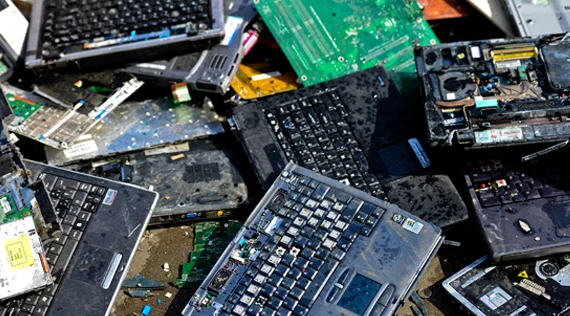
Discarded electronics generated worldwide in 2022 contained an estimated US$91 billion in metals, but only 22.3% of global e-waste was documented as formally collected and recycled. New industry investments are targeting the growing opportunity to recover valuable materials from obsolete electronics.
By Paul Ploumis | Published: November 18, 2026 | Research data: 2022, with 2030 projections | E-Waste Recycling
Key Points
- Global e-waste: The world generated 62 million tonnes of discarded electronics in 2022, containing metals valued at US$91 billion.
- Recycling gap: Only 22.3% was documented as formally collected and recycled, leaving US$62 billion in recoverable natural resources unaccounted for.
- 2030 outlook: E-waste generation could reach 82 million tonnes, while the documented formal recycling rate could fall to 20%.
- Industry investment: Umicore has announced a €450 million refining expansion, while Korea Zinc and Solarcycle have launched Jupiter to recover metals from retired equipment.
SEATTLE (Scrap Monster): The world's discarded electronic equipment represents a substantial source of recoverable metals, yet most of the global e-waste stream remains outside documented formal collection and recycling systems.
According to the Global E-waste Monitor 2024, published by the International Telecommunication Union (ITU) and the United Nations Institute for Training and Research (UNITAR), the world generated 62 million metric tonnes of e-waste in 2022.
The discarded equipment contained metals worth an estimated US$91 billion, including US$19 billion in copper, US$15 billion in gold and US$16 billion in iron.
However, just 22.3% of the total e-waste generated was documented as formally collected and recycled in an environmentally sound manner.
The report estimated that approximately US$62 billion in recoverable natural resources went unaccounted for during the year, highlighting the scale of material value lost outside documented recycling systems.
Global E-Waste Could Reach 82 Million Tonnes by 2030
The gap between electronic waste generation and formal recycling is expected to widen.
According to the UN-backed report, global e-waste generation is increasing by approximately 2.6 million tonnes annually and could reach 82 million tonnes by 2030.
Under the report's business-as-usual projection, the documented collection and recycling rate could decline from 22.3% in 2022 to approximately 20% by 2030.
The projection underscores the need for greater collection capacity, improved material recovery and additional recycling infrastructure as electronic devices reach the end of their useful lives.
Electronic Waste Recycling Market Forecast to Reach $91.5B by 2033
Investment interest in electronics recycling is growing as manufacturers seek additional sources of recovered materials.
A market study by Grand View Research, distributed through ResearchAndMarkets.com, valued the global electronic waste recycling market at approximately US$45.2 billion in 2025.
The study projects market revenue of US$47.5 billion in 2026, rising to US$91.5 billion by 2033, representing a compound annual growth rate of 9.8%.
Electronic waste contains copper, gold, silver, palladium, rare earth elements and other materials that can potentially be recovered and returned to industrial manufacturing supply chains.
The market-revenue forecast is separate from the estimated value of metals contained in discarded electronics.
Government funding is also supporting recycling technology development. In April 2026, the U.S. Department of Energy announced a Critical Minerals and Materials Accelerator funding opportunity of up to US$69 million.
The program included a funding category focused on recovering critical materials from postconsumer scrap, particularly electronic waste and discarded vehicle drivetrains.
Umicore and Korea Zinc Expand Metal Recovery Investments
Major metals companies are investing in additional refining and recycling capabilities.
Belgium-based Umicore announced on November 12, 2026, that it would invest €450 million to expand its precious metals refining operations in Hoboken, Belgium.
The investment, planned between 2027 and 2030, will expand processing capabilities within Umicore's Recycling business group, subject to required regulatory approvals. Commissioning is expected in 2030.
Meanwhile, Korea Zinc and Solarcycle announced the launch of Jupiter on November 16, combining Solarcycle's operations with Korea Zinc's U.S.-based PedalPoint Recycling business.
The venture will focus on recovering valuable materials from retired information technology equipment, data center hardware and energy infrastructure.
Korea Zinc is expected to retain majority control of the business.
Both developments demonstrate increasing corporate investment in collecting, processing and refining secondary materials, although announced projects do not guarantee future recovery volumes.
Courtesy: www.wboc.com