 By
Ghana's E-Waste Recycling Gap Persists Despite 72,000-Tonne UN Estimate
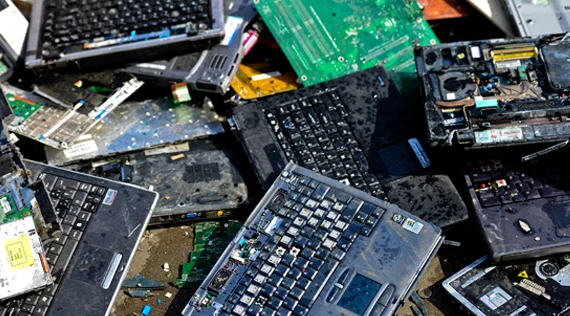
Ghana generated an estimated 72,000 tonnes of electronic waste in 2022, but international statistics recorded no documented formal recycling. As digital infrastructure expands, the country faces continuing challenges involving informal scrap processing, hazardous exposure and the development of safer material recovery systems.
SEATTLE (Scrap Monster): Ghana generated approximately 72,000 metric tonnes of electronic waste in 2022, the second-largest volume in West Africa, according to the Global E-waste Monitor 2024 published by the International Telecommunication Union (ITU) and the United Nations Institute for Training and Research (UNITAR).
The estimate represents approximately 2.2 kilograms per person. However, the international dataset does not document a formal recycling rate for Ghana, highlighting significant gaps in tracking discarded electronics.
Across West Africa, approximately 750,000 tonnes of e-waste were generated in 2022, with the regional documented formal collection and recycling rate reported at 0%.
Africa's documented recycling rate stood at just 0.7% of approximately 3.5 million tonnes generated, compared with the global average of 22.3%.
The absence of documented formal recycling does not mean discarded electronics are not recovered. Much of Ghana's electronics recycling activity operates through informal collection, dismantling, repair and scrap-metal trading networks.
Growing Electronics Market Adds Pressure to Waste Management
Ghana's expanding telecommunications infrastructure and digital economy are increasing the importance of responsible electronic equipment management.
MTN Ghana announced plans in November 2026 to invest approximately US$1.1 billion over three years in network infrastructure, including 5G deployment, additional cell sites and fiber connectivity.
While network expansion does not immediately translate into equivalent e-waste volumes, increasing equipment use and eventual replacement create longer-term collection and recycling requirements.
Illegal international shipments remain another concern.
In January 2023, Spanish authorities announced the dismantling of a criminal network that had illegally shipped more than 5,000 tonnes of hazardous electrical waste from Gran Canaria to African destinations over the preceding two years.
The operation involved 331 shipping containers and destinations including Ghana, Nigeria, Mauritania and Senegal. Authorities separately seized or immobilized more than 300 tonnes of waste and 14 containers during the investigation.
Ghana's Environmental Law Establishes E-Waste Funding Framework
Ghana introduced dedicated electronic waste controls through the Hazardous and Electronic Waste Control and Management Act, 2016 (Act 917).
The legislation was subsequently repealed and its e-waste provisions incorporated into the Environmental Protection Act, 2025 (Act 1124).
The updated law retains an advance eco-levy framework for designated electrical and electronic equipment and provides for the Electrical and Electronic Waste Management Fund.
The fund supports recycling and treatment facilities, collection systems, environmental monitoring, research, public education and measures intended to improve safe waste handling.
The legislation also provides for electronic equipment take-back obligations and regulatory oversight.
However, the Global E-waste Monitor's 2022 dataset identified no national collection or recycling targets for Ghana at the time of its assessment. The extent to which subsequent policy measures have improved documented recycling performance remains unclear.
Informal Recycling Supports Thousands of Jobs but Creates Health Risks
Informal recycling operations remain central to Ghana's electronic waste economy, particularly around Accra's Agbogbloshie area.
A study published in npj Urban Sustainability in December 2025 estimated that the Agbogbloshie recycling economy directly supported approximately 6,000 workers and another 30,000 indirect jobs across Greater Accra.
The study also documented serious environmental and occupational health concerns associated with open burning, uncontrolled material processing and exposure to hazardous substances.
Workers recovering copper and other metals from cables and electronic components can face elevated concentrations of fine particulate matter.
The researchers cited exposure measurements of approximately 80–100 micrograms per cubic meter of fine particulate matter (PM2.5), substantially exceeding the World Health Organization's 24-hour air-quality guideline.
Previous attempts to clear or relocate informal scrap operations have not eliminated the economic activity surrounding electronic waste recovery.
The researchers recommended greater integration of informal workers into regulated recycling systems, including worker registration, protective equipment and improved tracking of scrap-metal transactions.
ScrapMonster Industry Edge: Ghana's Recycling Gap Is Also a Data Problem
Ghana's informal recyclers recover valuable materials, yet much of that activity remains outside documented formal recycling statistics. The resulting gap makes it difficult to measure recovery volumes, environmental performance and the effectiveness of collection programmes.
Industry Takeaway: Integrating collectors into traceable purchasing and processing networks could improve reporting and environmental oversight while preserving livelihoods. The critical measure is not simply how much e-waste is generated, but how much is safely recovered and documented.
Data Note: The 72,000-tonne Ghana estimate and regional recycling figures refer to 2022 data published in the Global E-waste Monitor 2024. They should not be interpreted as verified 2026 waste-generation or recycling totals. Agbogbloshie employment estimates are drawn from previously published research rather than a current workforce census.
Courtesy: www.3news.com