 By
Ghana's E-Waste Economy: Turning Discarded Electronics Into Jobs and Valuable Materials
Ghana's electronics recycling sector supports collectors, repairers and small businesses while recovering valuable copper, aluminum and other materials. New approaches to cable processing and electronics reuse show how safer recycling can protect livelihoods while reducing environmental harm.
By Paul Ploumis
Published: November 3, 2026
Key Points
- Global e-waste: Reached 62 million metric tonnes in 2022, up 82% from 2010.
- Recycling gap: Only 22.3% was documented as formally collected and recycled.
- Recoverable resources: An estimated $62 billion in valuable materials went unaccounted for in 2022.
- Ghana's recycling economy: Collectors, repairers and traders recover materials and extend the lives of discarded electronics.
- Safer recovery: Mechanical cable processing and electronics refurbishment offer alternatives to hazardous practices.
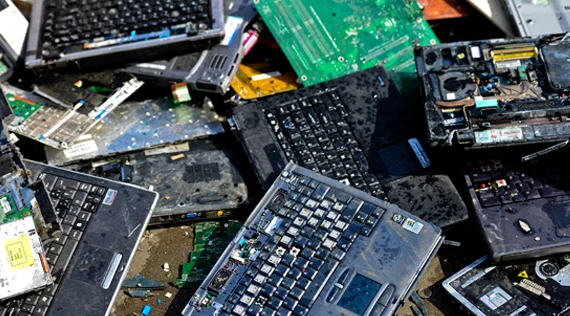
MONTREAL (Scrap Monster): A mobile phone that no longer holds a charge, a broken blender or an outdated computer may seem like household clutter. Together, however, discarded electronic devices represent a growing global waste problem and a substantial source of recoverable materials.
According to the United Nations' Global E-waste Monitor 2024, the world generated a record 62 million metric tonnes of electronic waste in 2022, an 82% increase from 2010. That volume is projected to reach 82 million tonnes annually by 2030.
Yet only 22.3% of the e-waste generated in 2022 was documented as formally collected and properly recycled. The UN estimates that approximately $62 billion worth of recoverable natural resources went unaccounted for, including valuable metals such as copper, aluminum and gold.
Beyond the loss of recoverable materials, unsafe processing and disposal expose communities to environmental and health risks.
The policy response has struggled to keep pace. Of the 81 countries with national e-waste policies, legislation or regulations identified in the 2024 report, only 46 had established national collection targets. That falls short of the earlier ambition for half of the world's countries, then 97, to have collection targets by 2023.
Nowhere is the connection between recycling, livelihoods and environmental protection more visible than in Ghana, where discarded electronics support an extensive informal recovery economy.
ScrapMonster Edge: Safer Recycling Must Also Make Financial Sense
Ghana's e-waste industry illustrates a challenge often overlooked in recycling policy: safer processing methods must compete with established collection and recovery practices on cost, convenience and payment.
Mechanical cable stripping can recover copper without burning insulation, but more careful sorting requires equipment, time and additional labor. Collectors also need confidence that formal buyers will offer commercially viable prices.
Industry takeaway: Environmental improvements are more likely to be sustained when they preserve income opportunities. Transparent material pricing, reliable collection networks and access to appropriate processing equipment can help connect informal scrap businesses with safer, more organized recycling markets.
Accra's Scrap Economy Supports Thousands of Livelihoods
Some discarded electronics reach African markets through illegal shipments, occasionally presented as functional second-hand equipment. Others enter local collection networks where devices are repaired, dismantled for components or sold for their metal content.
Accra's Agbogbloshie area became internationally known for hazardous electronics processing. In 2013, two environmental organizations ranked it among the world's ten most polluted locations.
Images of workers burning electrical cables to recover copper drew global attention. Although authorities cleared the Old Fadama scrapyard in 2021, many traders relocated, and recycling activity has since returned to parts of the area.
Estimates suggest that tens of thousands of people in Accra depend directly or indirectly on the recovery, repair and resale of discarded electronics.
Near the city's busy trading areas, collectors and repairers operate among scrap piles, market stalls and workshops alongside a heavily polluted lagoon.
Yakubu Adam, 53, buys discarded equipment through door-to-door suppliers, checks whether items remain functional and resells those suitable for continued use.
Nearby, a repairer known as Fuseni works on electronic components in a small workshop, repairing up to 20 items daily for approximately $3.30 per item.
Other businesses have developed more specialized services. Alaiku Abdul Razak, who employs around 20 people, manufactures machinery spare parts from designs sent by customers through WhatsApp.
These activities demonstrate that discarded electronics can retain commercial value long before they are reduced to raw materials.
Mechanical Cable Stripping Offers an Alternative to Burning
Ghanaian authorities are increasingly recognizing the role of collectors, traders and repairers in returning valuable materials to the economy.
Vincent Kyere, an e-waste project manager at Ghana's Environment Ministry, has emphasized that public discussion often concentrates on pollution while overlooking the economic value created by informal recyclers.
The objective is to preserve these livelihoods while reducing hazardous practices, including open burning of cables and uncontrolled disposal of toxic substances.
Local company GreenAd provides an example. Instead of burning insulation from electrical cables, its operations use mechanical processing to separate valuable materials.
Collectors deliver cables and receive payment based on published material price lists. Project manager Bennett Akuffo reported that the operation had accepted more than 900 tonnes of cable.
The facility is also receiving increasing quantities of newly manufactured goods from Asia that have been rejected because of quality defects.
Recycling Businesses Must Balance Safety and Operating Costs
Transitioning to safer methods is not necessarily straightforward for small scrap businesses.
Innocent Turkson, chairman of a scrap dealers' association in Tema, identified commercial economics as a central challenge.
Where workers previously broke equipment apart with basic tools, more careful sorting now requires additional time and labor. Some operators also worry that government-supported purchasing arrangements could reduce their negotiating power or the prices received for recovered materials.
For these businesses, the financial terms of safer recycling can be as important as the environmental benefits.
Repair and Reuse Create Value Before Material Recycling
Other Ghanaian businesses are demonstrating how discarded electronics can generate value without immediately entering the scrap processing chain.
Nana Yaw Konadu of Electro Recycling Ghana places particular emphasis on repairing and reusing equipment before dismantling it for materials.
At the company's workshop, employees assemble affordable televisions from second-hand Dell computer monitors supplied by a German partner.
The refurbished sets sell for just under $33, offering a more accessible alternative for customers who may be unable to afford new televisions.
The approach illustrates how repair and reuse can extend product lifespans, create work for technicians and reduce the amount of equipment requiring material recovery.
Ghana's experience highlights both sides of the electronics recycling economy: a valuable network of businesses and workers, and a continuing need to make material recovery safer.
Connecting those goals will depend on solutions that recognize the commercial realities of collection, repair, reuse and recycling.
Courtesy: www.yahoo.com
Statistical source: International Telecommunication Union and United Nations Institute for Training and Research, Global E-waste Monitor 2024.