 By
By 
ArcelorMittal Plans R$10B+ Brazil Investment as Steel Imports Ease
ArcelorMittal is preparing more than R$10 billion in new investment across its Brazilian operations, including an approved R$4 billion–R$5 billion expansion at Tubarão and a roughly R$5 billion project under evaluation at Pecém, as steel import pressure in Brazil begins to ease.
By Paul Ploumis
Published October 5, 2026
Summary Points
- ArcelorMittal is preparing a new Brazilian investment program exceeding R$10 billion.
- A R$4 billion–R$5 billion cold-rolling mill and continuous coating line at Tubarão have already received final approval.
- A roughly R$5 billion hot-rolled coil project at Pecém remains under evaluation, with a final investment decision expected by the end of 2026.
- Brazilian steel import penetration fell to about 16.4% in August after reaching 25.6% in February.
- Brazil imported 5.7 million tonnes of rolled steel in 2025, up 20.5% year over year.
- High electricity and natural-gas costs remain important competitiveness concerns for domestic steelmakers.
MONTREAL (Scrap Monster): ArcelorMittal is preparing a fresh investment cycle exceeding R$10 billion in Brazil as tighter trade-defense measures and lower steel import penetration improve conditions for domestic producers.
The investment pipeline centers on the company's flat-steel operations in Espírito Santo and Ceará and is aimed primarily at expanding production of higher-value steel products.
One major project has already received final approval. A second remains under evaluation and is expected to reach a final investment decision before the end of 2026.
R$4–5 Billion Tubarão Expansion Already Approved
ArcelorMittal confirmed in August that it will invest between R$4 billion and R$5 billion at its Tubarão operation in Serra, Espírito Santo.
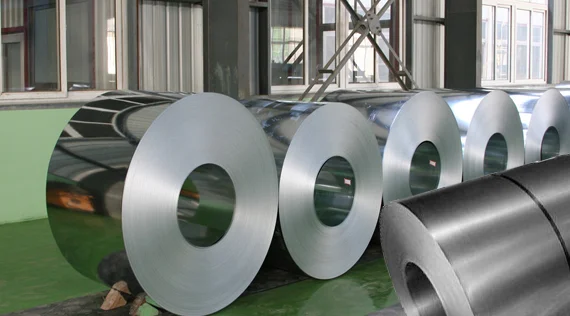
The project includes a new cold strip mill and continuous coating line.
The additional downstream capacity will allow Tubarão to increase production of higher-value steel for sectors including automotive manufacturing, construction and household appliances.
The project represents a shift further downstream for an operation already positioned as one of ArcelorMittal's major Brazilian flat-steel production hubs.
SCRAPMONSTER EDGE
The investment story is not simply about adding more steel tonnage. Both projects are focused on expanding ArcelorMittal's ability to convert Brazilian steel into higher-value finished products. That gives the company greater exposure to automotive, construction, appliance and industrial customers rather than relying as heavily on semi-finished steel sales.
Pecém Could Add Hot-Rolled Coil Production
ArcelorMittal is separately evaluating an investment of approximately R$5 billion at its Pecém plant in Ceará.
The proposed expansion would add a new hot-rolled coil production line, giving the operation additional downstream capability beyond its current slab production.
ArcelorMittal expects to make a final investment decision on the project by the end of 2026.
The distinction is important: unlike the Tubarão project, the full Pecém expansion has not yet received final investment approval.
ArcelorMittal acquired the former Companhia Siderúrgica do Pecém in 2023. The facility operates a blast furnace with roughly 3 million tonnes of annual slab capacity and has direct access to the Port of Pecém.
The company has previously identified rolling and finishing capacity as one of the principal expansion opportunities at the site.
Steel Import Pressure Has Eased in 2026
The investment plans come as imported steel is taking a smaller share of Brazil's domestic market than earlier this year.
According to Ministry of Development data compiled by Aço Brasil, steel import penetration reached 25.6% in February 2026 before falling to approximately 16.4% in August.
ArcelorMittal Brazil President Jorge Oliveira has said recent quarterly import penetration has been running at roughly 15.5%–16%.
That remains well above Brazil's longer-term norm. Average import penetration between 2000 and 2019 was approximately 9.7%.
Oliveira has indicated that a return to roughly 10% would represent a more sustainable balance for the domestic market.
Brazil Has Expanded Steel Trade-Defense Measures
The decline in import penetration follows a series of Brazilian trade-defense actions covering steel products from China and other countries.
In February, Brazil imposed definitive antidumping duties for up to five years on cold-rolled flat steel from China.
Separate measures were introduced on coated flat products from China and pre-painted steel from China and India.
Brazil has also expanded its tariff-quota mechanism and raised import duties on selected steel tariff lines.
Those actions followed several years of rapidly increasing steel imports and repeated calls from domestic producers for stronger protection against what they described as unfairly traded material.
2025 Rolled-Steel Imports Hit Record 5.7 Million Tonnes
Brazil entered 2026 after a record year for foreign rolled-steel shipments.
Imports of rolled steel reached 5.7 million tonnes in 2025, up 20.5% from 2024 and the highest level in roughly 15 years.
Imported material represented approximately 21% of apparent domestic steel consumption during the year.
At the same time, domestic rolled-steel production fell 1.3% to 23.4 million tonnes, while domestic sales edged lower.
The change during 2026 therefore represents an important shift from the conditions that prevailed last year, although imports remain well above their historical share of the Brazilian market.
IMPORT-PENETRATION CHECK
Recent improvement should be kept in perspective. Import penetration around 16% is considerably better for domestic producers than the 25.6% level recorded in February, but it is still roughly 50%–60% above Brazil's pre-pandemic historical average near 10%.
Trade Measures Are One Part of the Investment Decision
ArcelorMittal executives have linked improving domestic-market conditions to Brazil's stronger trade-defense measures, but import protection is not the only factor behind the investment program.
The projects are also part of a broader strategy to increase the company's production of higher-value steel products in one of its most important markets.
ArcelorMittal's Brazilian flat-steel network includes Tubarão, Vega, Pecém, Contagem, Tuper and Tekno. The company's Brazilian operations have annual crude-steel capacity of approximately 15.5 million tonnes.
ArcelorMittal has also invested heavily in mining, renewable energy and industrial modernization in Brazil in recent years.
Energy Costs Remain a Competitiveness Challenge
Despite the improvement in import conditions, ArcelorMittal continues to identify energy costs as a significant obstacle to Brazilian industrial competitiveness.
Oliveira has highlighted electricity and natural gas among the areas where Brazil needs to reduce structural costs to compete more effectively with steel producers in other markets.
The broader "Brazil Cost," which includes taxation, infrastructure, logistics and energy expenses, remains part of the industry's competitiveness debate even as trade protections strengthen.
That means the investment outlook will depend on more than imports alone. Domestic steel demand, energy costs, implementation of trade measures and the economics of higher-value downstream production will all influence future expansion decisions.
Market Read
ArcelorMittal's proposed investment cycle reflects a more constructive view of Brazil's steel market, but the program is being advanced in stages.
The Tubarão cold-rolling and coating project is confirmed and represents R$4 billion–R$5 billion of committed investment.
The roughly R$5 billion Pecém hot-rolled coil expansion remains conditional on a final investment decision expected by year-end.
Lower import penetration has improved the domestic backdrop compared with early 2026, but foreign steel still accounts for a substantially larger share of the Brazilian market than it did historically.
The central question is whether Brazil can sustain that improvement while also addressing the electricity, natural-gas and broader industrial costs that ArcelorMittal says continue to affect competitiveness.