Nippon Steel’s U.S. investments ‘at a crossroads’
Steel News | 2025-12-17 03:47:34
Projected to come on line in 2029, the plant is expected to switch its fuel to green hydrogen made with renewable electricity in 2034.
 By Paul Ploumis
SEATTLE (Scrap Monster): In early December, Nippon Steel announced it would build a $4 billion steel plant as part of a larger plan to invest $11 billion in its new American subsidiary, U.S. Steel, over the next two years. The facility, the location of which likely won’t be determined until 2027, is expected to include two electric arc furnaces that turn scrap into new steel.
The news came on the heels of a November announcement about the company’s plans for a new “direct reduced iron” facility at the Big River Steel Works campus in Osceola, Arkansas. Taken together, the two announcements suggest the company is working on a strategy for producing cleaner steel in the United States, even as it doubles down on coal-fired incumbent technology.
In August, Nippon unveiled plans to revamp an aging coal-fueled facility at the Gary Works complex in Indiana, one of six U.S. Steel blast furnaces the Japanese giant plans to overhaul in order to, as the company put it last year before the deal was finalized, “extend their useful lives for many years to come.”
Those relined blast furnaces could last decades, locking in demand for coal and dimming hopes in neighboring communities — which have some of the nation’s worst air pollution — that cleaner steelmaking equipment could replace the coal-burning facilities.
However, the new DRI plant in Osceola, if merged with an electric arc furnace, could establish a greener alternative for an integrated steel plant and potentially vault U.S. Steel ahead in the race to supply American automakers and industrial buyers with greener metal.
With billions more dollars yet to be allocated, analysts are watching closely to see how the two strategies play out.
Nippon Steel is “at a crossroads,” said Matthew Groch, a senior director at the environmental group Mighty Earth who tracks the steel industry. “Which way do you want to go?”
U.S. Steel confirmed its plans for a DRI plant in Arkansas in an email to Canary Media, but Nippon did not respond to a request for comment on the broader investment strategy.
The future of steel
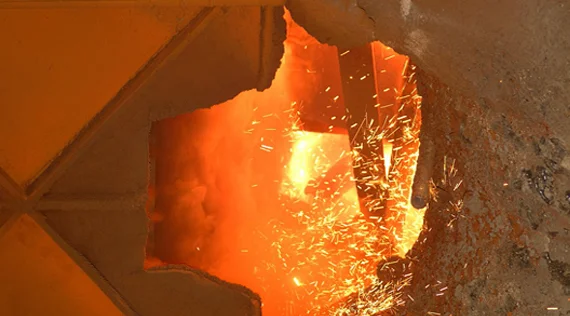
Blast furnaces transform iron ore into high-strength steel by combining the metal with purified coal, or “coke,” and limestone to produce liquid iron, which is then put into a separate furnace to become steel. The DRI process uses a high-temperature gas — usually natural gas, but increasingly hydrogen — to remove oxygen from the ore before it goes into an electric arc furnace to be turned into steel. If the electricity powering both the production of hydrogen and the EAF itself comes from zero-carbon sources, the steel is considered “green.”
Much of the steel production in the U.S. involves turning scrap metal into new steel in an EAF. But one-quarter of domestic steel production comes from seven integrated iron and steel facilities that all use coal-fired blast furnaces.
Under the Biden administration, there was a growing push for U.S. steel manufacturers to switch to more modern, less polluting processes. But since Trump returned to office in January, the industry has retreated from its plans for greener steel. Right before the inauguration, the Swedish steelmaker SSAB pulled out of negotiations for $500 million in federal funding to support a project to make iron with green hydrogen. In June, Cleveland-Cliffs exited its own green steel effort in Middletown, Ohio, after the Trump administration pressed the company to spend a $500 million Biden-era grant on ramping up coal-fired iron production.
On the face of it, Nippon’s reputation as a “coal company that also makes steel” suggested the merger would largely result in extending the life of coal-fired blast furnaces. But new investments in DRI and EAFs could transform U.S. Steel into the leading American steelmaker with lower-carbon integrated plants.
“Just building more EAFs without any clean iron going into it doesn’t really make a lot of sense,” said Roger Smith, Mighty Earth’s Japan director, who is based in Tokyo.
“Relining blast furnaces won’t help Nippon Steel achieve its commitment to become net zero by 2050. And by the time they finish planning and construction, we’ll be well past the U.S. midterm election and potentially into the next presidency,” he said. “Their plans need to be for the coming decades, not this moment in time.”
Analysis by the nonprofit energy researcher RMI shows that investing in gas-fueled DRI with an EAF is already roughly competitive with the cost of relining blast furnaces and upgrading basic oxygen furnaces at existing integrated plants.
“Every new investment decision or announcement that’s happened since the Trump administration took office has focused on cleaner steel or iron-making processes,” said Evan Gillespie, a partner at Industrious Labs, a nonprofit that researches ways to decarbonize heavy industry. “Nobody is investing in coal. That’s worth noting.”
Building only EAFs makes little sense, because the impurities in the scrap metal that’s typically used in that process make it difficult to forge steel strong enough for automobile manufacturing, the largest market for new steel in the U.S.
“U.S. Steel could build an EAF plant but source DRI from a different producer and still have a quality steel product to sell to automotive manufacturers,” said Elizabeth Boatman, a lead consultant at the Michigan-based clean energy consultancy 5 Lakes Energy.
“You can also produce steel out of high-quality scrap, when you’re careful about what you’re putting into your EAF,” she said. “Otherwise, you build a DRI-EAF plant.”
That’s what the leading low-carbon steel producer in the U.S. is doing. Hyundai Motor Group is charging ahead with plans to build a DRI plant powered by blue hydrogen — the version of the fuel that uses carbon capture to reduce emissions from gas-fueled operations — alongside an EAF. Projected to come on line in 2029, the plant is expected to switch its fuel to green hydrogen made with renewable electricity in 2034.
Courtesy: www.canarymedia.com