 By
By 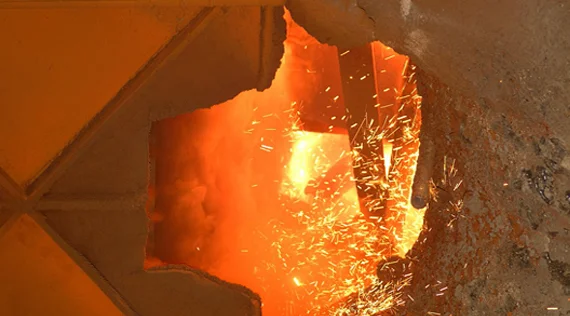
Iowa $15 Billion Steel Mill Moves Forward, but Land and Financing Remain Unfinished
Iowa's proposed $15 billion Mesabi Metallics steel complex has moved another step forward with the selection of Midrex Technologies for its direct-reduced iron system, but major pre-construction items — including financing, land acquisition, permitting and the final state incentive agreement — remain unresolved.
By Paul Ploumis
Published October 15, 2026
Key Points
- Proposed investment: $15 billion in Lee County, Iowa.
- First-phase capacity: 7.5 million tons of steel annually.
- Full buildout: Up to 10 million tons annually.
- Jobs: Approximately 1,750 permanent positions and up to 6,000 construction jobs are projected.
- State incentives: Iowa amended its MEGA program to allow an eligible rural project to receive investment tax credits of up to 10% of qualifying investment.
- Estimated incentive package: Approximately $1.36 billion, subject to a final contract and performance requirements.
- Still pending: Final land control, project financing, construction approvals and IEDA contract approval.
- New development: Midrex has been selected to provide DRI technology for the planned EAF-based complex.
MONTREAL (Scrap Monster): Iowa's proposed $15 billion steel complex returned to the spotlight during the state's final U.S. Senate debate this week, with both major-party candidates agreeing that taxpayers should be protected if the project fails to reach its promised scale.
Republican U.S. Rep. Ashley Hinson and Democratic State Rep. Josh Turek both said the company should bear responsibility for infrastructure costs if the development is reduced or fails to proceed as expected.
The agreement between the candidates reflects a broader question surrounding the Mesabi Metallics project: Iowa has already changed state tax law to accommodate the massive investment, but the mill itself remains a proposed development rather than a plant under construction.
ALSO READ:
Mesabi Metallics Announces $15 Billion Iowa Steel Complex
Iowa Approves Major Incentive Program for Mesabi Steel Project
Mesabi Project Draws Scrutiny Over Minnesota Bankruptcy History
ScrapMonster Exclusive: The Engineering Is Advancing Faster Than the Site and Financing
The most useful way to assess the Iowa project today is to separate what has actually happened from what is still planned.
On October 13, Mesabi Metallics selected Midrex Technologies for the direct-reduction portion of the steel complex.
The planned system will use MIDREX Flex technology to produce hot direct reduced iron, or HDRI, for direct charging into adjoining electric arc furnaces. The system will also be capable of producing hot briquetted iron.
That is a real engineering milestone. It identifies one of the central technology suppliers for what would become one of the world's largest DRI-EAF steelmaking complexes.
But several more basic development steps remain unfinished.
| Project Item | Current Status |
|---|---|
| $15B project announcement | Announced |
| Iowa MEGA law amendment | Enacted October 2 |
| DRI technology supplier | Midrex selected |
| Final Iowa incentive contract | Pending |
| Final project site / land acquisition | Pending |
| Construction permits | Not yet obtained |
| $15B Iowa financing | Still being assembled |
| Steel production | Targeted for 2030 |
That distinction matters. The project is moving through engineering and state economic-development processes, but it has not yet reached the stage where construction of the Iowa mill can begin.
Iowa Approved Up to 10% Investment Tax Credit
Governor Kim Reynolds signed House File 2801 on October 2 following a special session of the Iowa Legislature.
The House approved the measure 75-17 and the Senate passed it 28-19.
The legislation amended Iowa's Major Economic Growth Attraction, or MEGA, program.
For qualifying projects located in rural counties, the Iowa Economic Development Authority can now authorize an investment tax credit worth up to 10% of qualifying investment.
Lee County qualifies under the program's definition of a rural county.
State officials have estimated that the Mesabi package could total approximately $1.36 billion over the incentive period.
The Tax Credits Are Performance Based
Iowa Economic Development Authority Director Debi Durham has said Mesabi must meet agreed capital-investment, employment, wage and benefit benchmarks before receiving the tax credits.
According to Durham, the plant must be operational before the company receives its first credit.
The final contract is also expected to contain clawback provisions allowing the state to recover benefits if contractual obligations are not met.
However, that final contract has not yet been approved.
The IEDA board must negotiate and authorize the agreement with Mesabi Metallics.
Iowa entered a memorandum of understanding giving the state a 60-day exclusive period to negotiate the project.
Both Senate Candidates Back Taxpayer Safeguards
The project became an issue during Tuesday's final U.S. Senate debate between Hinson and Turek.
Turek said he supported the legislation because the incentives are tied to investment and job benchmarks rather than being provided as upfront cash.
He said infrastructure costs should remain the responsibility of the company if the development is scaled back.
Hinson agreed that taxpayers should not be responsible for an unsuccessful investment and said accountability provisions should be built into the agreement.
The candidates differed in their broader political assessments of the company and its history, but both supported performance-based protections for the state.
Mesabi Still Needs the Lee County Site
Despite the scale of the announcement, Mesabi had not completed acquisition of the roughly 2,000 acres envisioned for the Lee County complex when state lawmakers considered the incentive legislation.
The final location has also not been publicly identified.
This is significant because land control normally precedes detailed site engineering, environmental review, utility planning and many construction approvals.
Questions also remain around water, electricity, transportation infrastructure and housing requirements associated with a plant of this scale.
Financing Remains One of the Largest Unfinished Pieces
Mesabi executives told Iowa lawmakers that financing for the project was still being developed.
The $15 billion Iowa mill is substantially larger than the company's upstream Minnesota iron-ore project.
The U.S. Export-Import Bank has provided significant support for Mesabi's Minnesota operation.
EXIM's board approved a $770 million direct loan for the Minnesota iron ore mine and pellet operation in September.
Officials have also discussed potential financing support of up to $10 billion for further Mesabi expansion.
That should not be confused with finalized $10 billion financing for the Iowa steel mill. The publicly confirmed EXIM board approval is the $770 million direct loan associated with the Minnesota mine, while the Iowa project's broader financing package remains under development.
Midrex Selection Gives the Project a Defined Steelmaking Route
The latest development came this week when Mesabi named Midrex Technologies as its direct-reduction technology provider.
The project is designed around an integrated DRI-to-EAF steelmaking route.
Iron ore from Mesabi's Nashwauk, Minnesota operation would be processed into high-grade DR pellets and transported to Iowa.
The pellets would then be converted into direct reduced iron.
The hot DRI would feed electric arc furnaces along with recycled steel scrap.
The planned production chain is:
Minnesota iron ore → DR-grade pellet → Iowa DRI → EAF + scrap → finished U.S. steel.
Scrap Steel Will Be Part of the Feed Mix
The steel complex is not planned as a conventional blast-furnace operation.
Mesabi says its electric arc furnaces will use a combination of hot direct reduced iron and recycled steel scrap.
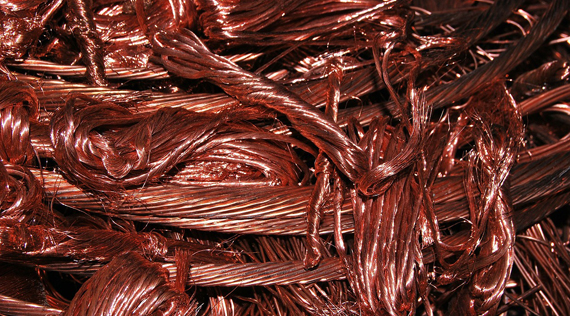
That makes the project relevant to the U.S. recycling industry as well as iron-ore markets.
Mesabi has not publicly disclosed the precise scrap percentage expected in the furnace charge.
The actual scrap requirement will depend on product specifications, DRI availability, operating economics and the metallics recipe used once the furnaces are commissioned.
At an initial production target of 7.5 million tons of steel annually, however, even a moderate scrap fraction could represent meaningful new ferrous demand.
ScrapMonster Intelligence: What Would a 7.5-Million-Ton EAF Mill Mean for Scrap?
The answer depends almost entirely on the furnace charge mix.
Mesabi plans to rely heavily on its own direct reduced iron, so it would be misleading to assume that all 7.5 million tons of first-phase steel capacity translates into scrap demand.
But the mathematics illustrate the potential scale.
| Illustrative Scrap Share | Implied Scrap Requirement at 7.5M Tons Output* |
|---|---|
| 10% | ~750,000 tons/year |
| 20% | ~1.5 million tons/year |
| 30% | ~2.25 million tons/year |
*Simple illustrative calculation based on finished-steel capacity and not a Mesabi forecast. Actual metallic yield, furnace charge and scrap demand would differ.
The company has not disclosed its planned scrap ratio, so these figures should not be presented as expected consumption.
What they demonstrate is that a 7.5-million-ton EAF complex is large enough that its eventual purchasing strategy could matter to Midwest ferrous scrap flows even with DRI providing the majority of metallic input.
At the proposed 10-million-ton full buildout, that potential market impact becomes larger still.
Project Would Become One of America's Largest Steel Plants
Mesabi says the first phase would produce approximately 7.5 million short tons of steel annually.
Later expansion would take the operation to about 10 million tons per year.
If completed at that scale, the complex would rank among the largest individual steelmaking facilities in the United States.
The company projects roughly 1,750 permanent jobs and up to 6,000 construction jobs.
Steelmaking is currently expected to begin around 2030.
2016 Bankruptcy Remains Part of the Due-Diligence Story
The company's history in Minnesota has become part of the Iowa debate.
Essar Steel Minnesota LLC and ESML Holdings Inc. filed for Chapter 11 bankruptcy protection in July 2016 after the Minnesota project failed to reach its original completion target.
Bankruptcy records placed liabilities in broad ranges reaching into the billions of dollars.
Through the reorganization, the business became Mesabi Metallics Company LLC, which emerged as successor to Essar Steel Minnesota's project interests in 2017.
Essar subsequently returned as a major financial backer of the operation.
The historical bankruptcy is relevant to project-risk assessment, but it should not be described as though Mesabi's current Iowa development is itself in bankruptcy or presently carries the same liabilities.
Minnesota Mine Has Reached Startup
The upstream side of Mesabi's strategy is substantially further advanced than the Iowa mill.
The company's new Minnesota iron-ore mine and pellet operation entered startup activity this year after years of construction and financing.
Mesabi has secured a $520 million senior secured credit facility from Breakwall Capital and $150 million of financing from Macquarie Group, in addition to the EXIM loan.
The operation is intended to supply DR-grade pellets to the future Iowa complex.
That gives the Iowa project a defined captive source of iron ore, although the Minnesota plant still needs to complete its own production ramp-up.
The Final State Contract Matters More Than the Debate
The political debate highlighted legitimate questions about accountability, but the decisive document will be the final contract negotiated between Mesabi and the Iowa Economic Development Authority.
That agreement will determine the precise performance benchmarks, qualifying investment, job requirements, wage commitments, timing and clawback protections attached to the incentives.
Until that contract is finalized, the widely cited $1.36 billion figure should be understood as the potential scale of the incentive package rather than money already transferred to Mesabi.
What to Watch Next
Final Iowa site: Mesabi still needs to secure control of the land required for the Lee County complex.
IEDA contract: The final performance agreement will establish exactly when and how the state tax credits can be earned.
Project financing: Funding a $15 billion development remains one of the largest outstanding execution requirements.
Permits and utilities: Water, electricity, transportation and environmental approvals will become increasingly important once the site is finalized.
Midrex engineering: Selection of the DRI provider is tangible progress and should lead to more detailed engineering and equipment decisions.
Scrap requirement: Mesabi has confirmed that recycled steel will be used in the EAFs but has not disclosed the expected scrap-to-DRI ratio.
Minnesota ramp-up: Successful production of DR-grade pellets is essential to the proposed mine-to-mill strategy.
2030 schedule: Land, financing, permits and construction will determine whether the targeted steelmaking start remains achievable.
ScrapMonster Market Read: The Iowa project is neither a completed deal nor merely a political promise. The state has changed its incentive law, Mesabi has an exclusive negotiating window, and the company has now chosen a major DRI technology provider. Those are substantive steps. But the largest execution risks remain ahead: securing the site, closing financing, obtaining approvals and building a steel complex on a scale rarely attempted in the United States. For the recycling industry, another question will become increasingly important as engineering advances — how much scrap Mesabi intends to blend with its captive DRI. At 7.5 million tons of first-phase EAF capacity, even a modest scrap percentage could create a sizeable new Midwest ferrous outlet.
Sources: Mesabi Metallics; Midrex Technologies; Iowa Legislature; Iowa Governor's Office; Iowa Economic Development Authority statements; Export-Import Bank of the United States; U.S. Bankruptcy Court records; Iowa media reporting.