A year later, U.S. Steel workers remain divided over benefit of Nippon Steel takeover
Steel News | 2026-06-19 06:51:29
As vice president of United Steelworkers Local 1219, which represents Edgar Thomson’s workers, Jackson said it’s not the first time he’s heard U.S. Steel tout vast investments.
 By Paul Ploumis
SEATTLE (Scrap Monster): On the one-year anniversary Thursday of a $15 billion deal that put Japan’s Nippon Steel in charge of iconic American manufacturer U.S. Steel, union workers remain divided about the takeover even as they prepare for critical contract negotiations.
Nippon says its $2.5 billion commitment to upgrade plants in the Mon Valley will modernize production and generate millions in tax revenue over the next three years.
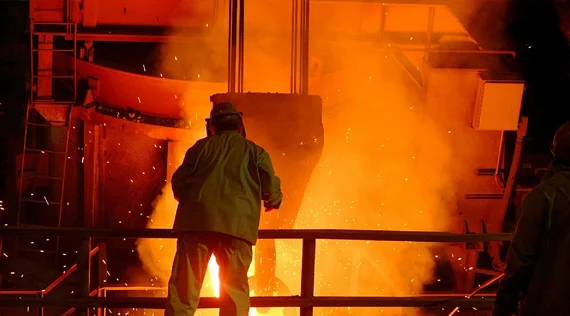
Perhaps the most promising project Nippon has announced during the past year: a new hot strip mill at U.S. Steel’s Edgar Thomson Plant, the company’s massive, 151-year-old facility that straddles Braddock and North Braddock.
Don Jackson said this week he’s not holding his breath.
As vice president of United Steelworkers Local 1219, which represents Edgar Thomson’s workers, Jackson said it’s not the first time he’s heard U.S. Steel tout vast investments.
“I won’t believe a word these people say until I see steel rolling out of it,” Jackson said of the hot strip mill.
He compared the proposal to “Project Icon,” a billion-dollar company initiative to upgrade the Mon Valley Works announced in 2019.
Less than two years later, the company abandoned the project, citing new environmental goals and permit difficulties.
The union condemned the move, saying instead that the company had shifted its attention to a recently acquired nonunion plant in Arkansas — Big River Steel — at the expense of the Mon Valley.
Staring down Nippon’s recent announcements, Jackson said he feels like Charlie Brown lining up to kick Lucy’s football — again.
“We have the exact same people and the exact same situation telling the exact same story — that’s why I’m not doing backflips over it,” he said.
On the other end of the spectrum is Richard Tikey. With nearly 30 years in the Clairton Coke Works, Tikey serves as vice president of USW Local 1557.
“Once this hot strip mill is done, you think they’re going to shut down a $2 billion hot strip mill in 10 years? No, they’re going to keep it running,” he said.
To Tikey, that means job security.
Though the national United Steelworkers union consistently opposed the Nippon deal, Tikey and several others in his local thought acquisition was the best way forward.
He said he was primarily persuaded by Nippon’s 10-year guarantee not to reduce production in Pennsylvania.
“For me, the key to all this was all these young guys getting the same opportunity I had,” Tikey said.
But plenty of his union brothers disagreed, falling in line with USW leadership — among them Tikey’s Local 1557 president, Bill Farrier, who declined an interview request.
Upgrades needed
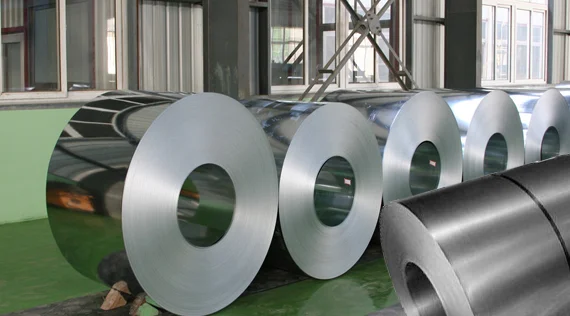
The strip mill, which rolls finished steel slabs into thin, coiled sheets, would replace an 87-year-old mill at the company’s Irvin plant in West Mifflin.
It’s a change both the company and union say are long overdue.
“They’ve needed to do this for 25 years,” said Bernie Hall, USW District 10 director.
Scott D. Buckiso, U.S. Steel’s senior vice president and chief manufacturing officer for the company’s North American flat-rolled segment, described Irvin’s antiquated mill as the “Achilles’ heel” of the Mon Valley Works.
The new mill, he said, would allow the company to enter previously untapped markets like the automotive and line pipe industries.
For now, the project exists only in government permit applications and a small banner that looms over the vast Braddock works.
“You don’t see it in picks and shovels and bulldozers yet, but you will very, very shortly,” Buckiso said.
The new strip mill is in addition to a proposed $100 million slag recycler that would see the oxidized by-product of steel smelting repurposed into materials for cement and highways.
While the projects would modernize the Mon Valley Works, University of Pittsburgh regional economist Chris Briem said they aren’t necessarily earth-shattering.
“I think it’s an improvement, but I don’t think it’s transformative of the competitiveness of the region in steel,” Briem said.
Operations in the Mon Valley, he said, have mostly remained “status quo” after a year under Nippon, but that’s no surprise given the scale of the company’s proposals.
Nippon’s willingness to dump capital into the region’s aging facilities, however, have signaled that the Mon Valley Works is here to stay, Briem said.
“Nippon Steel has deeper financial resources, and with their recent and past announcements, have clearly said they’re going to put money into keep these plants open,” he said.
Mixed feelings
One thing Tikey and Jackson can agree on: not much has changed so far.
“Anticipation is a big thing. Everybody wants to know when everything is coming because right now, there’s nothing,” Tikey said.
Right now, the company is in a holding pattern as it awaits permits, but Tikey is looking forward to the projects getting off the ground.
Buckiso, the U.S. Steel executive, said he expects both the slag recycler and hot strip mill projects to kick off later this summer, though the latter would not be complete until early 2029.
Andrew Macey, a longtime Clairton Coke Works veteran, said the mood has shifted since the acquisition.
“There’s a sense of a future, where prior to a year ago, you didn’t know,” he said.
But that optimism comes less than a year after an explosion left steelworkers Timothy Quinn, 39, of South Huntingdon, and Steven Menefee, 52, of East Huntingdon dead at the complex.
Two investigations suggested the explosions took place in the 13-14 Coke Battery transfer area while employees opened and closed the valve to prepare for planned maintenance.
A coke battery, a large industrial structure, houses multiple slot-shaped ovens used to heat coal to 2,000 degrees to create coke for use in steelmaking. It generates flammable, toxic gas.
The blasts resulted in fines and a lawsuit against the company less than two months after it acquired the works, the largest of its kind in the Western Hemisphere.
Both batteries are now repaired and back online. Macey said some of the scars remain.
“When you go by that battery, when you go by the area where the explosion was, believe me — it brings it back, it brings back that day,” he said.
Still, neither Macey nor Tikey blame Nippon for the explosion. Tikey credits the company for investing the money to fix it.
It remains an “open question” whether U.S. Steel would have had the funds or intention to repair the coke works without its acquisition, according to Briem, the economist.
Response from local officials
Though some Nippon employees from Japan have come to the Pittsburgh region since the deal, Buckiso said the acquisition has become more of a “partnership.”
“Nippon spent a lot of money on the acquisition, but Nippon has allowed U.S. Steel to continue to be U.S. Steel,” he said.
North Braddock Council President Lisa Franklin-Robinson said she believed Nippon officials would have a more “forward-facing” role in the Mon Valley.
She and other borough officials pushed for the deal before it was finalized, believing the Japanese firm would bring cleaner technology with its acquisition.
Franklin-Robinson is still optimistic for the future of Nippon’s ownership, but she said Braddock, North Braddock and East Pittsburgh’s year-long push for a meeting with company executives to discuss a potential community benefits agreement and local job training programs have so far failed to materialize — though she remains hopeful.
“I’m not sure if the working organization is the same organization we were advocating for,” she said.
West Mifflin Mayor Chris Kelly was less equivocal — saying he was “absolutely” in favor of Nippon’s ownership so far.
Kelly admitted he was initially unfamiliar with Nippon and therefore skeptical when it became U.S. Steel’s leading suitor, until he sat down with company leaders like Executive Vice President Takahiro Mori, whom he said was forthcoming and answered all of his questions.
One year after the purchase, Kelly said he has yet to hear “a single thing negative” from any of the Mon Valley employees he has spoken to.
“The more I learned, the more I actually sat down with [Nippon’s] leadership team, I became very impressed,” he said.
Kelly lauded Nippon’s community outreach division, which he said has passed the company’s success onto local residents through millions of dollars in project funding.
Nippon partnered with former NFL tight end and Woodland Hills High School alumni Rob Gronkowski last year to provide a new weight room for the school’s football program worth $400,000. The company also donated $500,000 to Clairton City School District’s new Tyler Boyd Stadium and funded Central Catholic High School’s first home football field in nearly a century in Hazelwood Green.
Kelly added that Nippon is hosting celebrations and free concerts in Braddock and North Braddock this summer, and indicated they would soon bring events to West Mifflin.
In the end, Kelly felt obligated to support Nippon, which offered what he saw as the last chance for U.S. Steel before it had to close.
U.S. Steel is one of West Mifflin’s top five employers, he said, and while the borough’s population of nearly 19,000 meant that it would have been large enough to survive a closure, he was not nearly as sure about the fate of smaller communities like Braddock and Clairton.
Environmental concerns
Some of the Mon Valley most outspoken environmental groups remain concerned about U.S. Steel’s pollution a year after the sale.
Qiyam Ansari, the executive director of Valley Clean Air Now, said he has noticed that there have been more bad air quality days coming from Edgar Thomson Works. He is working with North Braddock and Clairton on an ordinance to “try to force Nippon to the bargaining table to listen to what the community’s needs are.”
The ordinance wouldn’t guarantee benefits for the community by itself, but it would create a process for Nippon to talk directly to residents instead of elected officials.
So far, that’s been difficult for Valley Clean Air Now. Ansari said his organization has sent letters, published press statements, and even spoken to media outlets in Japan since the sale was announced, but while they have been able to get in contact with U.S. Steel’s environmental manager, it’s been “radio silence” from Nippon itself.
“It’s been pretty frustrating,” he said.
Ansari said that while U.S. Steel is a major employer in the region, it’s also an “economic dampener” for homeowners, noting that the average price of a home is around $60,000 near the plants compared to $150,000 county-wide.
Health care costs are also higher and residents are more likely to develop pollution-induced diseases, he said.
Matt Mehalik, executive director of the Breathe Collaborative, a group of more than 50 organizations working to improve air quality in Southwestern Pennsylvania, said U.S. Steel has paid tens of millions in environmental fines in the region since 2020.
When Nippon took over, his organization’s message was that real progress fighting pollution would only happen if it was treated as a “nonnegotiable priority.”
Instead, U.S. Steel under Nippon is forging ahead with a hot strip mill and has not addressed a major source of pollution coming from its coal-based blast furnaces at the Clairton Coke Works, Mehalik said.
“All this technology is early 20th-century technology, not 21st-century technology,” he said. “We’re concerned that it continues to put livelihoods at risk for [a] large number of steelworkers in the Mon Valley,” he said.
The future
Though union leadership protested the deal for more than a year, the United Steelworkers’ Hall said his colleagues have been forced to face the facts.
“What’s happened has happened, and we’re concentrating on moving forward now,” he said.
And forward for the union looks like contract negotiations.
The union will meet with the company in late July to begin discussing its master contract, which expires Sept. 1.
Hall said he’s headed into negotiations — with mostly the same U.S. Steel negotiators from 2022 — with two main goals: maintaining solid healthcare benefits and firming up Nippon’s proposed investments.
Like Jackson, he said he’s wary of U.S. Steel’s attention to its nonunion Arkansas mill, but he said USW has maintained regular communication with the company.
Jackson said he doesn’t expect rifts in local unions to affect negotiations.
“We want to see the company prosper — the company prospers, we all prosper, but we need a partner in that too,” he said.
Buckiso said he expects announcements about further investments in the Irvin and Clairton plants soon, though he did not offer details.
For now, he confirmed the company has no intentions of cutting any jobs in the Mon Valley Works.
Both Buckiso and Hall said they’re also eyeing how to keep steelmaking in the Mon Valley for future generations after the completion of the initial proposals.
But what that future looks like will have to be hashed out at the negotiating table.
Courtesy: www.triblive.com