American South Offers the World’s Best Chance for More Softwood Logs
Rubber and Wood | 2026-09-14 00:07:32
Southern capacity surpassed 27.7 billion board feet in 2025, 31 per cent above its 2017 level, while utilisation fell from 85 per cent in 2021 to 74 per cent in 2024, according to the University of Georgia’s reading of the same database.
 By Paul Ploumis
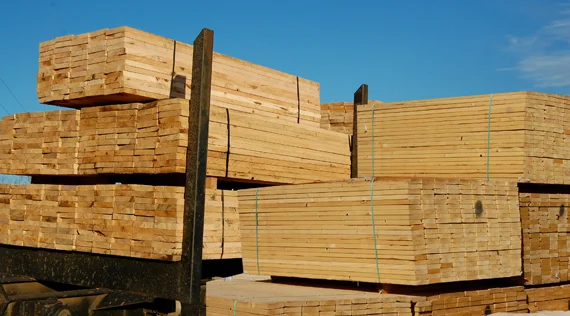
SEATTLE (Scrap Monster): Sawmills across the American South, the timber belt running from Virginia to east Texas, can cut more than 60 per cent more softwood lumber than they could in 2009, and a new global outlook makes the region the best remaining source of additional logs anywhere in the world, with supply growing 0.5 per cent a year through 2035 against demand climbing faster than that. That is according to Håkan Ekström of Global Wood Trends and Glen O’Kelly of O’Kelly Acumen, whose global overview shows North American softwood roundwood supply is almost 20 per cent below its 2000 level, while Europe, Russia, and the rest of the world have each added 18 per cent.
“Global softwood supply is not running out. However, bringing more accessible and competitively priced logs to market is becoming increasingly difficult,” the pair wrote as part of a four-part series, with demand for construction timber, packaging, and biomass expected to keep outrunning supply.
Timber resources across the South are abundant, and its harvest still runs below biological growth, which is why Ekström and O’Kelly hand it the greatest opportunity of any region, with labour shortages, infrastructure, and capital setting the pace. Its mills were built ahead of it, holding 25 per cent of North American capacity in 2009 and 38 per cent by the middle of 2024 on Forisk’s mill database, with more than 11 billion board feet added while Western Canada lost over a quarter of its own and the Pacific Northwest shed nearly 11 per cent.
Southern capacity surpassed 27.7 billion board feet in 2025, 31 per cent above its 2017 level, while utilisation fell from 85 per cent in 2021 to 74 per cent in 2024, according to the University of Georgia’s reading of the same database. Forisk puts what the South has added since 2009 at roughly the volume needed to replace the 12 billion board feet of Canadian lumber the United States buys each year.
Canada is expected to stabilise and recover modestly after years of decline in British Columbia without returning to the volumes it once sent south, while Europe cuts close to its sustainable biological limits, sustainability policy, forest protection, and climate damage closing off the room that is left. Russia holds the “enormous, underutilized softwood potential” that political risk, market access, and infrastructure leave in the ground.
Brazil, Chile, Argentina, and Uruguay produce 95 million cubic metres a year between them on a planted softwood area that has barely moved in a decade, and Oceania will be three million cubic metres lighter by 2035 as New Zealand’s cut declines through the mid-2030s due to the age structure of its forests. Japan sits near its own peak as post-war plantations come of age.
Chinese mills took 31.38 million cubic metres of imported logs in 2025, 13.1 per cent less than a year before and under half the 63.57 million of the 2021 peak; New Zealand radiata pine, 18.2 million of it and the next six suppliers together sending less than a third of what New Zealand did.
Ekström and O’Kelly expect China to buy lumber rather than logs as Asia-Pacific supply tightens and Chinese sawmilling costs rise, and the trade has run the other way so far. Softwood lumber imports fell 12 per cent in 2025 to 14.6 million cubic metres, and over the first half of this year Chinese mills took 15.876 million cubic metres of logs and 10.66 million of lumber while their plywood shipped out at 7.883 million, 21 per cent more than a year earlier.
Beijing’s property market is in its sixth year of contraction, sales 65 per cent below their 2020 peak and the analysts the International Tropical Timber Organization cites expecting no stabilisation before 2027, while American hardwood makes its own case for a way back in.
Courtesy: www.woodcentral.com.au