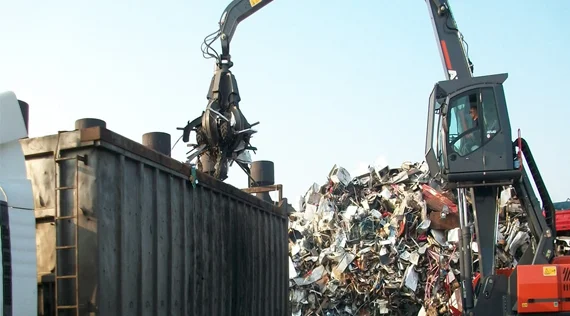
EU Scientists Unveil Advanced Marine Plastic Recycling Technology
Plastic Recycling | 2026-11-12 06:02:06
Marine plastic recycling presents significant technical difficulties because recovered materials often contain mixed polymers, sand, salt and other contaminants.
 By Paul Ploumis

SEATTLE (Scrap Monster): Researchers supported by the European Union have developed an innovative technology capable of separating contaminated marine plastic waste with more than 95% purity. The development opens new possibilities for converting ocean pollution into valuable industrial materials.
The breakthrough emerged from the CUPOLA project, funded through the Marie Skłodowska-Curie Actions (MSCA) Staff Exchanges programme. The project forms part of broader EU efforts to address plastic pollution. Since 2014, MSCA has supported 824 ocean- and water-related projects through €441 million in funding.
RELATED NEWS:
SeaSweepers Unveils Scalable Climate-Tech Solution to Tackle Marine Plastic Crisis
New Study Sets Numerical Target for Efforts to Combat Marine Plastic Pollution
Marine plastic recycling presents significant technical difficulties because recovered materials often contain mixed polymers, sand, salt and other contaminants. The CUPOLA team addressed this challenge by developing an advanced sorting process designed to prepare recovered plastics for high-quality recycling.
The research involves using established thermochemical conversion methods, particularly pyrolysis and gasification, to transform the sorted waste into useful products such as industrial chemicals, alternative fuels, functional carbon materials, refinery-compatible hydrocarbons and asphalt. The research also incorporated process modelling and economic assessments to examine the commercial feasibility of the proposed technologies.
The next priority is to establish a pilot-scale facility to test the technology under actual operating conditions.
POLL
Which potential application of the new marine plastic recycling technology offers the greatest industrial opportunity?
Frequently Asked Questions
- What is the major breakthrough achieved by the EU-supported CUPOLA project?
Researchers have developed an innovative sorting technology that can separate contaminated marine plastic waste with more than 95% purity. The development addresses a major challenge in marine plastic recycling and could make recovered ocean plastics suitable for higher-quality recycling and industrial applications.
- Why is recycling marine plastic waste particularly challenging?
Marine plastic waste often contains mixtures of different polymer types along with sand, salt and other contaminants. These impurities complicate conventional recycling processes and reduce the quality of recovered materials. The CUPOLA technology aims to overcome these limitations through advanced sorting.
- What useful products can be manufactured from the sorted marine plastics?
The sorted materials can undergo thermochemical conversion through pyrolysis and gasification. These processes offer opportunities to produce industrial chemicals, alternative fuels, functional carbon materials, refinery-compatible hydrocarbons and asphalt, potentially creating additional value from marine plastic waste.