SA among African countries joining $60m international programme to reduce e-waste
E-waste Recycling | 2026-10-22 00:08:39
The AfDB says GEM brings together governments, international organisations, the private sector and civil society to this end.
 By Paul Ploumis
SEATTLE (Scrap Monster): South Africa is among nine African countries to join a new $60 million (over R980 million) circular electronics programme backed by the African Development Bank Group (AfDB).
A total of 16 nations signed up to the Global Electronics Management (GEM) Program launched this month in Manila, capital of the Philippines.
Phase one will be implemented in Botswana, Djibouti, Eswatini, Ethiopia, Lesotho, Mozambique, Namibia, Somalia and South Africa, as well as Cambodia, Colombia, Kazakhstan, Peru, the Philippines, Turkey and Vietnam.
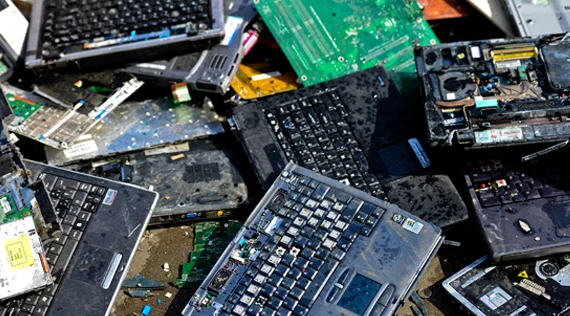
In 2022, countries around the world generated 62 million tonnes of e-waste, of which only 22.3% was formally collected and recycled in an environmentally sound manner, notes the AfDB.
That figure is projected to reach 82 million tonnes by 2030.
As Africa business specialist Rutendo Hwindingwi puts it, the GEM agreement has the participating governments "put their money where their mouth is" when it comes to creating policies and recycling models that will help to reduce the impact of e-waste.
"It's a big initiative. And, for a continent like Africa, it's always good to deliver on things like this, but in a sustainable way, and to create employment and boost industrialisation in the process."
The AfDB says GEM brings together governments, international organisations, the private sector and civil society to this end.
The aim is to promote sustainable electronics value chains by supporting action across the electronics lifecycle.
This includes resource-efficient production and longer product lifespans to repair, reuse, and recover for environmentally sound recycling.
The programme is funded by the Global Environment Facility (GEF) and led by the UN Industrial Development Organization (UNIDO) in partnership with the AfDB, the UN Development Programme (UNDP) and UN Environment Programme (UNEP).
Courtesy: www.ewn.co.za