From Northern Virginia to a Global Crisis: Why E-Cycling Matters More Than Ever
E-waste Recycling | 2026-09-23 00:18:48
Over the intervening decades, I have written extensively about e-cycling, watching it evolve from a niche municipal waste-management issue into a high-stakes global imperative.
 By Paul Ploumis
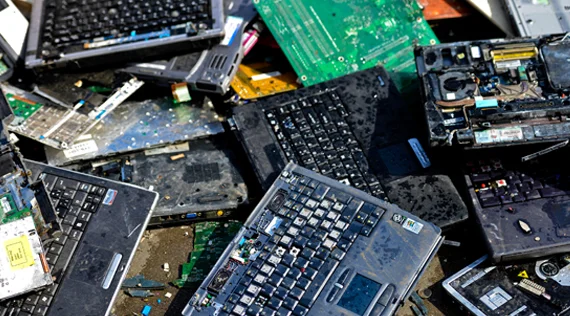
SEATTLE (Scrap Monster): Recently, a flyer on my local recreation department’s bulletin board for an upcoming e-cycling event brought back old memories.
Thirty years ago, I served as a toxic coordinator for regional governments in Northern Virginia, a region that has since transformed into one of the world’s largest concentrations of data centers.
In that role, I managed an Environmental Protection Agency (EPA) grant in partnership with Goodwill to refurbish discarded electronics, giving old technology a second life. I even attempted to build a bridge between Northern Virginia’s waste management authorities and the correctional system to establish refurbishing programs. At the time, however, the prevailing consensus was simply to ship end-of-life electronics overseas.
Over the intervening decades, I have written extensively about e-cycling, watching it evolve from a niche municipal waste-management issue into a high-stakes global imperative.
Back in 2013, it felt as though momentum was on our side. A report from the Consumer Electronics Association (CEA), now the Consumer Technology Association (CTA), highlighted a record-breaking year for consumer electronics recycling, with 620 million pounds recycled in the U.S. alone, more than double the volume from just three years earlier.
We were making undeniable progress. Yet in the years since, the sheer pace of global device production and consumption has drastically outpaced our processing infrastructure.
Current data outlines a severe imbalance:
62 million metric tons: The total volume of e-waste generated globally in a single year.
22.3% recycling rate: Less than a quarter of the world’s e-waste is formally collected and recycled.
Five times faster: Global e-waste generation is expanding roughly five times faster than documented recycling capabilities.
We are generating electronic waste at a rate unprecedented in human history.
In the absence of a unified U.S. federal e-waste standard, regulation remains a complex state-and-county patchwork. Currently, 25 states, along with Washington, D.C., maintain active e-cycling legislation.
Within these jurisdictions, two critical legislative frameworks are driving progress:
Extended Producer Responsibility (EPR): Updated laws are requiring manufacturers to take greater financial and operational responsibility for battery-embedded devices, including disposable vapes, smartwatches, and electric toothbrushes. These products can create critical fire hazards when they enter standard municipal waste streams.
Right-to-Repair Legislation: States including Colorado, Nevada, Oregon and Washington have passed laws requiring manufacturers to provide parts, tools and schematics to consumers and independent repair shops. These policies are intended to extend product lifespans and defer disposal.
To keep up with incoming volumes, the processing industry is deploying advanced mechanical and automated solutions, including:
AI-driven optical sensors: High-speed sorting systems capable of identifying and categorizing complex mixed-material streams at scale.
Automated robotics: Precision disassembly systems designed to safely dismantle intricate consumer electronics and reclaim critical raw materials, including gold, copper and rare-earth elements.
Technology accelerated the disposal crisis, but circular engineering will be essential to resolving it.
A large portion of electronic waste ends up in local landfills and incinerators or is exported to developing countries.
Overseas Export: A significant amount of global e-waste is shipped from developed nations to developing countries across parts of Africa and Asia because exporting waste can be far cheaper than processing it under stricter domestic environmental regulations.
Informal Recycling and Dumping: In regions with weak regulatory oversight, workers may manually dismantle or open-burn e-waste to recover raw materials without protective equipment. These practices can release persistent organic pollutants and heavy metals into the air, soil, and local water supplies.
Formal Recycling Facilities: A smaller percentage of e-waste goes to certified recovery facilities. There, devices can undergo secure data destruction, mechanical shredding and optical or magnetic sorting to safely recover precious metals such as gold, silver and palladium, as well as critical raw materials including copper, aluminum, cobalt and lithium.
That community flyer was a timely reminder that localized participation remains vital.
Building a sustainable digital infrastructure requires a fully integrated approach:
Participating in community e-cycling events
Advocating for expanded Extended Producer Responsibility (EPR) laws
Supporting state and national Right-to-Repair legislation
Investing in circular recycling and material-recovery technologies
We have come a long way since those early days with Goodwill and regional government, but the most critical work lies ahead.
Courtesy: www.waste360.com