E-waste, the new environmental challenge threatening the digital planet: which countries suffer the most
E-waste Recycling | 2025-10-21 00:16:55
Burning components emits toxic gases and fine particles, worsening air pollution.
 By Paul Ploumis
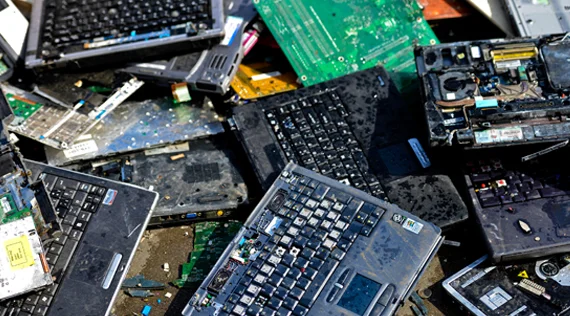
SEATTLE (Scrap Monster): Electronic waste has become one of the biggest ecological crises of the 21st century. According to the Global E-Waste Monitor, the world will produce around 82 million tons of technological garbage by 2030, compared to the 62 million tons recorded in 2022.
This 82% increase reflects an unsustainable consumption rate, where millions of devices become obsolete every year. Phones, computers, and appliances pile up in uncontrolled landfills, generating persistent pollution.
Electronic devices contain heavy metals, non-biodegradable plastics, and toxic substances. These elements contaminate the soil, water, and air, affecting ecosystems and human health worldwide.
Europe leads in technological waste production. Norway, the United Kingdom, and Switzerland generate over 23 kilograms per person per year. They are followed by France, Denmark, and the Netherlands, while Australia, the United States, Japan, and Taiwan also stand out outside the continent.
The urban mine of the future
Despite its negative impact, electronic waste is an urban mine of enormous value. In Europe, discarded devices contain nearly a million tons of critical raw materials each year, such as copper, aluminum, or silicon.
These materials are essential for producing green technologies and digital products. However, only 22% of electronic waste is formally recycled, leading to a massive loss of resources.
Countries like Bulgaria and Poland lead in electronic recycling, recovering over 80% of their waste. In most of the world, waste ends up incinerated or in landfills, releasing toxins into the environment.
Recovering these raw materials would reduce traditional mining dependence, decrease pollution, and strengthen local supply chains. The circular economy can turn waste into a source of sustainable wealth.
The consequences of technological waste
The environmental and health impact of this waste is profound. Batteries and circuits release lead, arsenic, and mercury, contaminating rivers, aquifers, and agricultural soils.
In many developing countries, electronic waste from wealthy nations is informally recycled, exposing entire communities to respiratory diseases and intoxications.
Burning components emits toxic gases and fine particles, worsening air pollution. At the same time, habitat loss and damage to ecosystems continue unchecked.
An opportunity to rethink progress
Reversing this crisis requires redesigning the relationship between technology and sustainability. Public policies must drive the circular economy, promoting mandatory repair and recycling.
Manufacturers have the responsibility to design durable, dismountable, and recyclable devices. At the same time, consumers must adopt more responsible habits and extend the lifespan of their equipment.
Transforming technological waste into a source of green resources is a historic opportunity. True progress does not lie in producing more but in doing so without destroying the environment.
The technology of the future must be circular or it will not be. Because on a finite planet, obsolescence cannot continue to be the price of development.
Courtesy: www.noticiasambientales.com