1 million tonnes of critical raw materials dumped in Europe’s e-waste: Study
E-waste Recycling | 2025-10-15 00:11:47
These essential metals and minerals are crucial for powering green technologies, supporting digital infrastructure, and modern defence systems.
 By Paul Ploumis
SEATTLE (Scrap Monster): Europe can go a long way in meeting its rising demand for critical raw materials, including rare earth metals, by better recycling and design. These are the findings of a study released today.
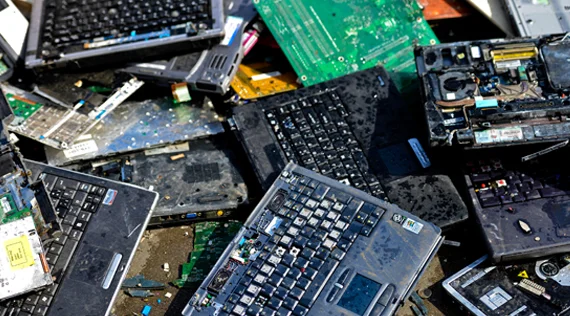
According to the report, released by WEEE Forum, a Brussels-based non-for-profit association, with European demand for critical raw materials rising amid geopolitical tensions and supply risks, a report reveals vital new data on the rapidly growing value and volume of Europe’s “urban mine” of electronic waste. Each year, discarded phones, laptops, servers, cables, appliances, and other electronic products across the EU27+4 region, including the European Union, the United Kingdom, Switzerland Iceland, and Norway, contain approximately 1 million tonnes of critical raw materials. These essential metals and minerals are crucial for powering green technologies, supporting digital infrastructure, and modern defence systems.
WEEE Forum says that the weight of critical raw materials embedded in Europe’s electronic waste equates to 50,000 standard shipping containers, each holding 20 tonnes, or enough 6.1-metre (20-foot) containers to form a line stretching from Paris to Zurich. The Critical Raw Materials Outlook for Waste Electrical and Electronic Equipment report, prepared by the European Union-funded FutuRaM consortium for International E-Waste Day, emphasises the fundamental role of electrical and electronic equipment (EEE) in Europe’s economy and daily life.
The analysis provides detailed datasets tracing EEE from first sale through end-of-life treatment and recovery across the EU, highlighting how Europe can enhance the recovery of these essential materials by improving the collection, design, and recycling of waste electrical and electronic equipment (WEEE).
The statement adds that in 2022, the EU27+4 generated 10.7 million tonnes of WEEE, approximately 20 kg per person, containing 29 critical raw materials with around 1 million tonnes embedded. While 54 pc or 5.7 million tonnes of WEEE was managed compliantly according to EU regulations, 46 pc or 5 million tonnes was handled outside compliant channels. From compliant treatments, roughly 400,000 tonnes of critical raw materials were recovered, including 162,000 tonnes of copper, 207,000 tonnes of aluminium, and smaller amounts of silicon, tungsten, and palladium.
However, even compliant systems lost about 100,000 tonnes of precious materials, mainly rare earth elements in magnets and fluorescent powders. Non-compliant routes caused major losses, with 3.3 million tonnes mixed with metal scrap, leading to partial recovery at best, 700,000 tonnes of e-waste landfilled or incinerated, 400,000 tonnes exported for reuse, and the remainder undocumented.
According to the statement, by 2050, the total volume of waste electrical and electronic equipment (WEEE) in the EU27+4 is projected to increase from 10.7 million tonnes in 2022 to between 12.5 and 19 million tonnes annually, depending on whether Europe follows a business-as-usual, recovery, or circularity scenario.
Courtesy: www.mediaindia.eu