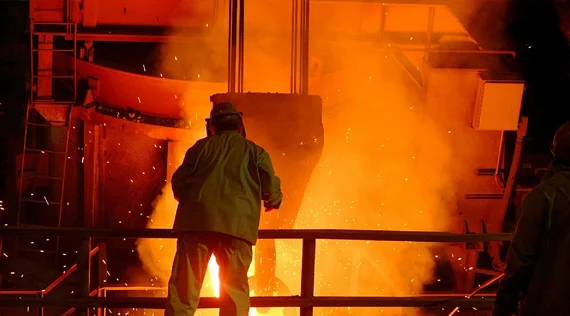
The government designated rebars as a representative item and defined the sector as one where structural improvement through facility scale adjustment is inevitable.
SEATTLE (Scrap Monster): Hyundai Steel, South Korea's second-largest steelmaker after POSCO, has formally decided to permanently shut one of the two rebar mills at its 1.6 million-tonne-a-year plant in Incheon, west of Seoul, together with a 90-tonne electric furnace, the company has announced. Korean industry watchers suggest the steelmaker is preparing itself for the massive restructuring of the country's struggling rebar industry that the government is planning.
The decision, announced after Hyundai Steel management had reached an agreement with the Incheon works' labour union last Tuesday, came as no surprise as the 750,000 tonnes/year bar mill and steel shop had both been suspended since January 4. Hyundai had halted all production at Incheon for about a month last April in hopes of a market improvement, as Mysteel Global reported. Whether the bar mill and EAF will be sold and dismantled or kept in reserve remains unclear.
Rebar production at Incheon has been at around 50% of capacity for over a year, in sync with South Korea's vastly reduced consumption of the bars. The production capacity of domestic rebar manufacturers including Hyundai Steel, Korea Iron & Steel, YK Steel, Daehan Steel and others is about 12.3 million t/y but according to Korea Steel Daily, nominal consumption of rebars last year including imports was only about 7 million tonnes.
With the permanent closure of half of Incheon's facilities, the combined rebar capacity at Hyundai Steel's three plants – the other two being at Pohang on Korea's southeast coast and at its huge blast-furnace works in Dangjin, south of Seoul – will fall from 3.35 million t/y to 2.6 million t/y.
However, the second part of Hyundai's statement issued the same day, that it is also reorganising bar facilities at Pohang and at Dangjin, is arguably more significant. The Pohang plant has a bar capacity of 550,000 t/y while the Dangjin rebar plant boasts a capacity of 1.25 million t/y.
Until now, the Pohang No.1 plant has been a 'mixed' line with output switched alternately between standard rebars and specialty steel bars and rods used for automotive applications for the steelmaker's part-parent, Hyundai Motor. (The Pohang No.2 plant making mostly H-beams was stopped last year, as reported). In future however, the steelmaker intends to dedicate the Pohang mill exclusively to rebars and transfer production of specialty bars to Dangjin.
"This is a measure to increase the efficiency of each product line by separating production items and to make it easier to control output according to market conditions," Korea's Steel & Metal News (SMN) quotes a Hyundai official as saying.
However, the industry daily sees the reorganization of the product mix as Hyundai adjusting the scale of its rebar facilities in preparation for the industry-wide restructuring being planned by the government. "(Hyundai) switching to a single-item production system will not only adjust the operation ratio but also help speed up decision-making when deciding to reduce or close facilities in the future," SMN noted.
And that future is very near. Last November, Korea's Ministry of Trade, Industry and Resources (MOTIR) unveiled what it called the Steel Industry Advancement Plan that presses steel firms to reduce capacity, promising incentives such as providing limited financial aid to certain export-oriented makers. The government designated rebars as a representative item and defined the sector as one where structural improvement through facility scale adjustment is inevitable.
Under the plan, the government will support the steelmakers' "pre-emptive measures" to adjust the production capacity of items facing oversupply, under the condition the companies make efforts for "responsible" management.
Courtesy: www.mysteel.net
 By
By