EU, US and Mexico Tighten Steel Trade Barriers Simultaneously
Steel News | 2026-05-26 05:05:05
Import growth in steel reached 12.4% over two years before the protective measures were implemented.
 By Paul Ploumis
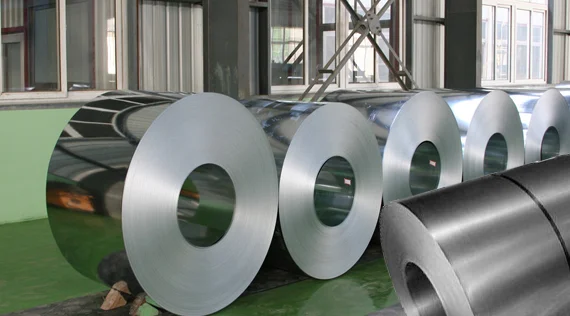
SEATTLE (Scrap Monster): The European Parliament has voted to overhaul its steel trade safeguards, cutting the volume of tariff-free steel imports by 47% and doubling the tariff on excess imports to 50%, in a move that mirrors parallel protectionist measures being implemented by the United States and Mexico.
With 606 votes in favor, 16 against, and 39 abstentions, the European Parliament approved a new framework to replace safeguards in place since 2018 that are set to expire June 30, 2026. The new regulation fixes annual tariff-free steel imports at 18.3 million metric tons. Quantities above that threshold will face a 50% tariff, up from the current 25%.
The vote reflects a convergence among major economies on the use of trade barriers to protect domestic steel industries from what the EU described as the effects of global overproduction, a dynamic that has cost approximately 100,000 jobs in Europe's steel sector since 2008.
The new regulation introduces traceability requirements to close loopholes that allowed third countries to circumvent restrictions through minimal transformation of steel products. Under the new rules, the origin of a product will be determined by the country where it was first smelted and molded, not where it was later processed.
The European Commission will be required to account for that origin when allocating national quotas and to review the regulation's scope in advance to assess whether additional product categories should be covered. The framework also includes a carve-out for Ukraine, whose steel industry the EU recognizes as having been disrupted by the war with Russia.
The text still requires formal approval by the Council before entering into force.
A Global Protectionist Shift in Steel
The EU's action comes as the United States and Mexico have each moved to shield their own steel sectors through overlapping layers of tariffs and trade measures.
In the United States, the Trump administration restructured Section 232 metals tariffs in 2026 under a tiered framework: 50% on steel, aluminum, and copper products; 25% on derivatives; and 15% on metal-intensive industrial equipment through 2027. The United States has imposed a 50% tariff on steel and aluminum imports from Mexico and other countries since June 3, 2025.
The impact on Mexico has been significant. Mexican steel exports to the United States fell 60%, compared with a 13% decline for Canada and 30% for Brazil, according to data from the American Iron and Steel Institute. The value of Mexican steel exports to the United States fell 12% between January and October 2025 versus the same period in 2024, according to Banco de México. Mexico's steel sector is currently operating at approximately 55% capacity utilization.
North America as a whole faces a structural gap in steel supply. In 2024, the continent produced 106.1 million metric tons of crude steel, roughly 75% of capacity, while consumption reached approximately 130 million metric tons, according to CANACERO.
"The 50% tariff will almost certainly boost profits for major steel companies. However, the resulting job losses and higher prices will impose a heavy burden on American manufacturers and households," said the Peterson Institute for International Economics.
Mexico's Parallel Response
Mexico has implemented its own protective measures. The government permanently extended tariffs of 10% to 35% on steel imports from countries without free trade agreements, including China, Vietnam, and South Korea, covering 220 steel products. The original tariffs, imposed in April 2024 on 1,466 products across 17 sectors, were set to expire in April 2025 but will now remain in place indefinitely.
Mexico's Ministry of Economy also imposed provisional countervailing duties on hot-rolled steel imports from China and Vietnam following an investigation initiated after a complaint filed in November 2024 by Ternium. For Chinese exporters, duties range from US$0.20/kg to US$0.23/kg. For Vietnamese producers, duties range from US$0.19/kg to US$0.196/kg.
Without intervention, officials estimated that up to 350,000 jobs could be lost by the end of 2026, particularly in automotive manufacturing, which accounts for roughly one-third of Mexico's total manufacturing employment. Import growth in steel reached 12.4% over two years before the protective measures were implemented.
"Our priority is clear. We will defend employment, support our industry, and demand fair conditions for trade. We seek a broad agreement with the United States that resolves current tensions and ensures long-term stability," said President Claudia Sheinbaum.
Mexico is pushing to eliminate Section 232 tariffs during the ongoing USMCA review. "We want the reduction, or outright removal, of all tariffs on products that comply with the rules of origin, including those imposed by the United States on steel and aluminum," Sheinbaum said.
Víctor Martínez, President, CANACERO and CEO, ArcelorMittal Mexico, has argued the US tariffs are economically unjustified. "While steel prices in Mexico declined across 13 benchmark products, prices in the United States rose during the same period," he noted, adding that Section 232 tariffs reflect political pressures and efforts to address Asian overcapacity rather than genuine national security concerns.
The United States, for its part, opened a tariff-adjustment pathway in April 2026 that allows eligible steel and aluminum producers in Mexico and Canada to reduce Section 232 duties by up to half, provided they commit to expanding primary steel or aluminum production capacity in the United States in support of automotive and heavy vehicle supply chains.
Courtesy: www.mexicobusiness.news