EU sets tariffs on steel from India, Japan, Taiwan, Turkey, Vietnam
Steel News | 2026-11-17 01:16:06
The investigation is the first in which the European Commission has established what it calls "particular market situations" for two of the production bases.
 By Paul Ploumis
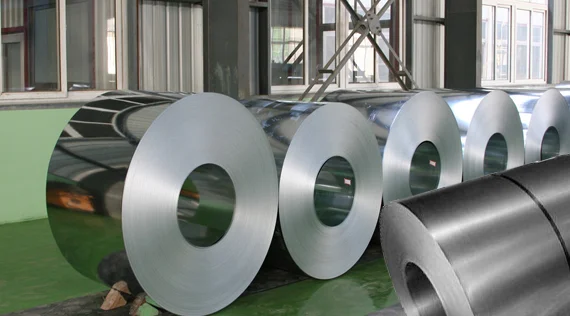
SEATTLE (Scrap Monster): The EU is imposing tariffs of up to 27.9% on cold-rolled flat steel products from India, Japan, Taiwan, Turkey and Vietnam after finding they were being sold at unfairly low prices in the European Union.
The anti-dumping duties for the steel widely used for cars, planes, home appliances and in construction will apply from Tuesday, the European Commission, the EU's executive, said on Monday.
EU steel association Eurofer, which brought the complaint in 2025, said unfairly priced imports were putting European production and jobs at risk and said the duties were a necessary step to restore fair competition.
The rates have been set at 9.5% for JSW Steel Ltd, Tata Steel Ltd and other companies from India, at 27.9% for Japanese steelmakers, including Nippon Steel and JFE Steel Corp, and at mostly 20.7% for China Steel Corp and other Taiwanese producers, with a 27.0% rate for non-cooperating companies.
For Vietnamese producers, such as POSCO Vietnam Co, the duty rate will be 16%, while for Turkish steelmakers duties are in the range of 3.0% to 7.8%.
The EU market for cold-rolled flat steel products is worth some €23.2 billion ($25.6 billion) and imports from the five countries about €1.78 billion.
The investigation is the first in which the European Commission has established what it calls "particular market situations" for two of the production bases.
Dumping duties are typically calculated by comparing the producers' domestic sales prices with lower export prices. However, that is only when a market is deemed to be functioning normally. For China, the EU does not use domestic prices, but instead constructs a "normal" value using input costs elsewhere. With "particular market situations", the EU is using a similar method on a more ad hoc basis for others.
The Commission said that domestic prices in India were distorted by government measures affecting the cost of iron ore, while in Taiwan, increased imports of cheap Chinese steel had substantially depressed local prices. As a result, the Commission made adjustments to the domestic steel sales prices.
Courtesy: www.reuters.com