 By
China's Daily Steel Output Falls 6.9% as Iron Ore Inventories Rise
China's average daily crude steel output declined in October 2026, but iron ore imports remained higher year to date. Port inventories reached 157.36 million tonnes as weaker steelmaking activity contrasted with continued raw-material inflows.
By Paul Ploumis | Steel News | Market data: October–November 2026
Key Points
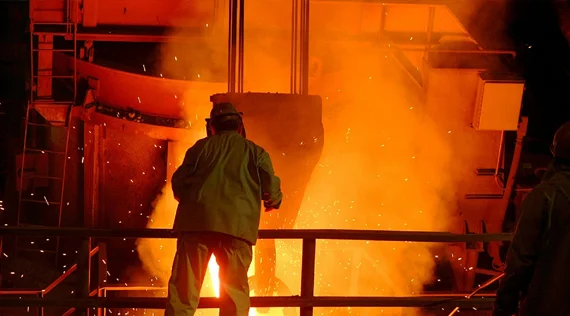
- Steel production: Average daily crude steel output fell 6.9% from September, with October production totaling 70.83 million metric tonnes.
- Iron ore imports: January–October arrivals increased 3.1% year-on-year to approximately 1.06 billion tonnes.
- Port inventories: Iron ore stockpiles reached 157.36 million tonnes in the week to November 20, up 12.7% year-on-year.
- Iron ore benchmark: The SGX benchmark ended November 20 at $90.37 per tonne, 19.2% below its May 11 high.
SEATTLE (Scrap Monster): China's steel industry is showing a widening gap between weakening crude steel production and continued iron ore imports, with inventories accumulating at Chinese ports despite reduced mill activity.
Average daily crude steel output fell 6.9% from September to October 2026, according to official production figures cited by Reuters. Total October output reached 70.83 million metric tonnes, while cumulative production during January–October declined 2.8% year-on-year.
Despite lower steel production, Chinese iron ore imports increased 3.1% over the first ten months of 2026 to approximately 1.06 billion tonnes, reflecting continued purchasing and inventory rebuilding.
Chinese Steel Mills Face Uneven Production Slowdown
China continues to account for more than half of global steel production, but domestic demand remains under pressure, particularly from the property construction sector.
Reuters' Open Interest analysis highlights uneven operating conditions across China's steelmaking regions. Data from DBX Commodities indicate that coastal producers with easier access to export markets have maintained relatively stronger production, while inland mills have faced deeper cutbacks as profitability narrowed.
The divergence helps explain why China's steel sector is not experiencing a uniform slowdown, even as overall crude steel production declines.
On the supply side, Australia and Brazil remain major iron ore exporters to China. Additional shipments are emerging from Guinea, where shipping analytics firm Kpler has recorded rising export volumes.
As a result, weaker steel production has not immediately translated into proportionately lower iron ore arrivals. Incoming shipments can continue to replenish port inventories even as mills reduce their operating rates.
China's Iron Ore Port Inventories Reach 157.36 Million Tonnes
Iron ore inventories at Chinese ports reached 157.36 million tonnes during the week to November 20, according to Mysteel data cited in the source reporting.
That represented a 12.7% increase from the corresponding week of 2025, indicating that iron ore availability remained elevated despite weaker steelmaking activity.
Meanwhile, the Singapore Exchange (SGX) iron ore benchmark ended November 20 at $90.37 per tonne, down 19.2% from its May 11 high.
The combination of softer production, higher inventories and lower benchmark prices highlights the distinction between China's continued iron ore imports and its immediate steelmaking requirements.
Higher Inventories Could Influence Future Ore Purchases
Elevated port inventories provide Chinese steelmakers with an alternative to immediately increasing seaborne purchases when production requirements change.
If mill operating rates weaken further, producers could draw down existing stocks rather than maintain the same import volumes. Under those conditions, seaborne iron ore demand could decline more quickly than headline steel production.
For major exporters in Australia and Brazil, as well as emerging suppliers such as Guinea, China's inventory decisions could therefore become an important factor influencing shipment volumes and benchmark pricing.
ScrapMonster Industry Edge: Iron Ore Imports Are Not the Same as Steel Demand
The critical distinction for iron ore traders and steel raw-material suppliers is between imports and actual consumption. China's iron ore arrivals rose 3.1% during January–October while crude steel production fell 2.8%. With port inventories 12.7% higher year-on-year, part of the incoming material is accumulating rather than immediately supporting steel production. For market participants, mill operating rates, inventory withdrawals and fresh purchasing provide a more complete picture than import volumes alone.
Courtesy: www.finimize.com