Canada’s Algoma Steel agrees to wrist-slap fine after admitting guilt in the death of Damien Bryant
Steel News | 2026-09-08 05:06:46
Algoma is precisely the kind of “defence champion” the strategy exists to cultivate, subsidize and protect.
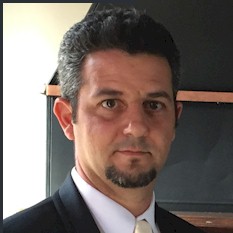 By Paul Ploumis
SEATTLE (Scrap Monster): Algoma Steel of Sault Ste. Marie pleaded guilty last week to one charge under Ontario’s Occupational Health and Safety Act to avoid going to trial for its role in the death of Damien Bryant, a 21-year-old contract worker. The company, one of Canada’s main domestic steel producers, agreed to pay a measly $250,000 fine, including the victim fine surcharge, underscoring how cheap workers’ lives are for Canadian capitalism.
The offence the company admitted is a narrow one. Section 17 of Ontario's confined spaces regulation requires an employer to secure a confined space against unauthorized entry, or to post adequate warning signs about unauthorized entry, or both. Algoma acknowledged that no signs were present on the coke oven gas pipe where Bryant lost consciousness on June 15, 2023.
Outside the Sault Ste. Marie courthouse, Bryant's mother, Jessica Bryant, held a box containing her son's remains. She had prepared a statement for the court but set it aside and spoke without it. “Just don't ever let this happen to anybody else,” she said.
Damien Melvin Grenville Bryant was just 21 when he died, a young father from Sudbury with a daughter, Rylee, who was one year old. He came from a large family: his mother Jessica and his father Grenville, six brothers and five sisters, two grandmothers, and a wide circle of aunts, uncles and cousins. He had earned a commercial driver’s license to operate a heavy truck. His family singled out that licence in his obituary as an accomplishment he was proud of.
He was remembered for a happy-go-lucky smile and a habit of wisecracking. His family described him as well known around town and a hard worker who would help anyone who needed it. He was well regarded by his colleagues, who organized a fundraiser for his baby daughter within days, signing it from the employees of GFL Sudbury and Sault Ste. Marie. His family held a celebration of his life at the Caruso Club in Sudbury on August 12, 2023.
The details about the incident that led to Bryant’s death are murky. Baking coal in the absence of air drives off a gas—coke oven gas—that is rich in hydrogen and methane. Rather than flare it, Algoma pipes it across the site to its reheat furnaces to recover heat and reduce the plant's emissions. This is a standard practice in the steel industry. The gas travels through a 54-inch main from the steel byproducts facility toward the plate and strip hot mill, with a 36-inch line branching off at a valve known as the C Valve, in a section of the plant called the east-west corridor.
Coke oven gas is dirty. Even after treatment, tar and naphthalene condense and build up on the pipe walls, narrowing the bore and restricting flow. Pipes must be periodically cleaned, and this can only be done when the line is out of service.
In June 2023, with the plant on a planned shutdown, Algoma contracted GFL Environmental Inc. to flush coke oven gas from that section of pipe. Two people were assigned to this job, both experienced vacuum truck operators who had worked at Algoma before. One of them was Damien Bryant, who was experienced at flushing coke oven gas specifically.
Before the work began, oxygen had been purged from the pipe to prevent the possibility of ignition. Bryant was operating a remote camera inside the pipe while his co-worker, Justin Warne, watched the video feed. At some point the camera stopped moving. When Warne noticed it had been stationary for a while, he went to check and found Bryant unconscious inside the 36-inch line. Algoma's emergency services personnel responded with Sault Ste. Marie fire and paramedic services and got him out. He was taken to Sault Area Hospital, where he died. The cause of death was oxygen deprivation.
Ontario's Ministry of Labour laid three charges on May 2, 2024, eleven months after the death. The first charge alleged that Algoma Steel failed, as an employer, to provide information, instruction and supervision to a worker. The second charge alleged that Algoma failed to prepare the coordination document required by the confined spaces regulation, which sets out the responsibility of each company for specific safety measures. The third alleged a failure to comply with the same regulation's unauthorized entry provision.
The case moved slowly. In June 2025, the Crown elected to have the matter heard by a provincial judge in the Ontario Court of Justice. Trial dates were eventually fixed for this month— September 1, 2 and 9 through 11, with further days, if needed, on September 27 and October 26: roughly three weeks of court time, which would have meant testimony from ministry inspectors and from Justin Warne, and a public reconstruction of the June 2023 shutdown.
But none of the testimony was ever heard. On September 1—the first scheduled trial day, three years and two-and-a-half months after Bryant’s death—Algoma pleaded guilty only to the least serious count: the signage charge. The Crown withdrew the other two. Senior Crown counsel David McCaskill read an agreed statement of facts into the record in which the company admitted that warning signs about unauthorized entry were not present on the pipe, and there had been no work-related reason for Bryant to enter it and that the job did not require confined-space entry. The agreed penalty was $250,000.
The official account of Damien Bryant’s death is factually accurate, but radically incomplete. The agreed statement of facts says he entered a pipe he was not supposed to enter, then stops there—as though entering a confined space were simply a personal choice or a lapse in judgment, rather than something dictated by the conditions of the work. What the record leaves out is what industrial workers know well: pressure to keep a job moving can override safety rules written on paper. Workers enter dangerous spaces not necessarily out of recklessness, but because the work seems to demand it—to free a stuck tool, clear a blockage, retrieve equipment, or solve some immediate problem. The real question is not only why Bryant entered the pipe, but what conditions made entering it seem necessary.
At Algoma Steel, the record of the company’s contempt for worker safety was established years before Bryant died. A freedom-of-information request by The Narwhal and Environmental Health News obtained the complaints filed with the Ontario Ministry of Labour between February 2019 and February 2020. In that single year there were 10 critical injuries, five cases of exposure to chemicals including benzene, asbestos and hydrogen cyanide, and 89 reports of occupational illness.
One complaint alleged that asbestos had been falling in two areas of a building and that the employer had been told about it repeatedly since December 2018 and had done nothing. Another alleged the respirators provided were inadequate. The reporting traced a series of warnings in the coke-making department leading to the day when three workers were exposed to hydrogen cyanide and taken to hospital. Since 2001, Algoma workers and their families have reported 1,430 cases of serious workplace illness and cancer; 960 of those claims were denied.
Such brutally exploitative conditions are not confined to a single company in the heavy industry sector. At National Steel Car in Hamilton, Ontario, over 1,200 workers are currently on strike to demand an end to the highly exploitative piecework system. Three workers died within an 18-month period between late 2020 and June 2022, including 51-year-old welder Quoc Le, who was crushed in June 2022. Despite at least 221 Ministry of Labour inspections over five years and 78 orders against the company, the deaths continued. The World Socialist Web Site described the plant as “one of the most unsafe workplaces in Ontario,” where weak safety standards and the pursuit of profit prevailed. After Le’s death, inspectors issued on-the-spot fines to rank-and-file for minor infractions, while the company’s organization of production went untouched.
Reacting to the minuscule fine imposed on Algoma for Damien Bryant’s death, a striking National Steel Car worker told the WSWS,
What happened at Algoma , in terms of fines, is literally identical to the fine for Quoc Le’s death. $250,000 for snuffing out a life in the name of profit. Le’s trial was particularly infuriating as the Crown and NSC’s lawyers cooked up a deal the judge was reluctant to overturn. It’s important to understand that in a case like this the maximum fine is $2 million. It simply shows, yet again, that anyone telling you the system will work things out and justice will be served is sadly mistaken. It’s obvious that the legal framework around labour, as a whole, is clearly designed for the benefit of employers.
The deadly conditions at National Steel Car are jointly enforced by the company and United Steel Workers union bureaucracy. The USW has abandoned the fight to abolish piecework in the current struggle and is instead pushing for a seat at the table in determining piecework rates. After the three workers died in the plant, the USW urged NSC workers to place their faith in the pro-employer bargaining system and the courts, which ordered NSC owner Greg Aziz to pay a miserable $650,000 in fines for three workers’ lives.
Beyond heavy industry, Canadian capitalism claims the lives of workers at a horrific rate. On August 24, just a week before Algoma pleaded guilty to a charge related to Bryant’s death, 39-year-old Oscar Robayo was crushed to death at Montreal Airport while performing a routine pushback of a passenger jet. Robayo’s employer, the subcontractor Samsic, has, according to numerous workers who spoke to the WSWS, refused to provide workers with the necessary equipment to perform their job safely and repeatedly disregarded key safety procedures. Nonetheless, the International Association of Machinists and Aerospace Workers (IAM) union has repeatedly boasted about the great working relationship it enjoys with Samsic management, including at an August 2025 “meet and greet” event where it lauded the company for taking over a competitor’s operations at the airport.
Similarly dangerous working conditions are evident throughout the American steel mills. In August 2025, an explosion tore through US Steel's Clairton Coke Works near Pittsburgh—the largest coke producer in North America—killing 39-year-old Timothy Quinn and 52-year-old Steven Menefee, and injuring 11 others. The blast occurred in coke batteries a worker described as “old as hell” with “a poor track record of maintenance.” When OSHA finally issued its findings six months later, it proposed penalties against US Steel of just $118,214.
In August 2026, just weeks before Algoma entered its plea, 28-year-old Jonathan Stepp—a young father of six and a contractor at Cleveland-Cliffs' Burns Harbor mill in Indiana — was killed operating a pot hauler carrying molten slag. It was the second death at a major US steel mill in little more than a month.
Canadian capitalism prioritizes trade war and militarism over protecting workers’ lives
Algoma Steel is Canada's second-largest steel producer and the largest employer in Sault Ste. Marie; it sits at the centre of developments that have made its steel a matter of state policy. The Crown’s handling of the Bryant case was shaped by the trade war with Washington. When the Trump administration doubled steel tariffs to 50 percent in June 2025, the Canadian Steel Producers Association warned the hike essentially closes the US market to Canadian steel and would cut domestic production in half. Under these conditions, protecting the profitability of the national steel industry became a matter of national importance.
The Crown candidly admitted as much. The settled fine amounts to a proverbial slap on the wrist: less than one hour of the company’s revenue. When Senior Crown counsel David McCaskill put forward the joint position—a $200,000 fine plus a $50,000 surcharge—he told the court that the penalty imposed on a company as large as Algoma could have been higher, but that among the considerations weighed was “the significant tariffs in place against Canadian steel from the United States.”
Canada’s rearmament drive, aimed at ensuring it remains one of the leading protagonists in the violent redivision of the world between the major powers, gives the state another, and still more direct, stake in Algoma's fortunes. Algoma already produces steel for military vehicles, and the Carney government's Defence Industrial Strategy—unveiled in February 2026—explicitly names steel as a defence-critical sector to be retooled for war production. The strategy commits the country to military spending of 5 percent of GDP, channels $290 billion into defence-related infrastructure, and sets the goal of adding 125,000 defence-industry jobs. Its overriding aim is to free Canada’s arms industry from dependence on American supply chains, and steel is at the top of the list of strategic materials to be secured for “sovereign” production.
Algoma is precisely the kind of “defence champion” the strategy exists to cultivate, subsidize and protect. A company the state is integrating into its war machine is not a company the state will seriously punish for what from the point of view of the capitalist class is the “small matter” of a worker's death.
Ultimately, Damien Bryant died because his life was priced as a cost of doing business. Canadian corporations, backed by the government and their “partners” in the trade union bureaucracies, proceed from the premise that Canadian capitalism must be “competitive” with its rivals, and that to this end, they must enforce concessions on workers’ wages and working conditions, and the rollback of safety and other regulations hampering the vast accumulation of private profit.
The case of Damien Bryant at Algoma Steel, alongside the ongoing strike at National Steel Car, demonstrate that workers must build rank-and-file committees with the power to halt production when working conditions are unsafe. These committees must become the basis for a rebellion against the trade union bureaucracies who want to preserve their corporatist relations with government and big business at all costs, and for placing real power on the shop floor. Rejecting the defence of private profit and “national interest” that underlie militarism and the race to the bottom in working conditions and safety standards, workers must unite internationally through the International Workers Alliance of Rank-and-File Committees.
Courtesy: www.wsws.org