U.S. Lumber Coalition Comments on Much-Needed Canadian Mill Production Cuts
Rubber and Wood | 2025-12-17 03:50:05
U.S. producers can and will compete with any foreign producer when a level playing field has been created by rigorous trade law enforcement.
 By Paul Ploumis
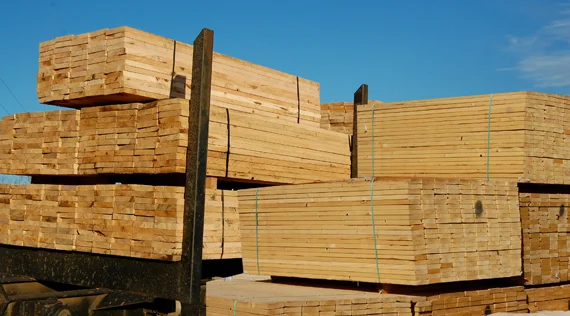
SEATTLE (Scrap Monster): Canada's massive excess lumber capacity sustained by billions of dollars of government subsidies continues to drive Canada's harmful and unfair trade practices in softwood lumber.
President Trump's focus on fully enforcing U.S. trade laws and implementing additional and appropriate tariff measures against unfairly traded Canadian lumber imports has added some 14,000 well-paying American jobs in forestry dependent communities while increasing U.S. lumber production capacity by over 8 billion board feet since 2016 – resulting in U.S. lumber producers supplying an additional 36 billion board feet of softwood lumber products into the U.S. supply chain. This is a win for the United States resulting in more U.S. wood being produced by U.S. workers to supply lumber for U.S. housing with high quality Made in U.S.A. wood products. In total, the U.S. softwood forestry industry supports over 750,000 American jobs.
Canada's only real outlet for its massive 8 billion board feet of excess lumber capacity and production is the United States. Canada on average exports 60 percent of its total softwood lumber production into the United States, with some regions exporting upwards of 70 percent and some companies in excess of 90 percent.
This dependency on the U.S. market for Canadian softwood lumber producers is at the core of Canadian unfair trade practices – causing subsidized Canadian lumber companies to dump their product into the U.S. market by any means necessary to maintain their desired production capacity utilization rates.
In the state of Maine and the nearby Canadian region, this has resulted in Canadian border mills operating at two shifts enabled by their unfair trade practices while forcing U.S. mills in Maine to operate at one shift.
Canada-based Groupe Lebel's announcement of cutting production by 25 percent in the face of President Trump's trade law enforcement and tariff measures provides the type of relief from Canadian unfair trade practices that will allow U.S. producers to increase production. U.S. producers can and will compete with any foreign producer when a level playing field has been created by rigorous trade law enforcement.
"For decades Maine softwood sawmills have been forced to reduce capacity and run their mills on single shifts due to subsidized and unfairly dumped Canadian lumber imports. Too add insult to injury, many of these Quebec mills exist within 1 mile of the Maine border. They suck sawlogs from our state, convert it to lumber in Quebec, and dump it back into Maine and New England," stated Jason Brochu, Co-President of Pleasant River Lumber Company.
"Maine mills are in the process of ramping up production to offset these dumped and unfairly traded Canadian imports, thanks to President Trump's focus on enforcing our trade laws as well as his additional tariff measure to grow U.S. lumber production," added Brochu.
"Maine lumber mills are modern and efficient and Maine forestry workers are ready for the challenge. Shifts can immediately be added to produce an additional 200+ million board feet of lumber in Maine from Maine logs," concluded Brochu.
Courtesy: www.prnewswire.com