Canada Can’t Shake Trump’s Lumber Tariff, Even If It Lands a US Deal
Rubber and Wood | 2026-11-23 01:27:29
British Columbia’s new Conservative government has since been elected on a platform that puts softwood on the same footing as autos, steel and aluminium in any talks with Washington.
 By Paul Ploumis
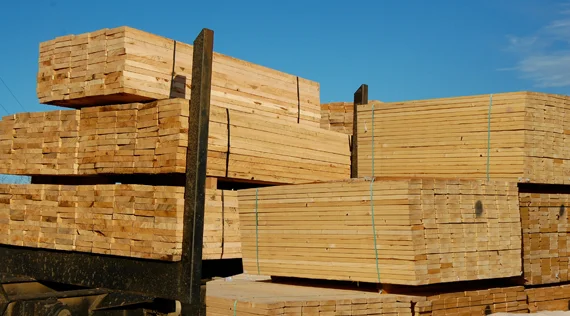
SEATTLE (Scrap Monster): Canada’s lumber exporters look set to settle for less than the deal on the table in August, which would have scrapped US President Donald Trump’s 10 per cent tariff on their softwood altogether. Canada-US Trade Minister Dominic LeBlanc acknowledged as much late last week, telling CBC’s Power & Politics that any agreement struck by the end of the year would probably lower the tariffs on lumber, steel, aluminium and autos rather than remove them.
“I think we have to be realistic with Canadians in those particular sectors,” LeBlanc told host David Cochrane. Some of the tariffs would remain, he said, but only where the long-term viability of those industries was assured, with Canada aiming to end up better placed than the countries that already have deals with Washington.
The August draft would also have cut the tariff on Canadian autos to 15 per cent from 25 per cent, Bloomberg reported at the time, before the talks collapsed over new US terms that Canadian Prime Minister Mark Carney called unfair. Either way, the tariff is the smaller part of what Canadian lumber pays at the border, with most producers paying a combined dumping and subsidy duty of 24.75 per cent since the US Commerce Department cut the rate in October, and 34.75 per cent once Trump’s tariff is added.
The arrangement Canada wants would still bring the Section 232 national security tariffs down and sweep away the 50 per cent tariffs Trump slapped on hundreds of Canadian goods under Section 338 of a Depression-era trade law. Crucially for Ottawa, LeBlanc said the Americans had been clear that if the two sides reached an arrangement on those tariffs, “we could also begin a formal review process that’s prescribed in the CUSMA agreement.”
That review of the Canada-US-Mexico Agreement, the North American trade pact that replaced NAFTA in 2020, has sat in limbo since Washington declined to renew it in July. Talks on the tariffs only flickered back to life after Carney spoke with Trump late last month, and the two leaders have since met briefly on the sidelines of the Asia-Pacific Economic Cooperation summit in China.
Behind closed doors, though, LeBlanc painted a bleaker picture, telling the federal government’s advisory committee on Canada-US economic relations on Thursday that Washington had shown little movement, two people familiar with the briefing told Reuters. At the same meeting, Canada’s top trade negotiators argued for a deal now rather than sitting out the final two years of Trump’s presidency, four sources said, although there was “no desire to accept a deal at any cost.”
Whilst Ottawa wants the arrangement done by the end of the year, LeBlanc said that is not a hard deadline. The wood trade faces a harder one in January, when the 232 tariff on kitchen cabinets and vanities is due to double to 50 per cent for every country without a deal, Canada included.
LeBlanc also warned against treating the new Democratic-controlled Congress as a cure-all for US tariffs, yet one of its most senior Democrats is urging Ottawa not to wait. Chris Coons, the Delaware senator in line to chair the powerful Senate Foreign Relations Committee, told Power & Politics from the Halifax International Security Forum on Friday that getting rid of the 338 tariffs would be a significant achievement for Canada, and called for the national security tariffs to be removed altogether.
“Frankly, if you can get an interim deal, I’d take it,” Coons said. The new Democratic majority, he argued, could then write something better into law.
A tariff win leaves softwood’s biggest bill in place.
In fact, the 232 tariff is the only part of Ottawa’s ask that touches Canada’s softwood lumber, which Trump left off the Section 338 list in July because it already paid the 232. Canadian plywood came off that list last month, with MDF and flooring added in its place.
The problem, as Policy Magazine columnist Anil Wasif argued on Friday, is that the dumping and subsidy duties come under a separate US trade law and are not among the tariffs LeBlanc wants lowered, so most of what softwood pays at the border would stay. Kim Haakstad, interim president of the BC Lumber Trade Council, had put both on the table in August, saying in a joint statement with the BC Council of Forest Industries that the tariff and the softwood duty dispute were “central to these discussions”.
British Columbia’s new Conservative government has since been elected on a platform that puts softwood on the same footing as autos, steel and aluminium in any talks with Washington. Yet the US Lumber Coalition, the alliance of American softwood producers behind the duty cases, has dug in since Ottawa promised its tariff-hit forest sector C$6.5 billion, with executive director Zoltan van Heyningen vowing on 10 November to collect, through duties and tariffs, “every cent of Canadian taxpayer-funded subsidies”.
Trump, for his part, insisted at a White House news conference on Friday, after returning from Asia, that the US does not need Canadian energy, vehicles or lumber. “That being said, we’re working on making a deal that’s fair,” he said.
Carney, who spoke virtually to the New York Times’ DealBook summit on Wednesday as he wrapped up a nine-day trade mission to Europe and Asia, had already put Washington on notice. “If the U.S. doesn’t want to do a deal, we’re busy,” he said.
Courtesy: www.woodcentral.com.au