America’s Copper Hoard Stokes Fear of a Supply Crunch
Copper | 2026-10-02 00:36:13
The result is that the U.S. is sitting on as much as 2 million tons of copper, according to BMO Capital Markets, effectively a giant private-sector stockpile. Some analysts are starting to conclude that policy ambiguity is the policy.
 By Paul Ploumis
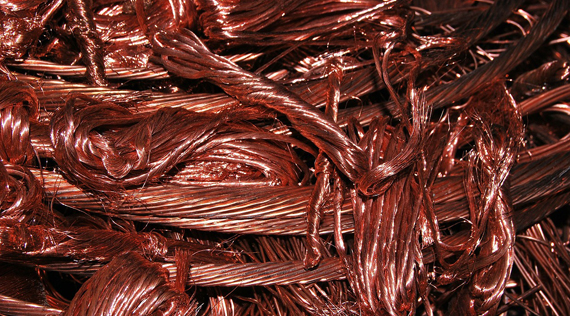
SEATTLE (Scrap Monster): Copper is piling up in American warehouses, and it could stay there a while. That would have scary implications for buyers elsewhere.
The copper market has been in limbo since July last year, when President Trump imposed tariffs on wire and other copper products but left out the refined metal used by manufacturers. He ordered a study of whether refined copper should face levies too but the administration hasn’t yet declared its intentions.
The uncertainty spurred U.S. buyers to snap up metal to avoid paying higher prices later. Copper futures are up more than 16% this year, with U.S. prices often fetching a premium—an incentive to move metal to America.
The result is that the U.S. is sitting on as much as 2 million tons of copper, according to BMO Capital Markets, effectively a giant private-sector stockpile. Some analysts are starting to conclude that policy ambiguity is the policy.
There are other reasons for copper’s rise. Electric cars, grid upgrades and data centers are widely expected to boost demand for decades. Meanwhile, “the global mine supply backdrop has never looked so challenged,” analysts at BMO Capital Markets wrote this week, in part because of weather-related disruption in Chile, the top producer.
For now, though, supply-and-demand projections are taking a back seat to the question of when copper in U.S. warehouses might be released.
“Once the metal arrives onshore in the United States it is actually no longer available for purchase by the world’s demand centers,” said Daniel Ghali, head of metals research at Deutsche Bank.
Like everybody in this market, Ghali is trying to gauge how much copper is locked up. Aside from the U.S., China has been stockpiling copper for years. Ghali thinks the two countries will have removed about 70% of global inventories from circulation by year-end.
Ghali sees copper prices rising 50% next year to $10 a pound, or $22,050 a ton. That’s his best guess of how expensive copper needs to be before industrial users switch to aluminum, a cheaper but less efficient conductor of electricity, and prevent the world from running out of copper.
He thinks the structure of the copper market could make it hard to get metal out of the U.S., no matter how the tariff question resolves.
Normally, when copper supplies are tight, prices for near-term delivery on the London Metal Exchange rise compared with prices farther out in the future, giving anybody sitting on copper an incentive to release it. The problem, as Ghali sees it, is the fact that the LME has U.S. warehouses. The usual mechanism for closing a shortfall—delivering metal to LME sites—could just shuffle copper around the U.S.
Ghali’s forecast is an outlier; most analysts aren’t predicting such drama. But there are other reasons to think prices could go up. BMO parsed Chinese import-and-export data and concluded that Beijing has likely been releasing copper from its own secretive stockpiles—and may eventually decide to top them up again. These calculations will perplex the copper market until the tariff question is settled.
Other efforts are afoot to boost U.S. copper supplies—mining projects, a new refinery, a new government-supported stockpiling program. They’re slow. In the meantime, the trade-policy question mark has ensured that the U.S. has abundant supplies of a critical metal.
“The risk of tariffs,” Goldman Sachs analysts wrote last week, “achieves a national-security objective by pulling metal inventories into the U.S. without requiring large-scale government purchases or immediately raising costs for downstream consumers.”
Courtesy: www.wsj.com