Toxic Chemicals in E-Waste: Growing Risks, Regulatory Shifts, and the Human Cost
Waste & Recycling | 2025-08-12 23:56:54
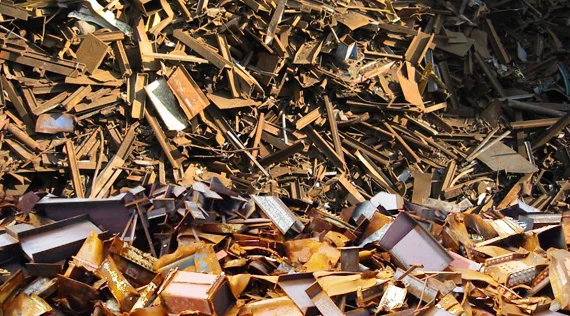
Once e-waste is disassembled, the most common next step is shredding, a mechanical process that breaks devices into smaller pieces for downstream sorting.
 By
By SEATTLE (Waste Advantage): In recent years, the global conversation around electronic waste has shifted from questions of volume and recovery to deeper concerns around toxicity, long-term environmental impact, and the safety of those who handle it. Nowhere is this shift more visible than in the growing awareness of PFAS, “forever chemicals”, toxic chemicals that hide in the everyday electronics we discard.
The Silent Threat of PFAS in Electronics
Per- and polyfluoroalkyl substances (PFAS) are a class of more than 10,000 synthetic chemicals known for their persistence in the environment and human body. They do not break down naturally, and many are associated with severe health risks: cancer, thyroid disorders, developmental issues, immune system disruption, and more.
While most public focus has centered on PFAS in drinking water, food packaging, and firefighting foam, electronics have remained an underappreciated vector. Yet PFAS are widely used in consumer electronics due to their heat resistance, nonstick properties, and dielectric strength. Circuit boards, casings, cables, displays, and connectors may all include PFAS-derived coatings or materials.
Disassembly and Exposure: Risk Starts Early
The e-waste stream is growing exponentially. The United Nations estimates that more than 62 million metric tons of e-waste were generated globally in 2022, with less than 20% formally recycled. Much of what enters recycling centers undergoes manual or semi-manual disassembly before being shredded or exported. In this process, PFAS-laden components are cut, cracked, and dismantled, releasing particles and fumes into the air.
Employees who manually disassemble electronics face elevated risks. Studies show disassemblers are routinely exposed to heavy metals, brominated flame retardants, and other airborne particulates. PFAS exposure adds another layer of concern. Unlike many traditional toxins, PFAS may not be captured in standard industrial hygiene protocols. They are often not listed on safety data sheets, resulting in inconsistent detection and mitigation.
A 2024 study published in Occupational Medicine & Health found elevated levels of perfluorooctanoic acid (PFOA) in workers at an electronics recovery facility in Eastern Europe. Although the facility followed standard PPE protocols, PFAS dust from cable stripping and PCB cutting bypassed filtration systems and settled in work areas. The result: measurable bioaccumulation among long-term staff.
Shredding, Export, and the Globalization of Risk
Once e-waste is disassembled, the most common next step is shredding, a mechanical process that breaks devices into smaller pieces for downstream sorting. Shredding also increases the surface area available for chemical off-gassing and dust release. In high-speed shredding environments, plastics and coatings containing PFAS can be aerosolized, posing serious risks to both workers and the local environment.
The challenge does not stop at the border. Between 50 and 70 percent of e-waste collected in the United States is exported, often to countries with weaker environmental protections. Recent reports by the Basel Action Network (BAN) show that e-waste from developed countries is ending up in informal facilities across Southeast Asia and Africa, where devices are often disassembled by hand or burned in the open air.
In these contexts, PFAS escape not only containment systems but also any regulatory oversight. Informal workers and nearby communities are exposed to PFAS compounds alongside a cocktail of other hazardous substances, with few resources for healthcare, protection, or remediation.
Additional Challenges
While PFAS dominates the headlines, another silent hazard looms large in the current e-waste processing model: dioxins and furans. These are not intentionally produced chemicals; they are unintended byproducts formed when halogenated materials, such as plastics containing brominated flame retardants, are shredded, crushed, or thermally treated in oxygen-limited environments. The process of shredding e-waste disperses these chemical precursors into fine particles, which, when later exposed to heat during smelting, open burning, or even landfill fires, create ideal conditions for the formation of dioxin and furan. These compounds are among the most toxic pollutants known to science, linked to cancer, endocrine disruption, immune suppression, developmental harm, and long-term bioaccumulation in humans and wildlife. Once released, they persist in the environment for decades and are extraordinarily difficult and costly to destroy. Their creation is not intentional, but it is inevitable. Dioxins and furans are not the starting problem; they are the toxic aftermath of how we have been recycling e-waste for decades. And that makes them one of the industry’s most dangerous and dangerously ignored liabilities.
Courtesy: www.wasteadvantagemag.com