
Lead Battery Scrap: ISRI Grades, Pricing and Where to Sell in North America
A practical, wire-style breakdown of how lead-acid battery scrap is graded, priced and traded across the U.S. and Canadian markets.
Lead-acid batteries remain the backbone of North America's lead recycling supply chain, supplying an estimated 85–90% of all lead scrap generated for reuse. When these batteries reach the end of a typical 3-to-5-year service life, they become one of the most consistently recycled materials in the industry, with recovery efficiency above 99%.
As of October 2025, U.S. buyers were paying $0.12 to $0.22 per pound for whole batteries depending on region, while Canadian yards reported C$0.21 to C$0.28 per kilogram. Pricing tracks closely with London Metal Exchange lead futures, moving within 24 to 48 hours of benchmark shifts.
What Readers Should Know
- Lead-acid batteries make up 85–90% of all lead scrap recycled in North America, with recovery efficiency above 99%.
- ISRI classifies battery scrap into three grades: RAILS (loose plates), RAINS (drained whole batteries) and RINK (wet whole batteries).
- U.S. prices ranged $0.12–$0.22/lb by region in October 2025; Canadian prices ranged C$0.21–C$0.28/kg.
- The LME lead price, near $2,000/metric ton, is the primary benchmark and moves battery scrap values within 24–48 hours.
- Drained (RAINS) batteries can command a 5–10% premium, and separated plates (RAILS) up to 10–15%, over whole intact batteries.
- Wet batteries are classified as hazardous cargo under DOT rule UN2794, which governs how they can be shipped.
What Is Lead Battery Scrap, and Why It Matters
Lead-acid battery scrap represents the most valuable and widely recycled form of lead material in North America. These batteries power everything from automobiles to industrial backup systems, and once they reach end-of-life, they become essential feedstock for the circular lead economy.
Lead-acid batteries account for approximately 85–90% of all lead scrap available for recycling, making them the cornerstone of secondary lead production. With over 99% recycling efficiency, they represent one of the most successful recycling programs in the materials industry.
What the Battery Is Made Of
Lead-acid batteries contain several valuable components that make them highly sought after by recyclers.
Lead content: 60–65% of total battery weight consists of recoverable lead, including:
- Lead oxide paste (active material)
- Lead grids and connectors
- Lead terminals and posts
Additional recoverable materials:
- Polypropylene plastic cases (15–20%)
- Sulfuric acid electrolyte (15–20%)
- Separators and other materials (5%)
The high lead content and established recycling infrastructure ensure consistent demand and stable pricing for battery scrap across all market conditions.
ISRI Grades: RAILS, RAINS and RINK Explained
The Institute of Scrap Recycling Industries (ISRI) classifies lead battery scrap into three primary categories.
RAILS — Lead Battery Plates
- Consists of loose lead plates removed from battery cases
- Must be free of plastic, rubber and non-metallic materials
- Separators may be included if properly sorted
- Material must be completely dry before shipment
- Available as automotive, industrial or mixed grades
RAINS — Drained/Dry Whole Intact Lead Batteries
- Complete batteries with all acid electrolyte removed
- Cases must be plastic or rubber and remain intact with caps
- Zero liquid content required for safety and shipping compliance
- Excludes non-lead batteries (NiCd, NiFe, etc.)
- Industrial and specialty batteries subject to separate agreements
RINK — Wet Whole Intact Lead Batteries
- Starting, Lighting, Ignition (SLI) automotive batteries
- Marine, truck, golf cart and commercial battery types
- Minimum 10% liquid electrolyte content by weight
- Complete cases with all caps and terminals intact
- Restricted shipping requirements due to hazardous classification
Visit ScrapMonster's Scrap Materials Guide for complete ISRI code definitions and trading standards.
How to Identify and Sort Battery Scrap
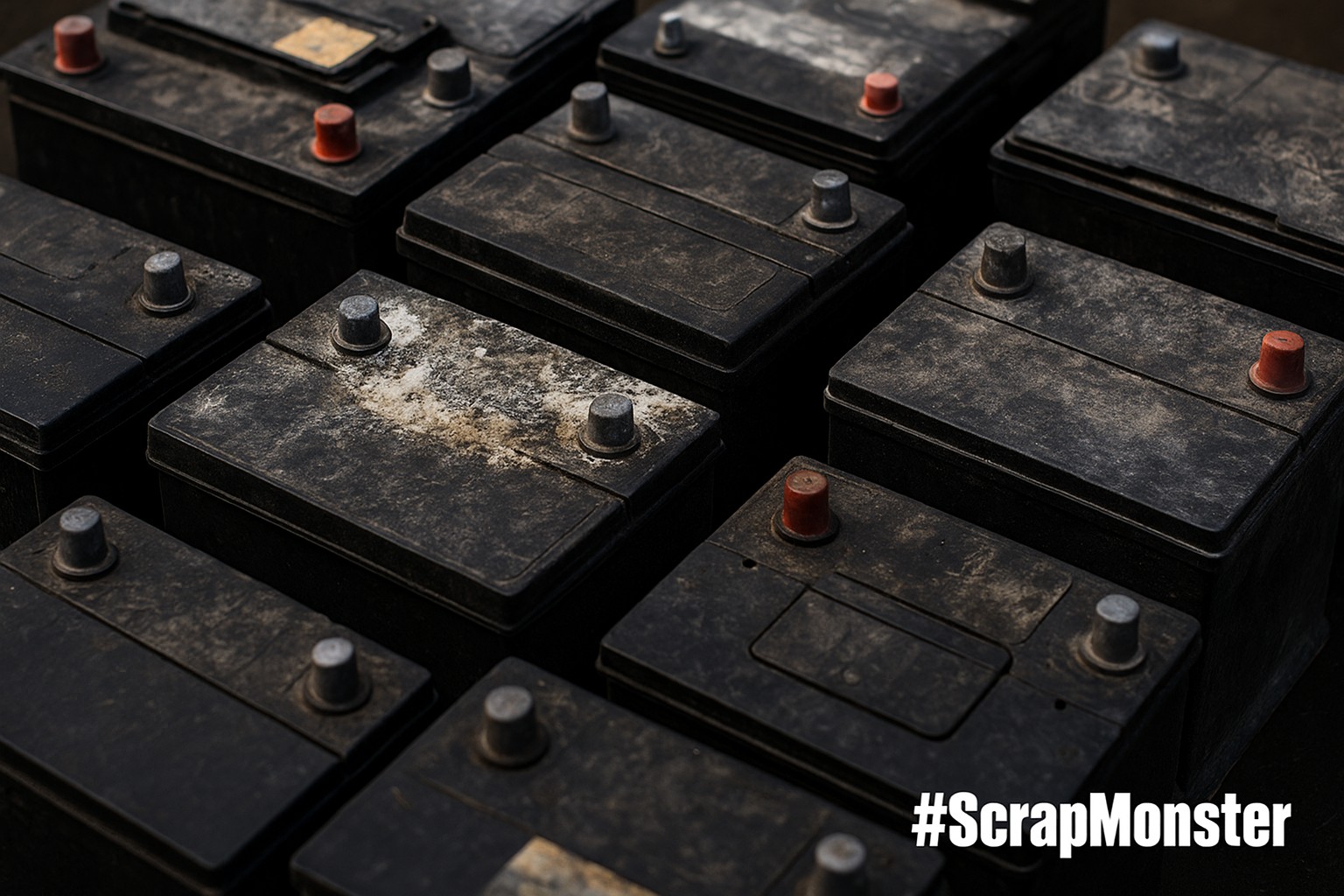
Automotive batteries: Rectangular plastic cases with two prominent terminals, typically black or colored plastic housing. Look for "Pb" symbols or voltage ratings (6V, 12V, 24V) on labels.
Marine/deep cycle: Larger, more robust construction with thicker terminals and often dual-purpose labeling for starting and deep-cycle applications.
Industrial/UPS: Sealed batteries with smaller form factors, often found in backup power systems, emergency lighting and telecommunications equipment.
Forklift/traction: Large, heavy batteries with steel cases, multiple cells and watering caps for maintenance access.
Magnet test results:
- Lead plates and terminals: non-magnetic
- Steel battery cases: magnetic (forklift/industrial types)
- Plastic cases: non-magnetic
- Steel brackets/hold-downs: magnetic (separate these for optimal pricing)
Use the magnet test to separate steel components and identify battery types. Clean separation of magnetic materials increases overall value.
What the Current Pricing Data Shows
Lead battery scrap pricing varies significantly across North America based on local processing capacity and transportation costs.
United States (October 2025):
- East Coast: $0.16–$0.22/lb for whole batteries
- Midwest: $0.14–$0.20/lb, reflecting transportation economics
- West Coast: $0.15–$0.21/lb, with Pacific export opportunities
- Southeast: $0.12–$0.18/lb in rural areas with limited competition
Canada: C$0.21–$0.28/kg (USD equivalent: $0.07–$0.09/lb)
Source : ScrapMonster
Check real-time pricing through ScrapMonster's live battery pricing page for your specific region, or visit the Lead Scrap Prices section for detailed export pricing.
What Is Driving Lead Battery Scrap Prices
London Metal Exchange (LME) lead price: The primary benchmark driving all lead scrap pricing, currently near $2,000/metric ton, directly influences battery scrap values within 24–48 hours of LME movements.
Processing capacity: Regions with secondary lead smelters typically offer premium pricing due to reduced transportation costs and competitive procurement.
Battery preparation:
- Whole intact batteries: base pricing
- Drained batteries (RAINS): 5–10% premium due to shipping advantages
- Separated plates (RAILS): 10–15% premium for reduced processing costs
Quantity and consistency: Large, consistent suppliers often negotiate premium pricing through long-term agreements with processors.
Environmental compliance: Properly documented and compliant shipments avoid penalties and delays that can affect final pricing.
Track pricing factors through ScrapMonster's Lead Market News, or check the Scrap Yard Prices section for the latest yard-level data.
Also Read
Where to Sell Lead Battery Scrap
Used lead-acid batteries are typically collected by authorized collection centers, which transport them to recognized recycling yards. The recycling process has undergone dramatic changes over the past two decades: early mechanical breaking methods have given way to more innovative techniques for safely recycling hazardous lead-acid batteries.
The following are some of the scrap yards in the U.S. that accept lead battery scrap:
- Harris Metals, Inc., Mattoon, Illinois
- Metal Conversion Technologies, Cartersville, Georgia
- Kimes Steel, Hartford, West Virginia
- Accurate Recycling Inc., Farmingdale, New Jersey
Use the Scrap Yard Finder to locate more yards close to your location. Full listings are also available in the U.S. Scrap Yard Directory and the Canada Scrap Yard Directory.
Beyond scrap yards, sellers have several buyer channels:
- Authorized recyclers: Licensed facilities with environmental permits for lead-acid battery processing.
- Secondary lead smelters: Primary processing facilities offering direct purchase programs for large-volume suppliers, typically at the highest pricing for properly prepared materials.
- Scrap yards with battery programs: Full-service dealers with dedicated battery collection and processing capabilities.
- Collection networks: Regional programs serving automotive, industrial and marine sectors.
- Retail take-back programs: Legally mandated in most states, though pricing is generally less competitive than dedicated recyclers.
For bulk volumes, the ScrapMonster B2B Marketplace lets registered members post and search buy and sell offers for lead scrap and connect directly with verified traders.
Where Sellers Source Battery Scrap
Automotive sources:
- Auto repair shops and service stations
- Vehicle dismantling operations
- Fleet maintenance facilities
- Battery replacement programs
Industrial sources:
- UPS and backup power system maintenance
- Telecommunications equipment upgrades
- Data center battery replacements
- Emergency lighting system servicing
Marine and recreational:
- Boat servicing and marina operations
- Golf course maintenance facilities
- RV and recreational vehicle service
- Off-grid solar system maintenance
Collection programs:
- Retailer take-back programs (legally mandated in most states)
- Municipal household hazardous waste events
- Commercial battery collection services
- Authorized collection centers
How to Prepare Batteries for Maximum Value
Safety first: Always wear protective equipment, including gloves, eye protection and acid-resistant clothing, when handling batteries.
Proper drainage: For RAINS classification, completely drain acid electrolyte in accordance with local environmental regulations. Store drained acid separately for proper disposal.
Case integrity: Maintain complete battery cases with caps and terminals intact. Cracked or damaged cases reduce value and create shipping complications.
Segregation: Separate by battery type and size — automotive SLI, deep-cycle marine, industrial/forklift and small sealed batteries (UPS/emergency lighting).
Documentation: Maintain records of battery sources, quantities and ISRI classifications for regulatory compliance and optimal pricing negotiations.
Storage: Keep batteries upright, in covered areas, on pallets or acid-resistant surfaces, following local fire codes and environmental regulations.
Safety and Handling Requirements
Personal protective equipment:
- Chemical-resistant gloves and aprons
- Safety glasses or face shields
- Acid-resistant footwear
- Respiratory protection in enclosed areas
Handling procedures:
- Never lift batteries by terminals or cables
- Use proper lifting techniques for heavy industrial batteries
- Avoid dropping or impacting battery cases
- Keep spark sources away from battery areas
Storage requirements:
- Covered, well-ventilated storage areas
- Acid-resistant flooring or containment systems
- Fire suppression systems appropriate for lead-acid batteries
- Temperature control to prevent freezing or overheating
Transportation compliance:
- DOT hazardous materials regulations (UN2794 for wet batteries)
- Proper placarding and shipping papers
- Approved packaging and securing methods
- Driver training for hazardous materials transport
Review complete safety protocols in ScrapMonster's Battery Safety Guide.
What Happens Next: Market Outlook
Demand drivers: Electric vehicle growth is increasing demand for lithium batteries, but lead-acid batteries remain essential for automotive SLI applications, industrial backup power and energy storage systems. This sustained demand supports stable pricing.
Regulatory environment: Stricter environmental regulations in 2025 favor established recyclers with proper permits and processing capabilities, potentially reducing competition and supporting pricing stability.
Technology advances: Improved battery technology is extending service life, potentially reducing scrap generation volume but increasing per-unit value due to higher lead content in newer designs.
Supply chain integration: Vertical integration between battery manufacturers and recyclers creates more stable, long-term pricing relationships for consistent suppliers.
Global market factors: International lead prices, trade policies and currency fluctuations continue to influence North American scrap pricing, with Asian demand particularly important for export markets.
Sustainability focus: Corporate sustainability initiatives and ESG investing priorities increase demand for recycled lead content, supporting premium pricing for certified recycled materials.
Stay informed about market developments through ScrapMonster's Lead Market Analysis and industry trend reports.
For the most current pricing, market analysis and buyer connections, visit ScrapMonster.com — North America's largest scrap metal trading platform, with 111,370+ members and comprehensive market intelligence tools.
People Also Ask
What are the three ISRI grades for lead battery scrap?
RAILS (loose battery plates), RAINS (drained, dry whole batteries) and RINK (wet whole batteries with electrolyte still inside).
How much can properly drained or separated batteries add to the sale price?
Drained batteries (RAINS) typically earn a 5–10% premium, and separated plates (RAILS) can add 10–15%, over whole intact batteries.
What single factor most influences lead battery scrap prices?
The London Metal Exchange lead price is the primary benchmark; battery scrap values typically shift within 24–48 hours of LME moves.
Are wet lead-acid batteries subject to special shipping rules?
Yes. Wet batteries fall under DOT hazardous materials rule UN2794, requiring proper placarding, packaging and driver training.
Where can sellers find buyers for lead battery scrap?
Options include authorized recyclers, secondary lead smelters, full-service scrap yards with battery programs, and ScrapMonster's B2B marketplace.