Lead Anode
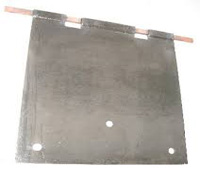
Characteristics
The lead anode is an anode that is made with the metal, lead. Lead anodes, however, are not made of pure lead and are more commonly made of metal alloys for better conduction of electricity and proper functioning in an electronic device. These kinds of anodes may not always have the same composition; how they are made differs greatly between the devices in which they are used. The different types of alloys that are used in the lead anode may include tin, silver, calcium, antimony, and tellurium, and all have different properties and purposes. A lead anode can be made with these types of alloys through chrome baths and differs based on the needs of the device in which it is used.
The lead anodes are manufactured in calcium-tin-lead (Ca/Sn/Pb), silver-lead (Ag/Pb) and antimonial lead (Sb/Pb) alloys which are the preferred alloys for these applications with their high resistance to corrosion in the sulphuric acid based electrolyte solutions.
Rolled lead anodes have become the industry benchmark with the benefits of fine grain structure, less segregation and elimination of cracks and voids resulting in more uniform corrosion of the anode.
Another way the lead anode can differ is in its contact of positive electrical currents, based on the type of metal alloy employed within the anode. Some manufacturers may assemble these by dipping an anode’s hook portion into a molten alloy of lead, subsequently placing the hook into some kind of mold and then casting a base of lead around its hook. The hook assembly is then burned to the remaining anode. This is an efficient and cost effective way of building a lead anode, though it creates the problem of containing impurities and weakening the structure of the anode.
One of the common uses for a lead anode is to place it in a device as a component for electrowinning cells. In these devices, the anodes conduct high densities of electrical currents, and come in the form of finger-like rods. The cells are most likely made of the metals manganese or tin for easy conduction of electrical currents between them and the lead anode. A cell, like those found in a battery or other kind of electric power supply, is comprised of rods of lead alloy with cores of reinforced titanium for strength and durability. The rod may also be surrounded by a plastic sleeve to protect it and so that it does not conduct electricity.
These metal alloys are also used in this anode-containing device because the resulting product is highly resistant to sulfuric acid corrosion within electrolytic solutions. Certain anodes with silver or antimony alloy composition have specialized properties where the anode will form a natural film of insulation when dipped into seawater.
Features
High quality, Corrosion resistant, Excellent strength, Durable
Application
Used in Electrode during Zinc Refining / Electrolysis. Anodes made of lead alloys are used in the electrowinning and plating of metals such as manganese, copper, nickel, and zinc. Rolled lead-calcium-tin and lead-silver alloys are the preferred anode materials in these applications, because of their high resistance to corrosion in the sulfuric acid used in electrolytic solutions. Lead anodes also have high resistance to corrosion by seawater, making them economical to use in systems for the cathodic protection of ships and offshore rigs. Anode applications other than electrowinning of metals such as plating and cathodic protection can also be catered for with cast and extruded anodes.
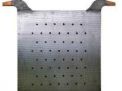
Lead Anode Pictures


Get an instant offer on your damaged car

Get an offer instantly
Just tell us a bit about your car and boom, there's your offer.

Free pickup
You have seven days to accept our offer and schedule pickup.

Get paid on the spot
Our pickup partner will do a quick inspection, and hand you a check.
Search Finish Plastics
- Filter by category
- Aluminum (31)
- Brass (3)
- Copper (1)
- Lead (4)
- Stainless Steel (14)
- Steel (38)
- Titanium (1)