- $74 million Estimated value of finished natural and synthetic IOPs
Iron oxide materials yield pigments that are nontoxic, nonbleeding, weather resistant, and lightfast. Natural iron oxides include a combination of one or more ferrous or ferric oxides, and impurities, such as manganese, clay, or organics. Synthetic iron oxides can be produced in various ways, including thermal decomposition of iron salts, such as ferrous sulfate, to produce reds; precipitation to produce yellows, reds, browns, and blacks (e.g., the Penniman-Zoph process); and reduction of organic compounds by iron (e.g., nitrobenzene reduced to aniline in the presence of particular chemicals) to produce yellows and blacks. Reds can be produced by calcining either yellow or blacks.
| Salient Statistics | 2014 | 2015 | 2016 | 2017 | 2018 |
|---|---|---|---|---|---|
| Sold or used, finished natural and synthetic IOP | 45300 | 53500 | 48500 | 47900 | 52000 |
| Imports for consumption | 175000 | 176000 | 179000 | 179000 | 180000 |
| Exports, pigment grade | 8790 | 8930 | 15800 | 13500 | 12000 |
| Consumption, apparent | 212000 | 221000 | 212000 | 213000 | 220000 |
| Price, average value, dollars per kilogram | 1.58 | 1.46 | 1.46 | 1.44 | 1.41 |
| Net import reliance as a percentage of reported consumption | >50 | >50 | >50 | >50 | >50 |
Iron oxide pigments (IOPs) were mined domestically by three companies in three States. Production, which was withheld to avoid disclosing company proprietary data, decreased in 2018 from that of 2017. Six companies, including the three producers of natural IOPs, processed and sold about 52,000 tons of finished natural and synthetic IOPs with an estimated value of $74 million, significantly below the most recent sales peak of 88,100 tons in 2007. About 55% of natural and synthetic finished IOPs were used in concrete and other construction materials; 20% in coatings and paints; 5% in foundry sands and other foundry uses; 3% each in animal food and industrial chemicals; 2% each in cosmetics and plastics;1% in glass and ceramics; and 9% in other uses.
| Tariff Items | Number |
|---|---|
| Natural: Micaceous iron oxides | 2530.90.2000 |
| Natural: Earth colors | 2530.90.8015 |
| Iron oxides and hydroxides containing 70% or more by weight Fe2O3: Synthetic: Black | 2821.10.0010 |
| Synthetic: Red | 2821.10.0020 |
| Synthetic: Yellow | 2821.10.0030 |
| Synthetic: Other | 2821.10.0040 |
| Synthetic: Earth colors | 2821.20.0000 |
In 2018, domestic mine production of crude natural IOPs decreased slightly owing to a major producer reducing mine output to draw down stocks after excess crude production in 2016 and 2017. Production and sales of finished natural and synthetic IOPs increased by about 9%. Domestic production of crude natural IOPs and production and sales of synthetic IOPs are expected to increase in 2019, owing in part to an increase in construction and refurbishment projects, resulting from the destruction of buildings, homes, and infrastructure that took place in 2017 and 2018 during hurricane seasons along the Gulf Coast and in southeastern States, and to a second consecutive year of significant wildfires in some Western States.
In the United States, residential construction, in which IOPs are commonly used to color concrete block and brick, ready-mixed concrete, and roofing tiles, increased during the first 9 months of 2018 compared with the same period in 2017; housing starts and completions each rose by about 6%. Spending on residential and nonresidential construction increased by 7% and 5%, respectively, during the first 9 months of 2018 compared with the same period in 2017.
Exports of pigment-grade IOPs decreased by about 13% during the first 9 months of 2018 compared with the same period in 2017, mostly owing to a significant decrease in exports to Belgium and China; more than 87% of pigmentgrade IOPs went to Mexico, China, Belgium, Chile, Brazil, Thailand, the United Kingdom, and Germany, indescending order of quantity. Exports of other grades of iron oxides and hydroxides, nearly double those of pigment grade, decreased by about 40% during the first 9 months of 2018 compared with those of the same period in 2017. About 97% of exports of other grades of iron oxides and hydroxides went to Spain, Canada, China, Mexico, Israel, Australia, Argentina, and Belgium, in descending order of quantity. Total imports of natural and synthetic IOPs decreased slightly in 2018 compared with those in 2017.
A company in Utah continued to ramp up production and marketing of its high-purity “advanced natural” iron oxides, mostly composed of goethite and hematite. The company sold its natural IOP products to the paints and coatings industries, promoted its transparent IOP products to the woodstains market, and marketed IOP products to the energy and biogas industries as desulfurization catalysts to compete with costly synthetic iron oxide catalysts commonly used in scavenging the highly corrosive hydrogen sulfide gas produced in the anaerobic conversion of biomass.
A major international IOP-producing company, with production facilities in many countries, completed the acquisition of a U.S. company that historically was a significant producer of crude and synthetic IOPs. The U.S. company produced a variety of natural and blended IOPs and ecofriendly, transparent IOP products, mostly by recovering iron oxide from waste streams and drainage and iron-bearing waste piles from current and closed coal and iron ore mines, especially in the Eastern States. The same company, partnering with the State of Virginia, donated 100 hectares, including a site for walking and biking recreational use as an extension to an adjacent State park; newly constructed trails with naturally colorful cliffs opened in 2018.
A major iron-oxide-producing company based in Germany was planning to expand its synthetic IOP production capacities of black and red pigments in Germany; black, red, and yellow pigments in China; and yellow pigments in Brazil, reaching a total global production capacity of more than 400,000 tons per year by 2019.
| Mine production States | 2017 | 2018 | Reserves |
|---|---|---|---|
| Austria (micaceous IOP) | 3500 | 3500 | |
| Cyprus (umber) | 4000 | 4000 | |
| France | 1000 | 1000 | |
| Germany | 200000 | 200000 | |
| India (ocher) | 2200000 | 2300000 | 37000000 |
| Pakistan (ocher) | 80000 | 80000 | |
| Spain (ocher and red iron oxide) | 16000 | 16000 |
Domestic and world resources for production of IOPs are adequate. Adequate resources are available worldwide for the manufacture of synthetic IOPs.
Milled IOPs are probably the most commonly used natural minerals for pigments. Because IOPs are color stable, low cost, and nontoxic, they can be economically used for imparting black, brown, red, and yellow coloring in large and relatively low-value applications. Other minerals may be used as colorants, but they generally cannot compete with IOPs because of their higher costs and more limited availability. Synthetic IOPs are widely used as colorants and compete with natural IOPs in many color applications. Organic colorants are used for some colorant applications, but many of the organic compounds fade over time from exposure to sunlight.
Get an instant offer on your damaged car

Get an offer instantly
Just tell us a bit about your car and boom, there's your offer.

Free pickup
You have seven days to accept our offer and schedule pickup.

Get paid on the spot
Our pickup partner will do a quick inspection, and hand you a check.
More from Metals
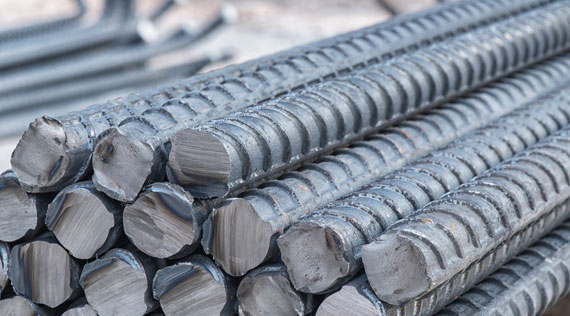
- 39% increase in Turkey’s exports of iron and steel in 2018.
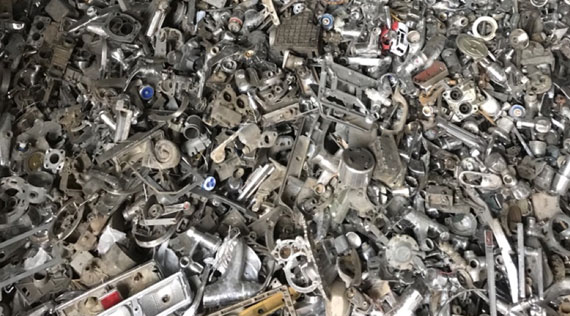
- 371211 Metric Tons Zinc Scrap exported in 2015
- 371164 Metric Tons Zinc Scrap exported in 2016
- 327188 Metric Tons Zinc Scrap exported in 2017
- 371211 Metric Tons Zinc Scrap imported in 2015
- 371164 Metric Tons Zinc Scrap imported in 2016
- 326431 Metric Tons Zinc Scrap imported in 2017
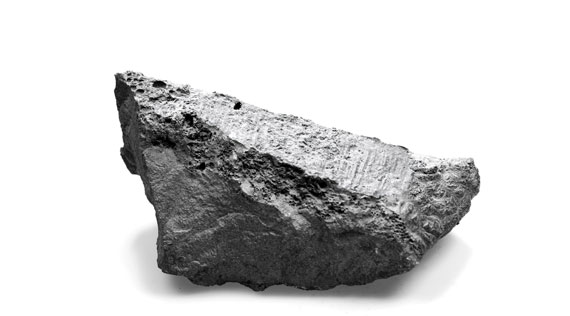
- 137506 Metric Tons Nickel Products exported in 2015
- 136236 Metric Tons Nickel Products exported in 2016
- 122902 Metric Tons Nickel Products exported in 2017